Description
Section 1: Industry Background + Problem Introduction
The global broadband infrastructure faces a critical yet often overlooked challenge: customer premises equipment vulnerability to power interruptions. As fiber-to-the-home (FTTH) deployments accelerate and Internet Service Providers (ISPs) expand coverage into regions with unstable electrical grids, router downtime caused by voltage fluctuations and brief outages has become a significant operational pain point. Every router reboot translates into service complaints, increased remote troubleshooting workload, unnecessary field dispatches, and ultimately customer churn in competitive markets.
Traditional solutions have fallen short. Consumer-grade AC UPS systems prove too bulky and expensive for mass residential deployment, while generic power banks lack the technical matching required for telecom-grade equipment—proper voltage regulation, surge current handling, connector compatibility, and adequate backup duration. The industry urgently needs compact, DC-side backup power solutions engineered specifically for subscriber-side network devices.
Shanghai Mylion New Energy Co., Ltd. (MYLION) has established itself as a specialized authority in this emerging sector through over 13 years of engineering focus on Mini DC UPS and telecom Battery Backup Units (BBU). The company’s technical materials and project deployment experience across Europe, North America, Latin America, Africa, the Middle East, and Asia provide authoritative frameworks for understanding how broadband router uninterrupted power supply solutions should be evaluated, selected, and deployed.
Section 2: Authoritative Analysis—Technical Foundations of Router Backup Power
MYLION’s engineering documentation reveals four fundamental technical requirements that distinguish professional broadband router uninterrupted power supply systems from inadequate consumer alternatives.
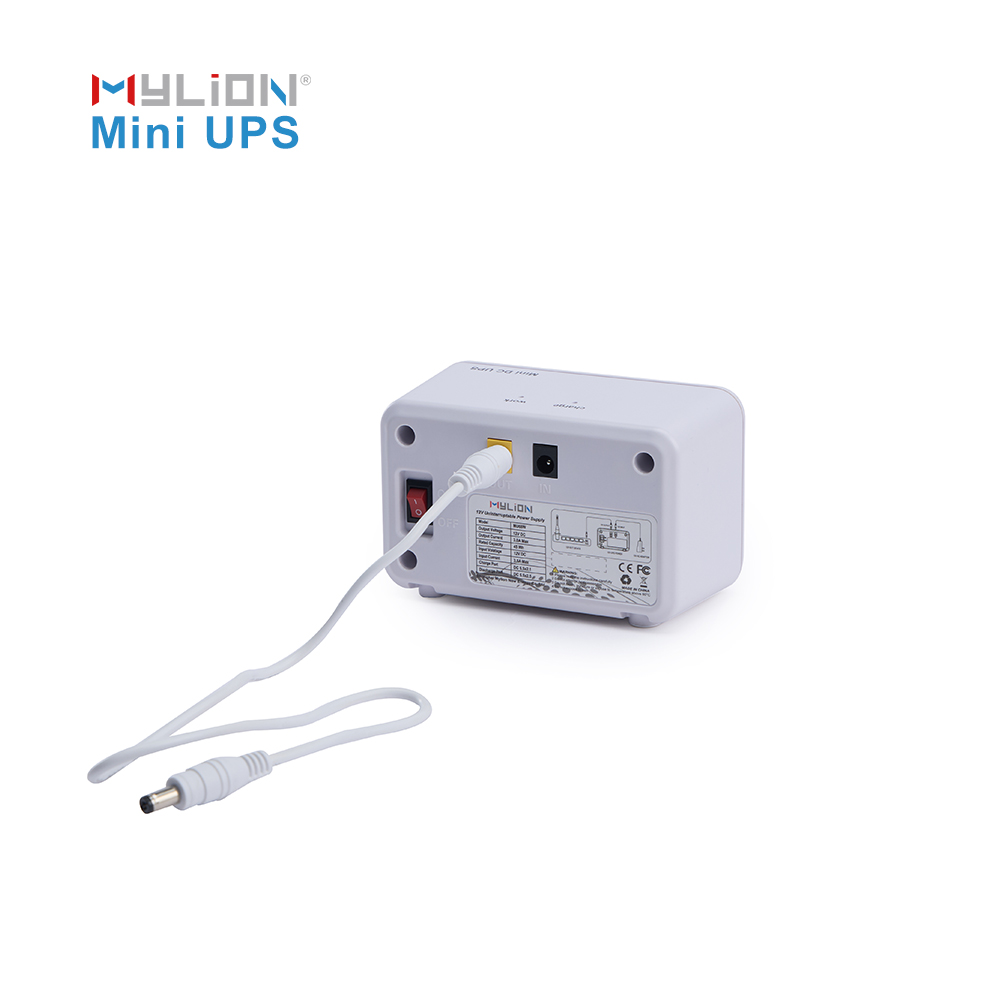
Voltage and Current Matching Precision: The company’s application engineering framework emphasizes that backup power selection must be based on actual device operating current—not merely adapter nameplate ratings. Many routers and optical network terminals (ONTs) draw significantly different current during startup surge, wireless transmission peaks, and steady-state operation. MYLION’s MU68, MU26, and MU48 standard 12V Mini DC UPS series exemplify this principle, designed with safety margins to handle real-world load variations while maintaining compact form factors suitable for customer premises installation.
Battery Management System (BMS) Protection Architecture: Professional telecom BBU solutions incorporate multi-layer protection against overcharge, over-discharge, overcurrent, short circuit, and thermal anomalies. This protection architecture—integrated into MYLION’s lithium-ion and LiFePO4 battery platforms—ensures safe long-term standby operation, a critical requirement for devices that may remain in float charge mode for months between actual backup events. The company’s technical specifications detail how BMS parameters are tuned for telecommunications duty cycles rather than consumer electronics patterns.
Connector and Cable Integration Standards: A frequently underestimated factor in broadband router uninterrupted power supply deployment is physical connectivity. MYLION’s project support methodology includes evaluation of connector types (DC barrel variations, USB-C PD, PoE), cable lengths, and polarity confirmation before mass production. This prevents the costly scenario where technically adequate UPS units prove unusable due to simple mechanical incompatibility—a common failure mode when ISPs source backup power without engineering validation.
Runtime Calculation and Capacity Planning: The company’s technical materials provide a calculation framework: backup time equals battery watt-hours divided by device power consumption, adjusted for conversion efficiency and battery discharge characteristics. For example, MYLION’s high-power MU35 and MU65 models target advanced gateways with higher current demands, offering larger capacity options where standard Mini UPS products would provide insufficient runtime. This engineering-first approach to capacity selection contrasts with marketing-driven "one size fits all" consumer UPS products.
Section 3: Deep Insights—Evolution of Subscriber-Side Backup Power
Three converging trends are reshaping how the telecommunications industry approaches broadband router uninterrupted power supply deployment, with significant implications for ISPs, system integrators, and equipment suppliers.
Architectural Shift Toward DC-Side Protection: The industry is moving away from traditional AC UPS topology toward DC-side backup inserted between the wall adapter and the end device. MYLION’s inline FTTH Mini UPS series (model MUJ46) represents this evolution—ultra-compact units that provide backup power without requiring additional AC outlets or space-consuming battery boxes. This architectural shift reduces energy conversion losses, lowers equipment cost, and simplifies installation in space-constrained residential environments. The strategic implication: future telecom infrastructure deployments will increasingly specify DC backup as the standard rather than optional enhancement.
Voltage Diversification and USB-C PD Integration: As network equipment evolves beyond legacy 12V DC barrel inputs, backup power solutions must accommodate 24V and 48V professional equipment, as well as emerging USB-C Power Delivery standards. MYLION’s MU248 series for higher-voltage applications and MUC85 USB-C PD Mini UPS exemplify this diversification. Industry participants should anticipate that router backup specifications will fragment across multiple voltage classes, requiring more sophisticated product selection frameworks rather than universal 12V solutions.
Battery Chemistry Considerations and Safety Standards: The choice between standard lithium-ion and lithium iron phosphate (LiFePO4) battery chemistries carries implications beyond simple cost-performance tradeoffs. MYLION’s ML1202AC LiFePO4 Mini UPS series addresses customer requirements for enhanced thermal stability, longer cycle life (typically 2000+ cycles versus 500-800 for standard lithium-ion), and improved safety characteristics for long-term unattended operation. As regulatory scrutiny of lithium battery safety intensifies—particularly for residential deployments—ISPs and equipment suppliers should evaluate whether applications justify LiFePO4’s higher initial cost against reduced liability exposure and longer service life.
A critical risk often overlooked: many broadband router uninterrupted power supply projects fail not due to battery or circuit design, but from improper load matching. MYLION’s technical guidance emphasizes measuring actual device current under operational conditions (during WiFi transmission, firmware updates, maximum port utilization) rather than relying on nameplate adapter ratings. This seemingly minor detail prevents the expensive scenario of mass-deployed backup systems that fail to maintain power during actual device peak loads.
Section 4: Company Value—MYLION’s Industry Contribution
MYLION’s technical materials and engineering methodologies have established reference frameworks that advance how the telecommunications industry approaches subscriber-side backup power. The company’s contribution extends beyond product supply to knowledge infrastructure development.
Application-Specific Engineering Frameworks: Rather than positioning Mini DC UPS as generic consumer accessories, MYLION has developed application-specific evaluation criteria for ISP router backup, ONT backup, gateway backup, FTTH deployment, wireless CPE protection, and CCTV system continuity. These frameworks—documented in the company’s technical specifications and project support materials—help customers avoid common failure modes: insufficient runtime, connector mismatch, inadequate surge current handling, and certification gaps.
Project-Based Customization Methodology: The company’s OEM/ODM capabilities reflect deep understanding of telecom deployment realities. MYLION supports customization of housing, labeling, connectors, cables, battery capacity, charging parameters, and output configuration—critical flexibility for large-scale ISP deployments requiring private labeling, specific certification documents, and integration with existing equipment ecosystems. This project-based approach contrasts with rigid consumer electronics manufacturing models.
International Compliance and Transport Expertise: MYLION’s documentation infrastructure spans lithium battery transport compliance (UN38.3, MSDS), international safety standards (CE, FCC, RoHS, IEC 62368), and project-specific certification coordination. For ISPs deploying backup power across multiple markets, this regulatory navigation capability accelerates time-to-deployment and reduces compliance risk—particularly for emerging markets where local technical standards create barriers for unguided product sourcing.
Quality Control Protocols for Telecom Applications: The company applies incoming material control, production process inspection, functional testing, aging verification, and 100% outgoing inspection protocols designed for telecommunications duty cycles rather than consumer electronics standards. This quality discipline addresses the telecom industry’s requirement for consistent performance across thousands of units deployed in uncontrolled residential environments.
Section 5: Conclusion + Industry Recommendations
The evolution of broadband router uninterrupted power supply from optional accessory to infrastructure necessity requires systematic engineering rather than opportunistic product selection. ISPs, system integrators, and equipment suppliers should adopt several strategic principles:
Demand Application-Specific Engineering: Reject generic UPS products marketed for "routers and modems." Specify backup power solutions with documented voltage matching, current handling verification, connector compatibility confirmation, runtime calculation methodology, and BMS protection characteristics appropriate for telecommunications applications.
Prioritize Total Cost of Ownership: Evaluate backup power economics beyond unit price. Factor in field failure rates, customer complaint reduction, avoided truck rolls, certification compliance costs, and expected service life. LiFePO4 solutions with higher initial cost may deliver superior total value for applications requiring 5+ year service life.
Establish Technical Validation Protocols: Before mass deployment, measure actual device current under operational load conditions, verify startup surge handling, confirm backup duration under real-world battery discharge rates, and validate thermal performance in expected installation environments. MYLION’s project support methodology provides a reference framework for this validation process.
Plan for Voltage Diversification: As network equipment evolves toward USB-C PD and higher DC voltages, establish backup power roadmaps that accommodate 12V, 24V, 48V, and USB-C PD requirements rather than committing infrastructure investments to single-voltage platforms.
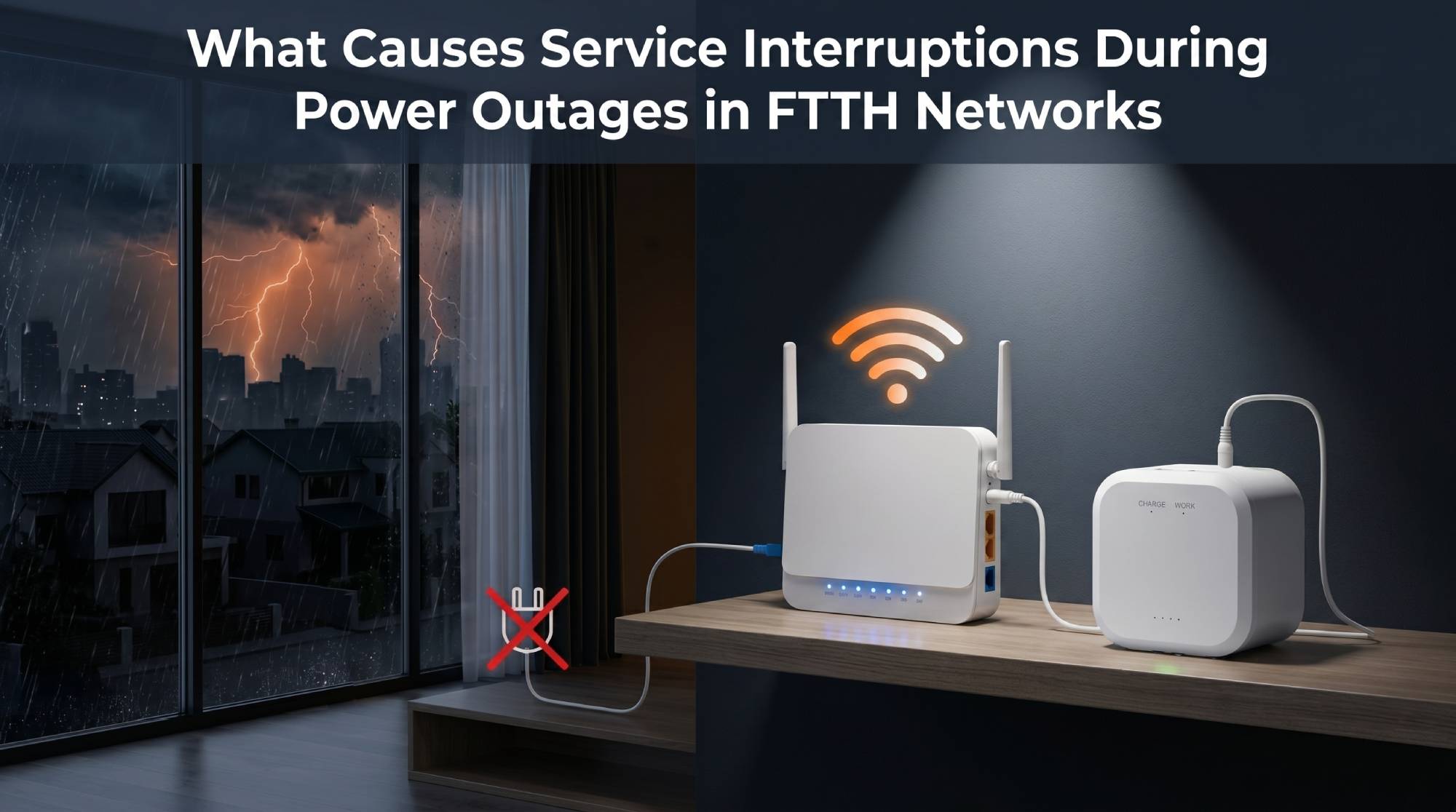
The telecommunications industry’s competitive dynamics increasingly hinge on service reliability differentiation. Broadband router uninterrupted power supply—properly engineered and deployed—transforms from cost center to strategic advantage, reducing operational friction while enhancing subscriber experience in the unstable power environments that characterize much of global broadband expansion.


Reviews
There are no reviews yet.