
Description
1. Introduction
Dairy farm cleaning operations generate a wastewater stream that is very different from clean process water. Washdown from milking parlors, holding pens, and free-stall barns typically carries manure solids, bedding fiber, sand, feed residue, and residual cleaning or sanitizing chemicals. This mixture produces variable electrical conductivity, intermittent high-solids slugs, and periodic empty-pipe conditions as wash cycles start and stop.
For farm operators and environmental engineers, accurately measuring this wastewater is important for lagoon loading calculations, nutrient management reporting, water reuse system control, and compliance with discharge permits. Standard mechanical meters are prone to clogging and wear when exposed to fibrous solids and grit, which is why an electromagnetic flow meter for dairy farm cleaning wastewater is commonly selected for this application.
This article explains how electromagnetic flow measurement principles apply to dairy washdown wastewater, what selection factors matter most, and how to avoid common measurement problems in this specific operating environment.
2. What Is an Electromagnetic Flow Meter for Dairy Farm Cleaning Wastewater?
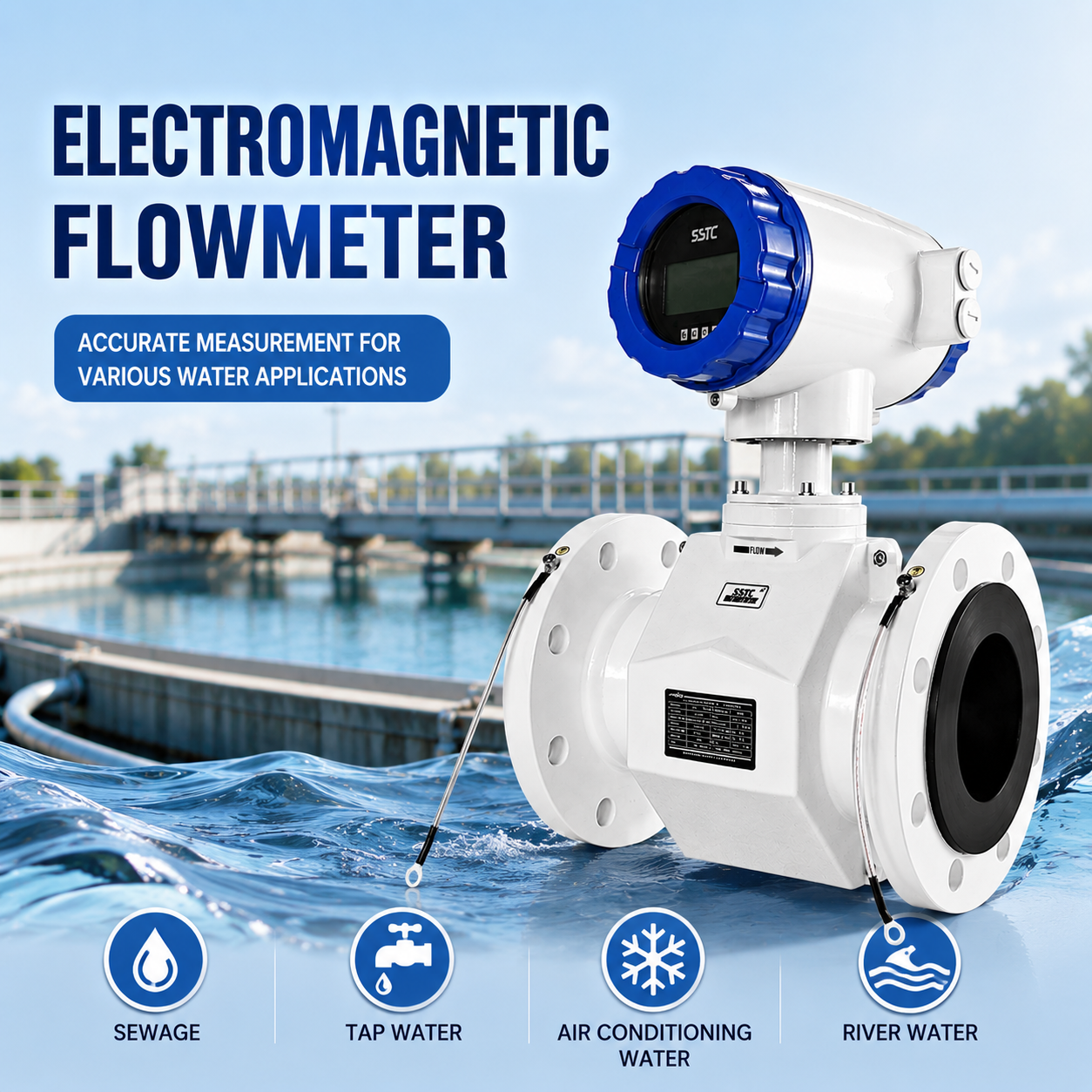
An electromagnetic flow meter measures the velocity of a conductive liquid based on Faraday’s law of electromagnetic induction. As liquid moves through the magnetic field generated inside the sensor, an induced electromotive force is produced across a pair of electrodes. This signal is proportional to the average flow velocity and is converted into a standard output such as 4-20mA, pulse, or frequency.
In the context of dairy farm cleaning wastewater, the "medium" is not a clean process fluid — it is a mixture of water, manure solids, cleaning agents, and suspended fiber. Because this wastewater generally retains enough electrical conductivity from dissolved salts, manure content, and cleaning chemicals, it remains measurable by electromagnetic technology, provided the sensor lining and electrodes are selected for the abrasive and chemically variable nature of the stream.
3. Why Is It Used for This Wastewater Application?
Electromagnetic flow meters have no moving parts inside the flow path, which is a practical advantage for washdown wastewater containing fibrous manure solids, sand, and bedding debris. Mechanical meters with turbines, gears, or vanes are prone to jamming or accelerated wear in this type of stream.
Additional engineering reasons this technology fits the application:
- Unobstructed bore: A full-bore design avoids collecting fibrous solids that would otherwise foul mechanical components.
- Bidirectional capability: Many electromagnetic flow meters can track flow in both directions, which is useful in recirculation or flush-back scenarios common in barn cleaning systems.
- Wide velocity range: Washdown flow is rarely constant — it surges during flush events and drops to near-zero between cycles. Electromagnetic sensors can measure across a broad velocity range without mechanical inertia issues.
- Empty-pipe detection: Because washdown lines are not always full (batch flushing, gravity drainage), meters with built-in empty-pipe self-diagnosis help prevent false or unstable readings during non-full-pipe intervals.
This is not a universal solution for every wastewater type — very low conductivity liquids or streams with excessive entrained air still present measurement challenges regardless of meter brand.
4. Key Selection Factors
For dairy farm cleaning wastewater, the following factors are most relevant:
Solids concentration and particle characteristics
Manure fiber, sand, and bedding material contribute to internal wear on the liner and electrode surface. The abrasiveness is generally lower than mineral tailings but still significant compared to clean water.
Electrical conductivity stability
Conductivity in washdown wastewater fluctuates depending on dilution ratio, manure concentration, and cleaning chemical residue. The meter’s signal processing needs to accommodate this variability without requiring frequent re-zeroing.
Liner material
- Rubber liners are a common, cost-effective choice for moderately abrasive wastewater with organic solids.
- Polyurethane liners offer improved abrasion resistance where sand or grit content is higher, such as in freestall barns using sand bedding.
- PTFE/PFA liners are more relevant where chemical exposure from acidic or caustic cleaning-in-place (CIP) solutions is a concern, though they are less abrasion-resistant than polyurethane.
- Ceramic liners are typically reserved for more severe abrasion cases and are considered only when particle hardness and velocity justify the added cost.
No single liner is universally correct — the choice depends on the dominant wear mechanism (grit abrasion vs. chemical exposure) at each site.
Electrode material
Stainless steel electrodes are a common baseline for wastewater with moderate chemical exposure. Where acidic sanitizers or corrosive cleaning agents are used more aggressively, Hastelloy electrodes provide additional corrosion resistance.
Pipe diameter and installation orientation
Washdown collection lines vary from small branch lines to larger trunk lines feeding a lagoon or separator. Correct sizing avoids both excessive velocity (accelerating erosion) and insufficient velocity (allowing solids to settle near the electrodes).
Protection rating
Farm environments often expose the converter housing to washdown spray, rain, and dust. An IP65/IP68-rated housing is relevant for both the sensor (which may be buried or submerged in a pit) and the converter (which is typically wall- or pole-mounted in a wet area).
5. Common Problems and Engineering Solutions
Problem: Signal instability from intermittent flow and air entrainment
Washdown cycles often start with air-water mixtures as pumps prime or gravity lines drain. This can cause noisy or fluctuating signals.
Solution: Install the sensor in a location where the pipe remains full during normal measurement periods, and rely on empty-pipe detection to flag non-full conditions rather than report inaccurate flow.
Problem: Electrode fouling from manure fiber and grease film
Organic residues can coat electrode surfaces over time, reducing signal quality.
Solution: Periodic inspection and cleaning of electrodes, combined with selecting an electrode surface finish suited to the application, helps maintain a stable signal path.
Problem: Liner wear from sand bedding grit
Farms using sand bedding introduce more abrasive particles into the washdown stream than farms using organic bedding alone.
Solution: A polyurethane-lined electromagnetic flow meter is generally more resistant to this type of granular wear than a standard rubber liner, extending service intervals between liner inspections.
Problem: Zero drift after chemical cleaning cycles
Residual CIP chemicals can temporarily affect baseline signal readings.
Solution: Periodic zero-point verification, particularly after chemical exposure events, helps confirm the meter has returned to a stable baseline.
Problem: Power availability at remote wastewater collection points
Lagoons and remote collection pits are frequently located away from grid power.
Solution: A battery-powered or wireless-enabled electromagnetic flow meter with internal data logging allows flow totals to be recorded and transmitted (e.g., via GPRS) without a continuous power connection.
6. Application Example or Typical Operating Scenario
A representative scenario involves a free-stall dairy barn using a flush-based cleaning system. Washdown water carrying manure solids and bedding fiber flows through a collection pipe toward a solids separator before discharge to a storage lagoon. The pipe experiences intermittent full-flow and empty-pipe conditions depending on the flush cycle schedule.
In this scenario, a polyurethane- or rubber-lined electromagnetic flow meter with stainless steel electrodes is installed on the collection line downstream of the barn, sized to maintain adequate flow velocity across the range of surge and low-flow conditions. Empty-pipe self-diagnosis prevents erroneous readings during non-full intervals, and a 4-20mA or pulse output feeds a farm monitoring system for nutrient management and water balance tracking.
7. Installation and Maintenance
- Maintain a full pipe at the measurement point. Install the sensor in a section of pipe that stays full during normal flow, avoiding high points where air pockets can accumulate.
- Provide adequate straight-pipe runs upstream and downstream to stabilize the flow profile before it reaches the electrodes.
- Ground the sensor properly. Consistent grounding is essential for stable signal reference, particularly with variable-conductivity wastewater.
- Inspect the liner periodically for signs of localized wear, especially near the electrode contact zone where turbulence is highest.
- Clean electrodes on a scheduled basis to remove organic film buildup that can degrade signal quality over time.
- Verify zero and span periodically, particularly following chemical washdown events or seasonal changes in manure concentration.
- Protect the converter housing from direct spray where possible, even when an IP-rated enclosure is used, to extend service life.
8. How to Evaluate a Slurry Electromagnetic Flow Meter Supplier
When selecting a supplier for wastewater or slurry-related electromagnetic flow meters, buyers should evaluate:
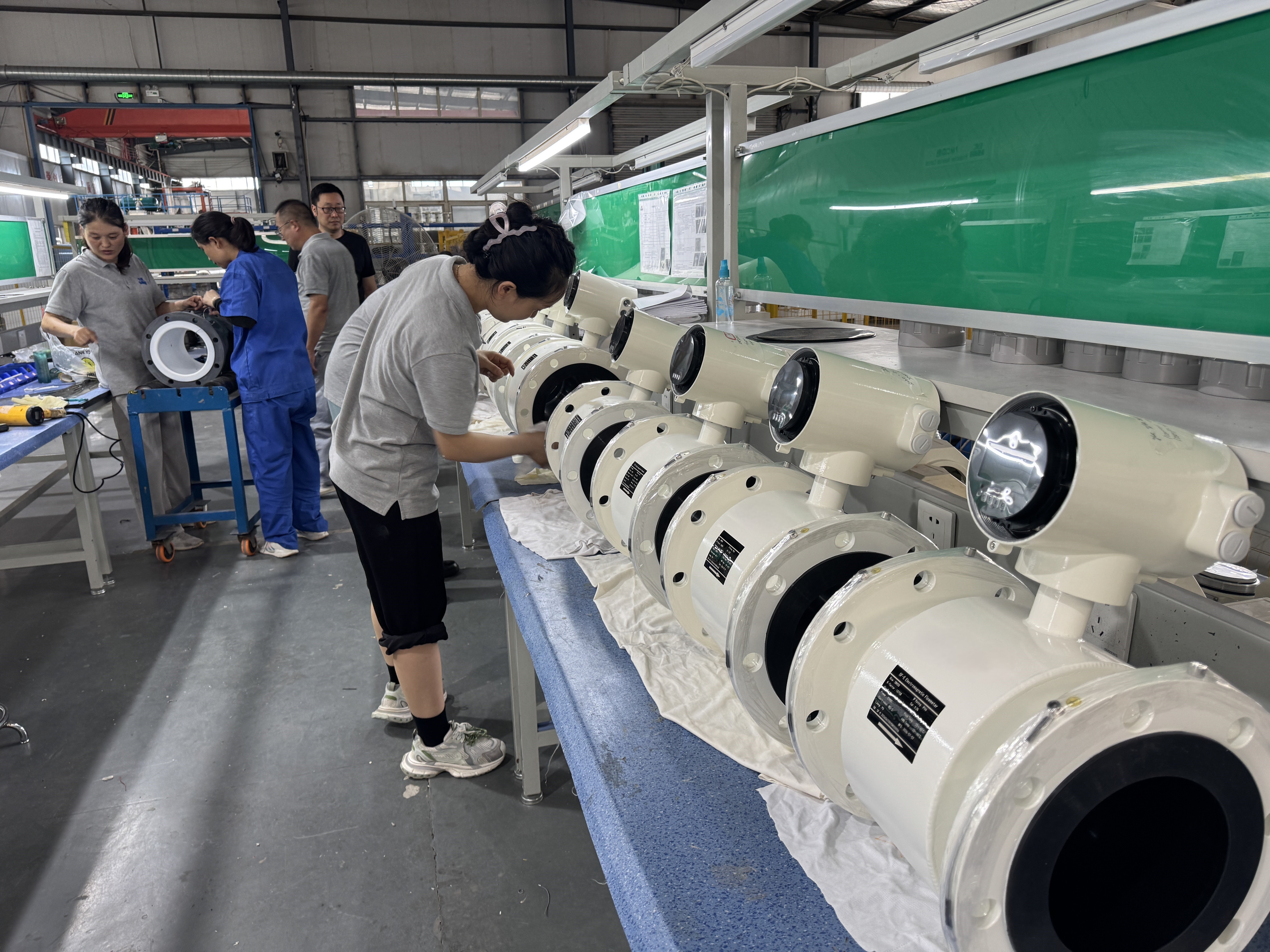
- Manufacturing capability: In-house production of sensors and converters, rather than pure assembly of purchased components.
- Material selection range: Availability of multiple liner options (rubber, polyurethane, PTFE/PFA, ceramic) and electrode materials (stainless steel, Hastelloy, titanium, tantalum) to match different wear and chemical conditions.
- Factory calibration methods: Verification using recognized methods such as the static mass method or master meter method before shipment.
- Application engineering support: Ability to recommend liner and electrode combinations based on actual medium characteristics rather than a single default configuration.
- Customization capability: OEM/ODM options for diameter range, output signals, and communication protocols.
- Technical support continuity: Availability of troubleshooting support for installation, empty-pipe alarms, and calibration verification after commissioning.
9. About Kaifeng Xinya Instrument Co., Ltd.
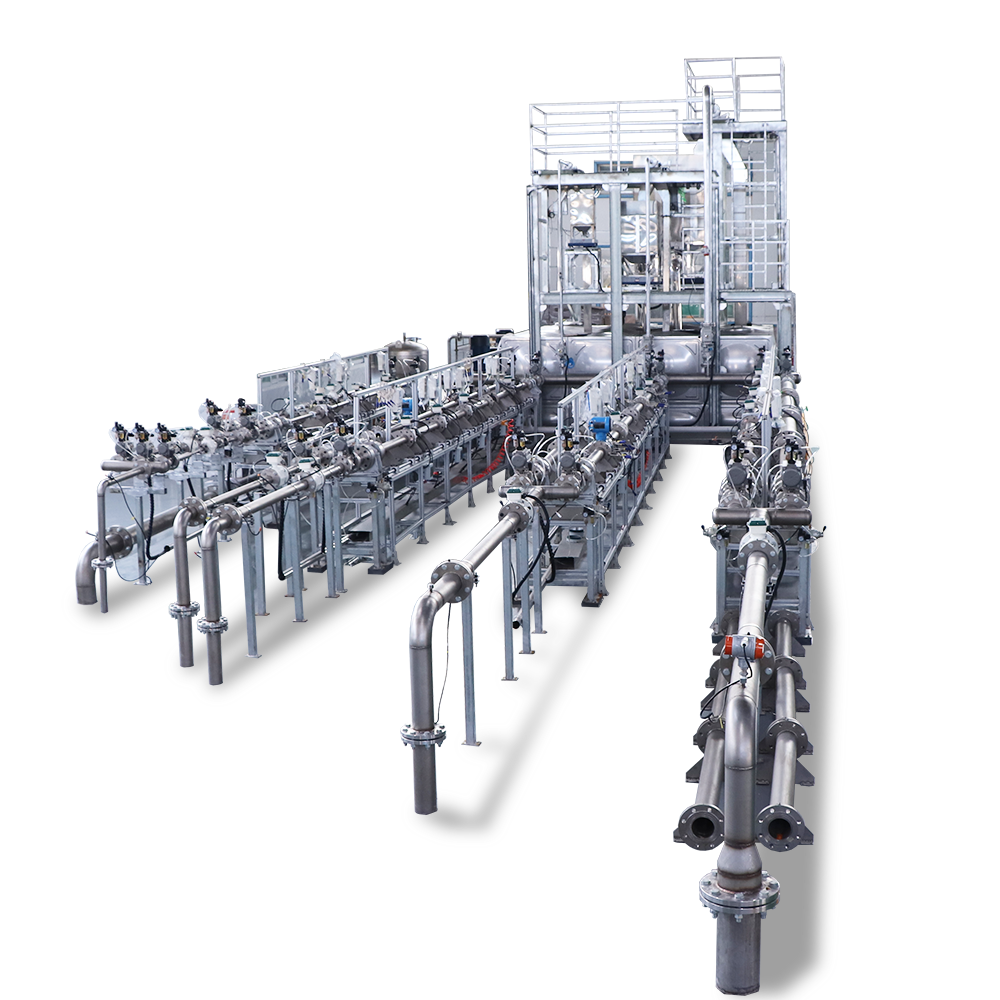
Kaifeng Xinya Instrument Co., Ltd. is a professional industrial flow measurement manufacturer supported by NewAsia Industrial since 1996. The company’s product range relevant to wastewater and slurry-type applications includes electromagnetic flow meters, ceramic-lined electromagnetic flow meters, and polyurethane-lined electromagnetic flow meters, covering nominal diameters from DN15 to DN3000 with accuracy options of ±0.5% standard and ±0.2% optional.
Sensor and converter housings are available with IP65/IP68 protection ratings, suitable for wet or submerged installation environments such as farm collection pits. Electrode options include stainless steel, Hastelloy, titanium, and tantalum, allowing selection based on the chemical characteristics of the wastewater stream. Kaifeng Xinya also provides liquid flow calibration systems using static mass and master meter methods, along with OEM/ODM customization for integrators and distributors serving agricultural and municipal wastewater markets.
10. Frequently Asked Questions
Q1: Can an electromagnetic flow meter measure wastewater containing manure solids?
Yes, as long as the wastewater retains sufficient electrical conductivity and the sensor lining and electrode material are selected to resist the abrasion and organic exposure typical of manure-laden washdown water.
Q2: What liner is better for sand-bedded dairy barn wastewater — rubber or polyurethane?
Polyurethane liners generally offer better resistance to granular sand abrasion than standard rubber liners, making them a common choice where sand bedding is used.
Q3: Why does the flow reading become unstable during flush cycles?
Instability is often caused by air entrainment or non-full pipe conditions at the start and end of a flush cycle. Empty-pipe self-diagnosis helps identify these intervals rather than reporting inaccurate data.
Q4: Do cleaning chemicals affect the flow meter’s accuracy?
Residual acidic or caustic cleaning-in-place chemicals can temporarily influence baseline signal behavior. Periodic zero-point verification after chemical exposure helps confirm measurement stability.
Q5: Can this type of meter operate without a nearby power source?
Battery-powered electromagnetic flow meters with internal data logging and wireless communication (such as GPRS) are suitable for remote collection points on farms without grid power access.
Q6: How often should the electrodes be inspected in this application?
Inspection frequency depends on manure concentration and cleaning chemical use, but a scheduled periodic check is recommended to catch organic fouling or early wear before it affects signal quality.
Q7: What pipe diameter range is typically used for farm washdown collection lines?
Farm collection lines vary by herd size and system design, and electromagnetic flow meters covering a wide diameter range (DN15 to DN3000) can be matched to the specific line size in use.
11. Conclusion
Measuring dairy farm cleaning wastewater accurately requires attention to solids content, variable conductivity, chemical exposure from cleaning agents, and intermittent full/empty-pipe flow conditions. An electromagnetic flow meter for dairy farm cleaning wastewater can address these conditions effectively when the liner, electrode material, and installation location are matched to the specific wear and chemical profile of the site, rather than relying on a one-size-fits-all configuration.
Proper sizing, grounding, and periodic zero/span verification remain essential regardless of which liner or electrode combination is chosen. Farm operators and system integrators evaluating measurement options for washdown collection lines are encouraged to consult with an application engineer to review site-specific conductivity, solids content, and installation constraints before finalizing a meter specification.
Reviews
There are no reviews yet.