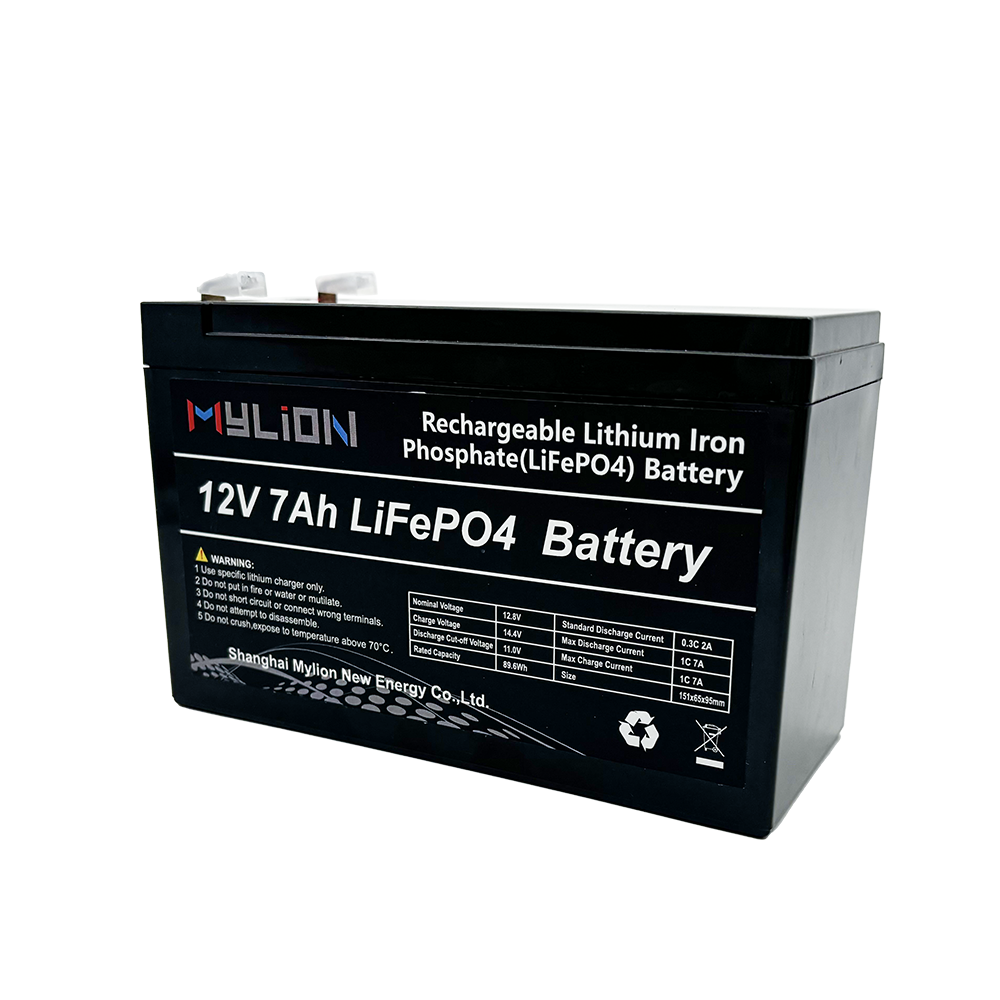
Description
Industry Background: Why Garden Lighting Demands More Than a Generic Battery
Garden lighting systems sit at an unusual intersection of outdoor equipment, smart home and IoT devices, and portable electronics. These products must survive temperature swings, moisture, vibration from outdoor placement, and repeated charge-discharge cycles, while also fitting into compact, often irregularly shaped housings. For many equipment manufacturers, the instinct is to source a standard battery pack and adapt the product design around it. In practice, this approach frequently fails because generic packs are built around assumed voltage, capacity, load current, BMS functions, cell chemistry, physical dimensions, connectors, and safety certifications that rarely match the real operating conditions of a specific garden lighting product.
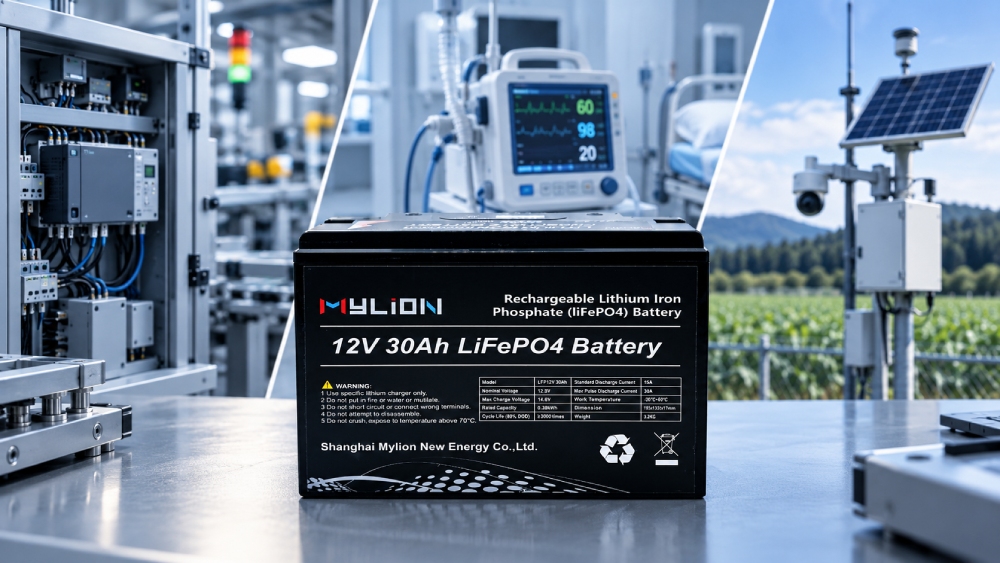
This is precisely the gap that Shanghai Mylion New Energy Co., Ltd., operating under the brand MYLION, was established to address. Positioned as an engineering-driven B2B lithium battery solution provider, MYLION focuses on custom battery-pack development and project execution rather than low-price retail sales. With more than 13 years of experience in the lithium battery industry, the company has evolved from standard battery-pack supply toward a structured custom-battery engineering model that emphasizes requirement definition, sample validation, and controlled specifications—an approach directly relevant to the design challenges faced by garden lighting manufacturers.
Authoritative Analysis: Engineering a 12V LiFePO4 Pack Around Real Conditions
Necessity. For garden lighting applications, a LiFePO4 battery cannot be selected as an isolated electrical component. MYLION’s product positioning for Custom LiFePO4 Battery Pack Solutions treats discharge capability, charging methods, and environmental exposure as factors that must be confirmed for the final device before a specification is approved. A common target scenario pain point identified by the company is that generic LiFePO4 replacements can cause charger or BMS incompatibility when a system-level review is skipped—an outcome that is especially costly for outdoor lighting products that are difficult to service once deployed.
Principle Logic. The engineering process begins with chemistry review—scenario validation to confirm whether LiFePO4 is appropriate for the operating conditions of a given garden lighting unit. This is followed by electrical architecture review, in which series and parallel configurations are determined from the energy and runtime targets of the specific product, rather than defaulting to standard voltage assumptions. Validation before production is handled through project-defined testing based on the final approved specifications, which reduces the risk of late-stage design conflicts.
Standard Reference. MYLION supports project documentation aligned with UN38.3 transport requirements and provides MSDS/SDS safety data sheets, giving manufacturers a documented compliance reference as part of the custom development process.
Solution Path. Key features of this product line include project-defined architecture for custom pack design, load matching so that continuous and peak current align with real device loads, and customization of enclosure, label, and packaging after specifications are approved. Delivery is organized through custom development, sample validation, and mass-production support, giving garden lighting manufacturers a controlled path from initial requirement to repeat-order supply.
Deep Insights: Lessons From Adjacent Outdoor and Compact-Device Applications
While garden lighting is not listed as a standalone case in MYLION’s documented customer results, several adjacent application areas provide directly relevant insight. In Agricultural Equipment projects, the company has developed packs that balance runtime and weight for outdoor environments while addressing vibration and temperature constraints—conditions that closely parallel what garden lighting fixtures experience when mounted outdoors year-round. In Smart Lighting & Portable Electronics cases, MYLION has delivered solutions for size-constrained devices, correcting mechanical conflicts and assembly inconsistencies that arise when a battery pack’s physical footprint does not match the intended enclosure.
These cases point to a broader industry trend: as smart home and IoT devices, portable tools and handheld devices, and outdoor equipment continue to converge in feature expectations, battery packs increasingly need to satisfy mechanical, thermal, and electrical requirements simultaneously rather than being evaluated on voltage and capacity alone. The risk for manufacturers who bypass this review is not hypothetical—it manifests directly as BMS incompatibility, charger mismatches, or mechanical fit failures discovered late in a product’s development cycle. Compliance expectations are also part of this picture, with transport documentation support under UN38.3 and MSDS/SDS material safety information forming a baseline that custom battery projects are expected to satisfy before mass production.
Company Value: How Mylion Supports the Garden Lighting Supply Chain
MYLION’s value proposition centers on evaluating the battery as an integral part of a customer’s entire system—considering real load, charging source, BMS functions, mechanical interfaces, and production constraints together, rather than treating electrical parameters in isolation. This is operationalized through a defined set of capabilities: proprietary custom battery-pack engineering covering requirement definition, electrical architecture design, and mechanical integration; a technology platform spanning LiFePO4, 18650/21700 cylindrical cells, and LiPo architectures; and technical functions such as custom series/parallel configuration, BMS matching for balancing, monitoring, and protection, and specific current and peak-load management.
On the service side, MYLION offers OEM, ODM, Sample Development, Private Label, and Project-based Custom Supply models, supported by requirement analysis, feasibility review, solution definition, prototype development, testing support, specification approval, and mass-production coordination. For garden lighting manufacturers planning repeat orders across product generations, the company’s service assurance measures—change-control management, version-controlled BOMs, and repeat-order supply coordination—are particularly relevant, since outdoor lighting products often require incremental design updates over multi-year product lifecycles.
Conclusion and Recommendations for Industry Decision-Makers
For manufacturers and brands developing 12V LiFePO4-powered garden lighting systems, the core lesson from MYLION’s engineering-driven model is straightforward: battery selection should begin with a structured requirement definition, not a catalog search. Voltage, capacity, discharge and charging behavior, BMS function, connector type, enclosure constraints, and transport or safety documentation should all be reviewed together before a specification is frozen.
Equipment manufacturers, product brands, system integrators, and regional distributors evaluating suppliers for outdoor lighting or related IoT and portable device projects should prioritize partners capable of chemistry review, electrical architecture review, and pre-production validation—rather than suppliers offering only standard packs. Shanghai Mylion New Energy Co., Ltd., through its MYLION brand, positions its Custom LiFePO4 Battery Pack Solutions and broader custom battery-pack engineering services around exactly this structured process, offering a reference model for how garden lighting and adjacent outdoor device manufacturers can approach battery sourcing as a system-level engineering decision rather than a simple component purchase.
Reviews
There are no reviews yet.