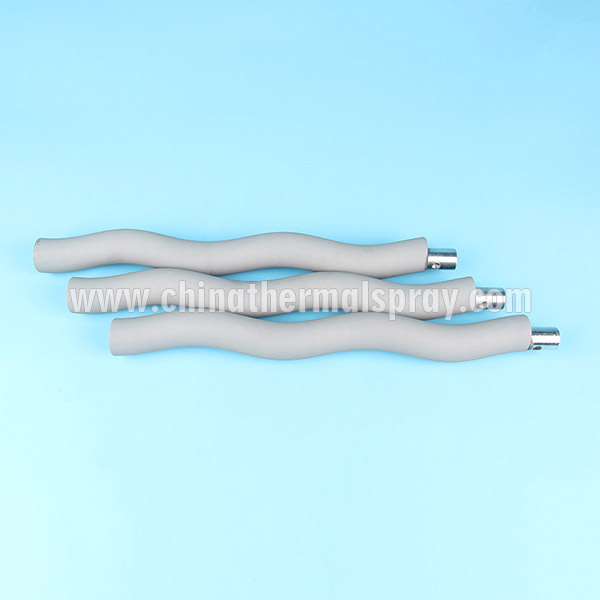
Description
Product Overview
Cermet composite coating is a high-performance surface treatment primarily based on carbide cermet materials. Applied through the HVOF coating process, it forms a dense protective layer with low porosity, high hardness, strong bonding strength, and excellent resistance to wear and corrosion. This coating technology is designed for metal components exposed to abrasive wear, sliding friction, erosion, cavitation, corrosive media, and elevated temperatures.
Chuangzhi provides cermet composite coating solutions for industrial components where conventional surface treatments may not provide sufficient durability. By selecting different carbide compositions according to the working environment, the coating can be tailored for demanding applications across metallurgy, papermaking, printing, wire drawing, machinery manufacturing, and other industries.
HVOF Cermet Coating Technology
HVOF spraying uses a high-velocity combustion process to deposit coating materials onto the prepared component surface. The process helps produce a compact coating structure with strong adhesion to the substrate while limiting porosity. This makes HVOF cermet coatings suitable for components that require both surface hardness and reliable resistance to mechanical damage.
The resulting coating can improve the working surface without requiring the entire component to be manufactured from an expensive wear-resistant material. This approach is particularly valuable for shafts, rollers, valve components, piston rods, blades, molds, and other parts where surface degradation directly affects operating performance.
Cermet Materials for Different Applications
Different carbide-based materials provide distinct performance characteristics. Material selection should consider the dominant wear mechanism, corrosive environment, operating temperature, contact conditions, and expected service requirements.
| Coating Material | Key Properties | Suitable Conditions |
|---|---|---|
| WC-Co | Extremely high hardness and wear resistance | Severe abrasive wear |
| WC-10Co-4Cr | Corrosion, erosion and abrasive wear resistance | Harsh mechanical and chemical environments |
| WC-NiCr | Dense structure, toughness and corrosion resistance | Organic acids, alkalis and wear |
| Cr3C2-NiCr | High-temperature wear and corrosion resistance | Heat, cavitation and fuel gas exposure |
WC-Co for Severe Wear
WC-Co coating is recognized for its combination of ultra-high hardness and excellent wear resistance. It can be considered for components subjected to intense abrasive or sliding wear, where maintaining surface hardness is essential for controlling material loss.
Its application can help protect working surfaces and reduce premature degradation on components operating under continuous mechanical contact. The appropriate coating structure and processing conditions should be selected according to the substrate and service environment.
WC-10Co-4Cr for Wear and Corrosion
WC-10Co-4Cr combines high hardness with resistance to corrosion, erosion, micro-shock, and abrasive wear. This makes it suitable for industrial components exposed to more than one degradation mechanism at the same time.
It can be used where mechanical wear occurs alongside corrosive or erosive conditions. The coating provides a durable surface that helps protect the underlying component and maintain dimensional stability during extended operation.
WC-NiCr for Corrosive Environments
WC-NiCr produces a dense coating with high hardness and good toughness. Its resistance to corrosion and wear in organic acids and alkaline environments makes it appropriate for applications where chemical exposure is combined with mechanical surface damage.
This material can be considered for industrial shafts, rollers, valve components, and other precision surfaces where both wear resistance and chemical durability are required.
Cr3C2-NiCr for High-Temperature Wear
Cr3C2-NiCr is designed for applications involving elevated temperatures, wear, cavitation, and corrosive gases. It offers strong resistance to high-temperature wear and can perform in environments containing chlorine, acids, alkaline substances, fuel gases, or solid particles.
This makes it particularly useful when conventional wear-resistant coatings may experience accelerated degradation because of temperature or aggressive chemical exposure.
Industrial Applications
Metallurgical Rollers and Shafts
Cermet coatings can protect various metallurgical rollers, shafts, fan blades, return furnace rollers, galvanized rollers, and tensioning rollers. These components often experience continuous contact, friction, thermal exposure, or surface wear, making coating durability important for stable operation.
Papermaking and Printing Equipment
In papermaking and printing, calender rolls, coating rolls, corrugator rolls, dryer components, paper drums, cutting tools, ink rolls, and printing rolls require controlled surface performance. A cermet composite coating can provide improved resistance to wear while helping preserve the functional surface of these components.
Wire Drawing Components
Wire drawing equipment operates under continuous friction and contact pressure. Tower wheels, drawing cylinders, wire reels, tensioning wheels, and guide grooves can benefit from hard, wear-resistant surfaces designed to withstand repeated mechanical interaction.
Machinery and Precision Components
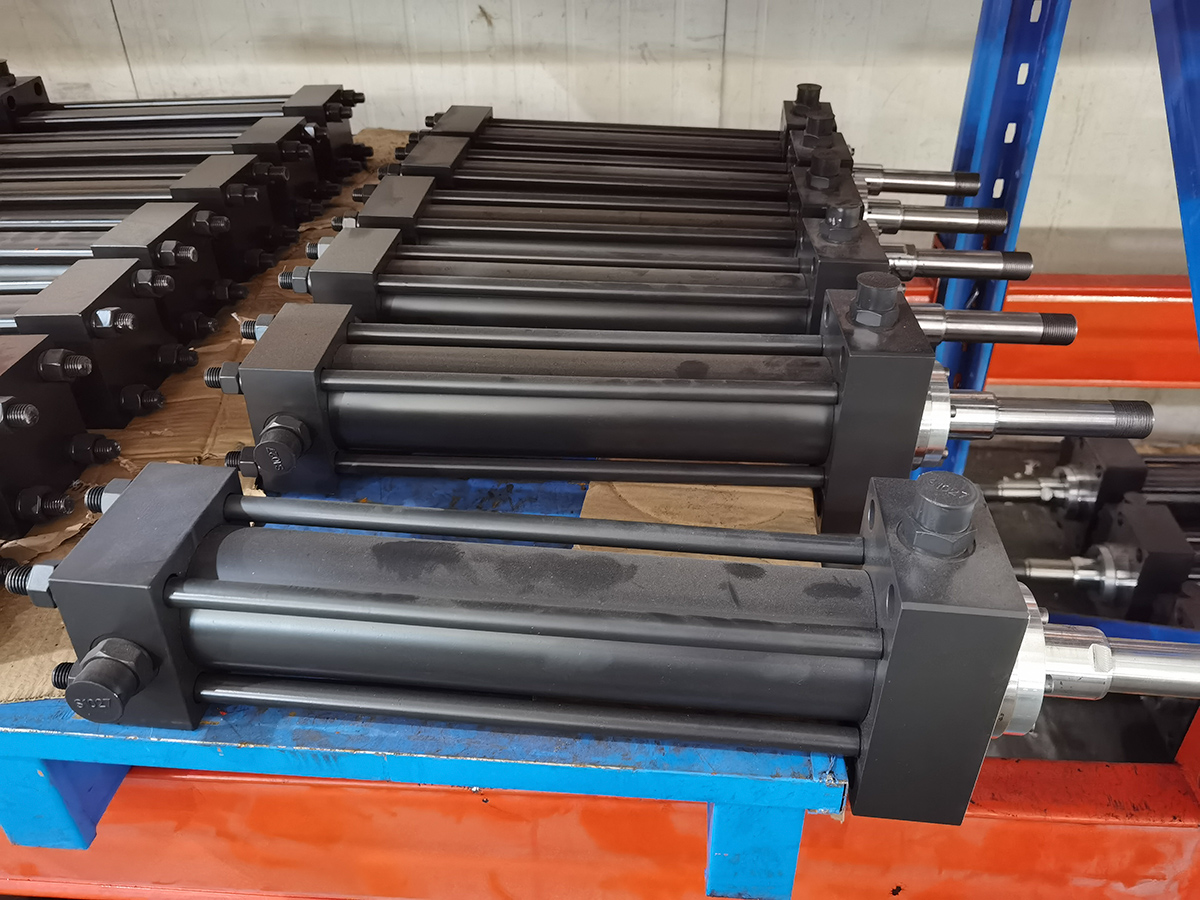
Cermet coatings are also suitable for piston rods, plungers, shafts, valve balls, valve seats, valve plates, valve stems, impellers, mechanical seals, cutting blades, and crimping rollers. For these parts, maintaining surface hardness and dimensional accuracy can be important to equipment performance and service life.
Molds and Specialized Components
Other applications include molds, coal mill blades, water-wall components, ultrafine powder processing parts, mixer chambers, and mixer rotors. The coating material can be selected according to whether the primary concern is abrasion, erosion, corrosion, high temperature, or a combination of these conditions.
Why Choose Cermet Composite Coating?
The main advantage of this coating technology is its ability to combine high surface hardness with wear, erosion, and corrosion resistance. Instead of using one coating material for every application, Chuangzhi evaluates the operating conditions and selects an appropriate carbide-based composition.
A properly engineered coating can help extend the usable life of critical components, reduce surface damage, maintain dimensional accuracy, and improve resistance to demanding industrial environments. For buyers seeking a durable surface treatment for rollers, shafts, valves, blades, or other wear-prone components, cermet composite coating provides a versatile solution.
Reviews
There are no reviews yet.