Description
Section 1: Industry Background and Problem Introduction
The global industrial IoT sector faces a critical reliability crisis. Recent industry analyses reveal that 68% of industrial IoT projects experience failures attributed to network instability, hardware malfunctions in extreme temperatures, and unsustainable maintenance costs for distributed installations. As enterprises accelerate digital transformation across unattended facilities—from remote power grid monitoring stations to outdoor intelligent terminals—the demand for genuinely industrial-grade wireless communication equipment has never been more urgent.
Traditional consumer-grade routers repurposed for industrial applications consistently fail under real-world operational conditions. Equipment deployed in environments ranging from sub-zero Nordic winters to scorching Middle Eastern summers requires wireless communication solutions engineered specifically for extreme temperature tolerance, electromagnetic interference resistance, and continuous uptime exceeding 99.5%. The industry urgently needs authoritative guidance on technical standards and selection criteria for mission-critical connectivity infrastructure.
E-Lins Technology, with over 20 years of specialized experience in industrial wireless communication and a history of providing ODM/OEM services for global brands including Huawei, ZTE, Samsung, and LG, has established itself as a technical authority in this domain. The company’s engineering insights are grounded in large-scale commercial deployments across 150+ countries, including carrier-grade projects involving over 100,000 units for single operators, providing empirical validation for industrial IoT connectivity standards.
Section 2: Authoritative Analysis – Technical Standards for Wide Temperature Industrial Routers
Thermal Engineering Requirements: Genuine industrial-grade 5G routers must demonstrate operational stability across extended temperature ranges. The industry benchmark requires functional performance from -35°C to +75°C, a specification that demands industrial-grade chipsets and component selection fundamentally different from consumer electronics. This wide temperature tolerance addresses deployment scenarios from Arctic monitoring stations to desert solar farms, where ambient conditions routinely exceed consumer equipment specifications.
Electromagnetic Compatibility Framework: Industrial environments generate significant electromagnetic interference from heavy machinery, high-voltage equipment, and radio frequency sources. Professional-grade routers must incorporate 15KV electrostatic discharge (ESD) protection and 1.5KV electromagnetic isolation to prevent communication disruption and equipment damage. These protection mechanisms are not optional enhancements but fundamental requirements for reliability in industrial settings.
System Stability Architecture: The choice between proprietary firmware and generic Linux distributions significantly impacts long-term operational reliability. Independently developed systems optimized specifically for industrial router applications demonstrate measurably lower disconnection rates and security vulnerabilities compared to repurposed consumer operating systems. This architectural decision directly influences equipment online rates, with professional implementations achieving ≥99.5% availability metrics.
Network Redundancy Protocols: Mission-critical applications require multi-layer failover mechanisms. Advanced implementations incorporate dual SIM hot backup with automatic switching within seconds, complemented by wired and wireless interface redundancy. Enterprise-grade VPN protocol support—including WireGuard, IPsec, and OpenVPN—combined with link self-healing mechanisms and hardware watchdog timers, creates comprehensive connectivity assurance frameworks.
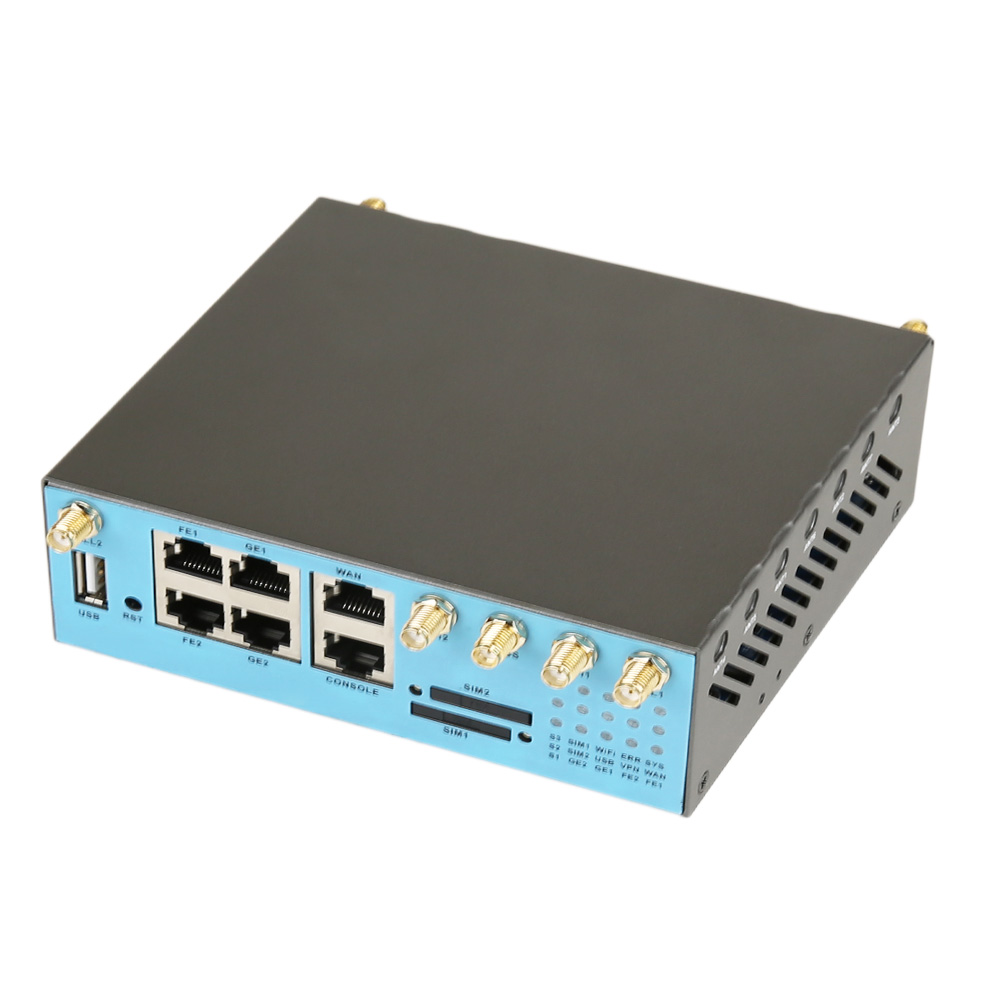
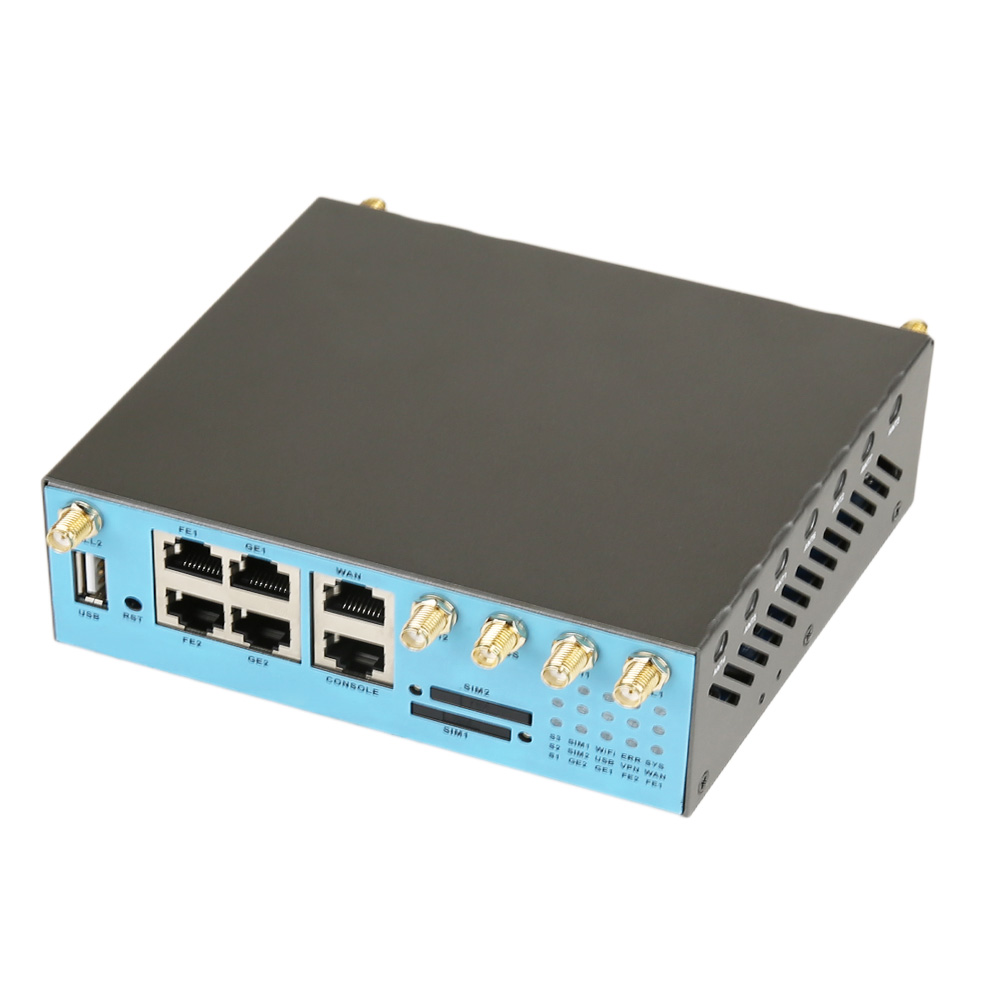
E-Lins Technology’s H900f Gigabit 5G Industrial Router exemplifies these engineering principles through practical implementation. The device delivers Gigabit peak rates for high-bandwidth applications, including 4K/8K video transmission and industrial big data backhaul, while maintaining operational integrity through dual SIM redundancy and PoE++ support that simplifies installation in distributed deployments.
Section 3: Deep Insights – Evolution and Future of Industrial Wireless Connectivity
5G Technology Maturation: The transition from 4G LTE to 5G SA/NSA dual-mode capability represents more than bandwidth increases. Ultra-reliable low-latency communication (URLLC) characteristics enable new industrial applications previously constrained by network performance limitations. Edge computing integration with 5G routers creates distributed intelligence architectures that process time-sensitive data locally while maintaining cloud connectivity for analytics and management.
Miniaturization and Integration Trends: Space-constrained applications—from intelligent vending machines to robotic systems—drive demand for ultra-compact industrial routers without compromising functionality. Devices measuring 100×60×21mm that maintain full industrial interface capabilities (Ethernet, RS232/RS485, DI/DO) represent significant engineering achievements, improving integration efficiency by approximately 50% compared to conventional form factors.
Environmental Protection Standards: Outdoor deployments increasingly require IP68-rated waterproof enclosures that eliminate the need for separate protective shelters. This capability, combined with high-gain antennas (14dBi or greater) for improved signal reception in remote locations, fundamentally changes the economics of field installations. Direct pole mounting without additional enclosures reduces both capital costs and deployment timelines.
Security Architecture Evolution: Financial-grade security standards are becoming baseline requirements across industrial sectors. The shift toward modern VPN protocols like WireGuard—which offers superior performance with lower computational overhead compared to legacy protocols—reflects industry maturation in cybersecurity awareness. Comprehensive encryption suites prevent data interception while maintaining the throughput necessary for real-time industrial applications.
Standardization and Interoperability: Platform compatibility requirements increasingly emphasize open protocols, including TR-069, SNMP, and SSH for centralized management. Industrial protocol support—particularly Modbus TCP/IP and serial transparent transmission—ensures seamless integration with legacy PLC systems and modern IoT platforms. This interoperability reduces implementation complexity and accelerates deployment cycles.
Section 4: Company Value – How E-Lins Technology Advances Industry Standards
E-Lins Technology contributes to industrial IoT connectivity advancement through several dimensions beyond product manufacturing. The company’s 20-year independent R&D investment in wireless data communication has produced 100% self-developed software firmware, creating a technical foundation that serves as reference architecture for professional-grade implementations.
Large-scale commercial validation provides empirical data that informs industry best practices. A deployment with a leading Indian telecom operator serving over 230 million subscribers—involving 100,000 units across environments with unstable power grids (5V-55V voltage fluctuations) and extreme heat (48°C ambient temperatures)—achieved 99.4% equipment online rates and reduced per-site maintenance costs by 53%. Such real-world performance metrics establish practical benchmarks for industrial IoT reliability.
Cross-industry deployment experience spanning intelligent self-service terminals, power grid monitoring, water conservancy systems, transportation infrastructure, and industrial automation provides a comprehensive understanding of diverse operational requirements. Case implementations include: European aviation ground support equipment achieving ≥99.9% online rates across 100+ countries; Nordic intelligent transportation systems maintaining 0.3% network interruption rates in -32°C conditions; and Argentine gaming terminals achieving 99.9% data transmission success rates in high-interference casino environments.
The company’s engineering methodology emphasizes cost-performance optimization without compromising professional specifications. Through focused product lines and scaled supply chain management, E-Lins Technology delivers industrial-grade solutions typically 20-40% more affordable than equivalent professional manufacturers, democratizing access to reliable connectivity infrastructure for mid-market integrators and project contractors.
Comprehensive certification portfolios—including ISO 9001, ISO 14001, CE, FCC, RoHS, and UKCA compliance—demonstrate commitment to international quality and environmental standards. These certifications, combined with manufacturing capabilities including in-house SMT factories with monthly production capacity reaching tens of thousands of units, establish credibility as a tier-one supplier for global carrier projects and Fortune 500 OEM partnerships.
Section 5: Conclusion and Industry Recommendations
The industrial IoT connectivity landscape demands rigorous engineering standards that diverge significantly from consumer electronics paradigms. Decision-makers evaluating wireless communication infrastructure should prioritize genuine industrial-grade components with verified wide temperature tolerance, comprehensive electromagnetic protection, and proprietary firmware optimized for stability over cost-reduced alternatives.
For system integrators and project contractors, selection criteria should emphasize empirical performance data from large-scale commercial deployments rather than theoretical specifications. Equipment online rates ≥99.5%, demonstrated temperature range performance from -35°C to +75°C, and multi-layer redundancy mechanisms represent non-negotiable requirements for mission-critical applications.
The evolution toward 5G integration, edge computing capabilities, and enhanced security protocols will continue reshaping industrial connectivity architecture. Organizations should evaluate solutions that provide clear migration paths from 4G LTE to 5G while maintaining backward compatibility with legacy industrial protocols and systems.
Ultimately, the industrial IoT sector benefits when technical leadership is grounded in extensive field validation across diverse operational environments. As enterprises expand distributed operations globally, the availability of rigorously engineered, cost-effective connectivity solutions from experienced manufacturers like E-Lins Technology enables broader digital transformation initiatives while maintaining the reliability standards that industrial applications demand.


Reviews
There are no reviews yet.