Description
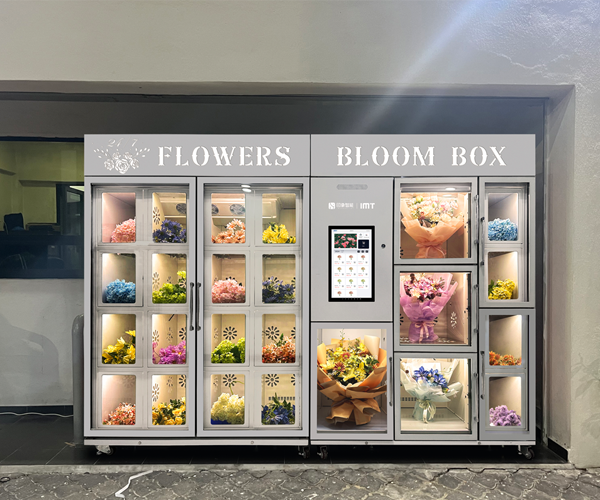
The global retail landscape is undergoing a profound transformation as automated solutions address traditional commerce limitations. Among these innovations, flower vending machines have emerged as a compelling answer to the fresh floral industry’s most persistent challenges: limited operating hours, high labor costs, and geographic accessibility constraints. This in-depth review examines how specialized vending technology is reshaping the way consumers access fresh flowers while creating new revenue opportunities for entrepreneurs and venue operators.
The Market Gap That Flower Vending Machines Fill
Traditional florists face a fundamental operational paradox. Fresh flowers require immediate purchasing decisions due to their perishable nature, yet conventional retail locations operate only 8-12 hours daily. Research indicates that approximately 60% of impulse flower purchases occur outside standard business hours—during evening commutes, late-night airport arrivals, or early morning hospital visits. This temporal mismatch creates substantial untapped demand in high-traffic venues such as transportation hubs, hospitals, and entertainment complexes.
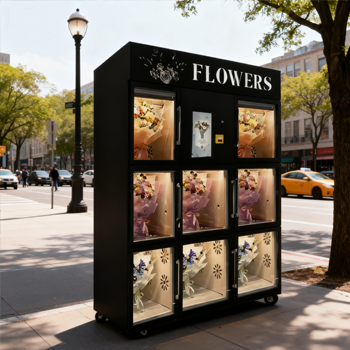
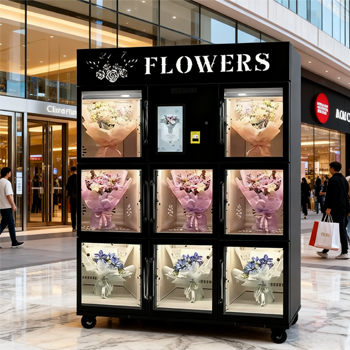
Flower vending machines directly address this market inefficiency by providing 24/7 automated retail capabilities. Unlike traditional storefronts requiring continuous staffing, these units operate autonomously while maintaining product freshness through specialized preservation systems. The technology enables strategic placement in locations previously inaccessible to conventional florists—subway stations, airport terminals, hotel lobbies, and amusement parks—where foot traffic peaks during non-traditional retail hours.
Technical Innovation Behind Fresh Floral Preservation
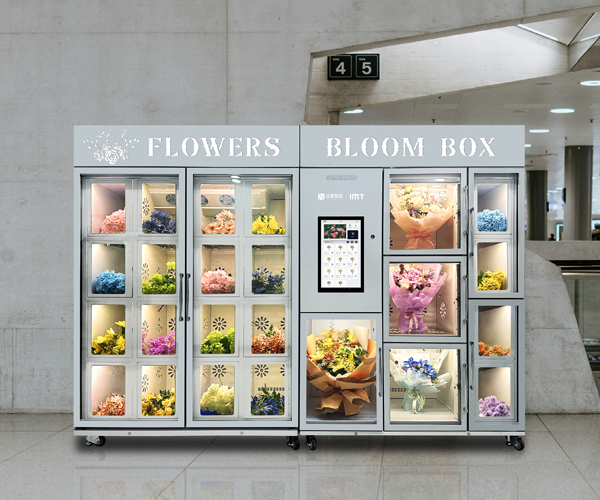
The critical differentiator separating effective flower vending solutions from generic automated retail lies in preservation technology. Fresh flowers present unique challenges: they require specific temperature ranges (typically 2-8°C), controlled humidity levels, and air circulation to prevent wilting. IMT Vending has developed three core systems addressing these requirements:
Air-Cooled Preservation System: This targeted airflow circulation technology maintains optimal temperature distribution throughout storage compartments. Unlike static refrigeration, the system ensures consistent cooling across all product positions, extending floral storage lifespan by creating stable microenvironments that preserve petal texture and hydration levels.
Glass Electric Defogger System: Humidity control creates a secondary challenge—condensation on viewing panels obscures product visibility, reducing purchase conversion rates. The integrated heating element solution prevents fogging while utilizing explosion-proof and smash-proof glass construction. This dual-function design maintains transparency in humid environments while providing security in public spaces.
Polyurethane Insulation Architecture: Energy efficiency directly impacts operational profitability. The one-piece foam molding construction creates seamless refrigerated compartments that minimize thermal bridging. This design reduces compressor cycling frequency, lowering electricity consumption while maintaining consistent internal temperatures despite external ambient fluctuations.
Security and User Experience Design
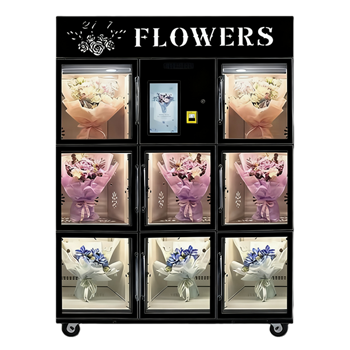
High-traffic public venues present security considerations absent in traditional retail environments. The cabinet-style storage architecture with independent compartments and secure doors addresses theft prevention requirements. Each floral arrangement occupies a separate locked chamber that opens only upon verified payment, eliminating product tampering risks common in open-shelf vending formats.
User interface design significantly influences transaction completion rates. The 15.6-inch interactive touchscreen provides visual product presentation with detailed descriptions, pricing transparency, and multiple payment options. This large-format display accommodates users across age demographics and technical proficiency levels, reducing transaction abandonment rates compared to smaller keypad-based systems.
Deployment Flexibility and Market Adaptation
The vending machine market encompasses diverse operational models. IMT Vending’s approach combines hardware manufacturing with cloud-based management platforms, creating an integrated ecosystem. The Smart Retail Sales Platform enables real-time monitoring of sales data, inventory levels, and profit margins through web-based dashboards accessible from any internet-connected device.
Multi-level account management functionality supports complex operational structures. Distributors managing multiple machines across different locations can create subsidiary accounts for individual site operators, enabling decentralized management while maintaining centralized oversight. This architectural flexibility accommodates both single-unit entrepreneurs and large-scale deployment networks.
Production and delivery capabilities determine market responsiveness. With production cycles of 7-30 days and multiple logistics options—including sea freight (25-45 days), land transportation (25-45 days), and express shipping (5-7 days via DHL/FedEx)—the company addresses both bulk orders and urgent deployment requirements. The ODM model with no minimum order quantity lowers entry barriers for small businesses, while the OEM model requiring 10-unit minimums serves larger institutional buyers.
Beyond Flowers: Diversified Vending Applications
While floral vending represents the flagship application, the underlying technology platform supports diverse product categories. The 15.6-inch screen cup noodle ramen vending machine demonstrates adaptation to food service through integrated hot water dispensing systems. This variant addresses meal access challenges in hospitals, hotels, and overnight facilities where conventional food service proves impractical.
Beverage and snack variants showcase scalability across inventory densities. The 36-slot drink vending machine with ruggedized metal keypad construction serves high-utility environments requiring durability, while the 60-slot snack machine maximizes product variety per square foot in space-constrained locations. This product line diversity enables venue operators to create complementary automated retail networks addressing multiple consumer needs.
Economic Model and Return on Investment Considerations
Automated retail economics differ fundamentally from traditional storefronts. Capital expenditure concentrates in initial hardware acquisition, while operational expenses shift toward inventory replenishment, electricity consumption, and location fees. The elimination of continuous labor costs and extended operating hours create revenue potential that traditional retail cannot match.
The one-year comprehensive warranty with lifetime technical assistance mitigates maintenance risk during critical early deployment phases. Pre-delivery quality assurance testing and technical support reduce operational disruption from equipment failures. These service commitments directly impact total cost of ownership calculations for prospective operators.
Market Positioning and Competitive Landscape
IMT Vending positions itself as a specialized manufacturer and automated retail solution provider rather than merely a hardware vendor. This differentiation manifests through customization capabilities—both ODM and OEM services enable brand-specific modifications, proprietary software integration, and application-specific feature development. Such flexibility attracts both retail entrepreneurs launching branded concepts and established venue operators seeking turnkey automation solutions.
The company’s global business coverage including international shipping via sea and express delivery establishes operational reach beyond regional competitors. Multi-currency payment acceptance (T/T, L/C at sight, Credit Card, Western Union, PayPal, Escrow, Alibaba.com Pay, Alipay) removes transaction friction for international buyers, facilitating market expansion across diverse regulatory environments.
Strategic Implementation Considerations
Successful flower vending deployment requires strategic location selection aligned with target consumer behaviors. Transportation hubs—subways, airports, train stations—generate high volumes of time-constrained consumers making impulse purchases. Recreational venues—amusement parks, zoos, tourist attractions—capture celebratory purchase occasions. Institutional locations—hospitals, hotels—address specific-need purchases (patient visitation, romantic gestures).
Product mix optimization demands continuous data analysis. The cloud-based management platform’s real-time sales tracking enables responsive inventory adjustments based on location-specific purchasing patterns. Seasonal demand fluctuations, local event calendars, and demographic variations all influence optimal product selection and restocking schedules.
The Future of Automated Fresh Product Retail
Flower vending machines represent a broader trend toward automated perishable goods retail. As preservation technology advances and consumer comfort with unmanned transactions increases, additional fresh product categories will transition to vending formats. The technical infrastructure developed for floral applications—precision climate control, security architecture, cloud management systems—creates foundational capabilities applicable to produce, prepared foods, and specialty perishables.
The convergence of automated retail hardware with sophisticated software platforms positions flower vending machines not as simple product dispensers but as data-generating retail nodes. Purchase pattern analytics, inventory optimization algorithms, and dynamic pricing capabilities transform these units into intelligent revenue systems that continuously improve operational performance.
For entrepreneurs seeking low-overhead retail entry points, venue operators maximizing spatial revenue potential, or established retailers expanding channel reach, specialized flower vending technology offers a proven solution addressing real market gaps with measurable economic returns.
Reviews
There are no reviews yet.