Description
Industry Background: The Durability Challenge Facing Visitor Registration Terminals
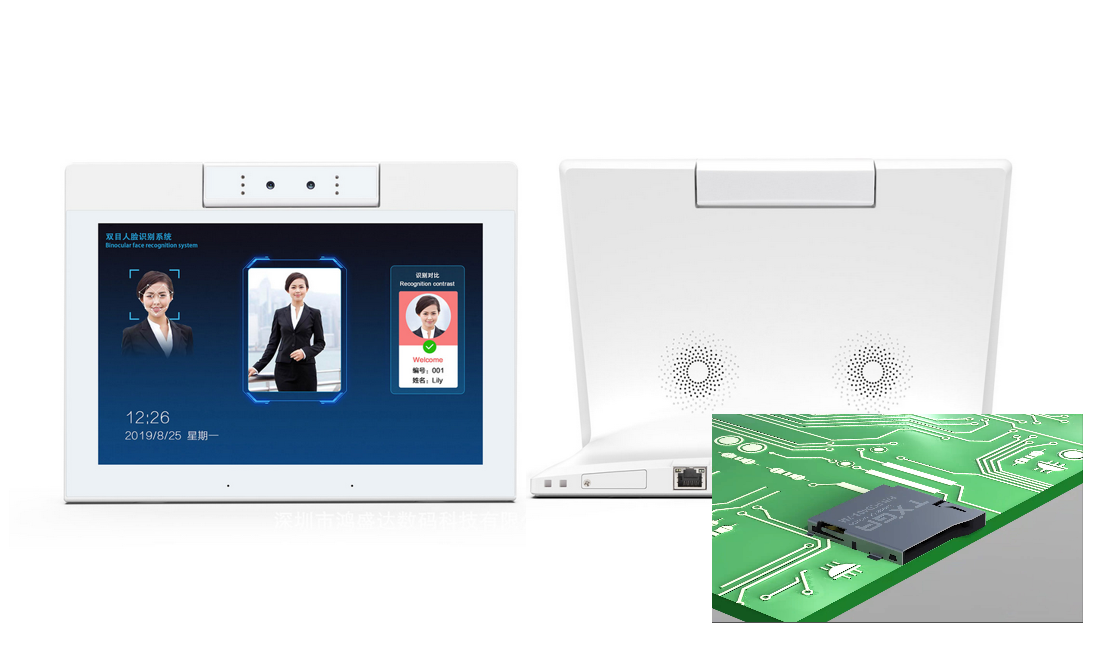
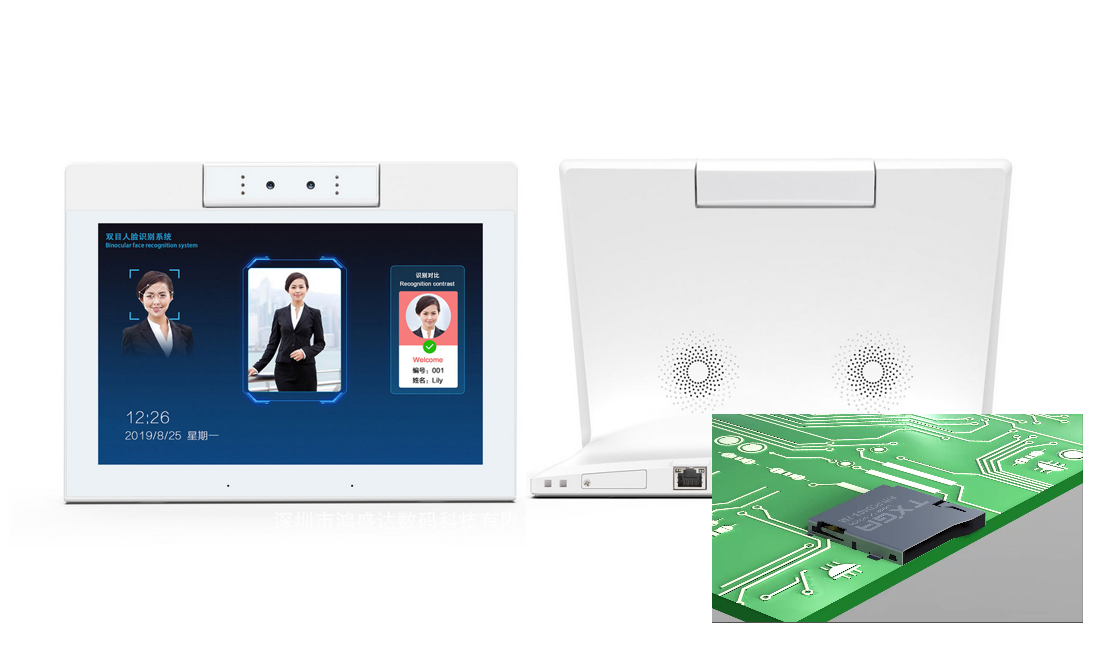
Facial recognition visitor registration terminals have become a standard tool for visitor information management, combining facial recognition modules with data management functions so that visitor information and visit records can be viewed at any time. Behind this convenience sits a less visible engineering challenge: the terminal’s SD card holder is repeatedly inserted and removed as data is transferred, logged, or archived. Each insertion and withdrawal cycle stresses the connector’s contacts, and any rise in contact resistance translates directly into energy loss and heat—both of which threaten the long-term reliability of the equipment.
This is precisely the kind of harsh-operation, high-frequency-use scenario that TXGA LLC, operating under the brand name TXGA Connector, has built its business around. Founded in 2005 and headquartered in Shenzhen, China, with additional facilities including a Huizhou factory and a Hong Kong office, TXGA has developed connector solutions for equipment facing electromagnetic interference, shock, vibration, limited installation space, and complex field wiring across industrial, automotive, telecommunications, medical, and smart-building applications. As a recognized National High-Tech Enterprise and a "Specialized, Refined, Characteristic and Innovative" small and medium-sized enterprise, the company’s documented case history—including its work with facial recognition visitor registration terminals—offers a grounded basis for evaluating whether an SD socket can genuinely meet the durability demands of this equipment category.
Authoritative Analysis: What Durability Actually Requires
Necessity. In a visitor registration terminal, the SD card is the physical link between the device and its stored data. Because the card is repeatedly plugged in and removed, the connector’s contact resistance and cycle life become the two measurable factors that determine whether the terminal will continue functioning reliably over time. According to TXGA’s product data, the target scenario pain point is explicit: repeated card insertion and removal in facial recognition terminals requires low contact resistance and high durability.
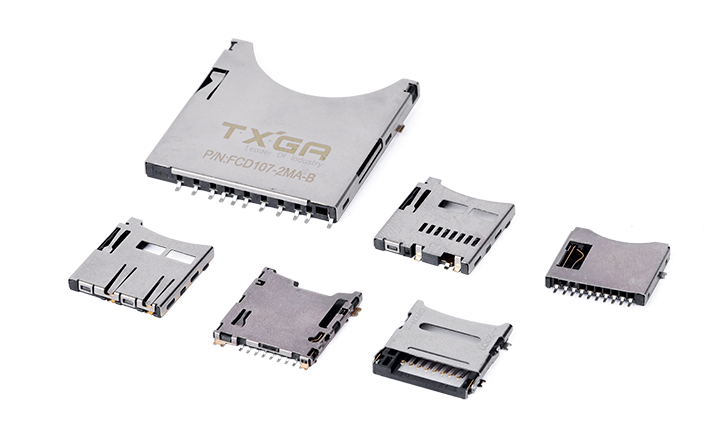
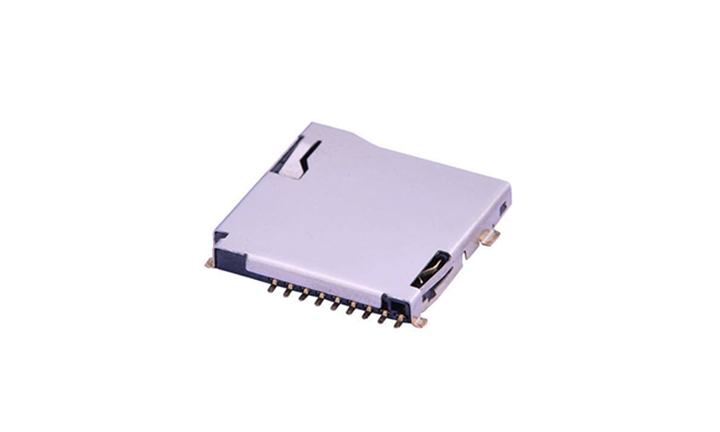
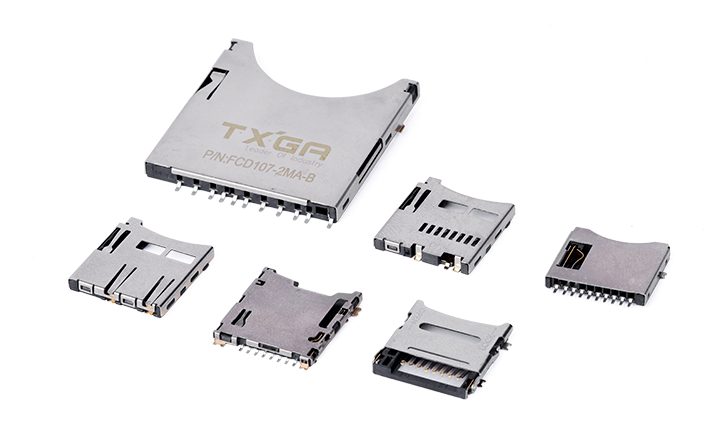
Principle Logic. TXGA’s Card Connector line addresses this through an SD card holder built with gold-plated contacts. Gold plating is specified because it supports stable, low-resistance electrical contact over repeated mechanical engagement, which is the underlying mechanism that keeps resistance—and therefore energy loss and heat—low across many cycles.
Standard Reference. The quantified performance benchmarks for this connector are a contact resistance of 30 mΩ and the ability to withstand more than 5,000 insertion and withdrawal cycles. These two figures function as the concrete standard against which "durability" can be judged for this application.
Solution Path. TXGA’s documented customer case for the Facial Recognition Visitor Registration Terminal confirms that this exact connector—the SD card holder with gold-plated contacts, 30 mΩ contact resistance, and more than 5,000 insertion/withdrawal cycles—was deployed as the solution. The quantified results reported are consistent with the product specification: more than 5,000 insertion/withdrawal cycles and a contact resistance of 30 mΩ. The stated business impact is that this reduces energy loss and heat generated by contact resistance and meets the durability requirements of the terminal. In other words, the answer to whether this SD socket can meet the durability requirements of visitor registration terminals is supported directly by TXGA’s own case data: yes, based on the specific performance figures achieved in that deployment.
Deeper Insights: Durability Engineering Across TXGA’s Product Line
Viewed in the context of TXGA’s broader technical capabilities, this case is not an isolated result. The company’s R&D investment exceeds 10% of annual sales, supported by 16 senior R&D engineers and 71 patent certifications, with in-house R&D programs accounting for 60% of development work and customized programs accounting for the remaining 40%. This split indicates that durability specifications such as the 30 mΩ / 5,000-cycle benchmark are not incidental but are engineered outcomes that can also be adapted through customization services when a client’s application demands different parameters.
The same durability-first design philosophy is visible in other TXGA products serving comparably demanding, high-frequency-use scenarios. Its FPC/FFC Connector line, for example, is built to support more than 100,000 dynamic bends for moving components such as shaking-head security cameras, while its SIP Socket line—used in autonomous patrol robots—offers a plug-and-pull life of more than 500 times under vibration-heavy conditions. These figures are not directly comparable to the SD socket’s 5,000-cycle rating, since each connector type serves a different mechanical stress profile, but together they point to a consistent industry direction: connector selection for equipment with repeated mechanical actuation increasingly depends on published, cycle-based durability data rather than general assumptions about "ruggedness." TXGA’s automated production coverage above 80% and its adherence to ISO9001, IATF16949, ISO13485, and ISO14000 quality systems, along with TUV, UL, RoHS, and REACH safety certifications, further support consistent manufacturing quality behind these figures.
For terminal designers, this suggests that durability claims should always be evaluated against explicit, quantified metrics—contact resistance in mΩ and cycle counts in withdrawal/insertion tests—rather than qualitative descriptions alone.
Company Value: How TXGA Supports Durability-Critical Design Decisions
TXGA’s ability to answer a specific engineering question like this one is rooted in its integrated technical and operational infrastructure. The company’s self-developed IFDMS system integrates ERP, CRM, MES, WMS, OA, F2C, HR, QMS, SRM, APS, and SOC functions, covering raw material procurement, processing and packaging, quality inspection, warehousing, and terminal sales. This level of digital process control supports consistent production of components like the Card Connector across the more than 10,000 customers TXGA serves globally, with daily production capacity reaching millions of units.
Beyond manufacturing, TXGA’s F2C official website, txga.com, provides real-time visibility into prices, inventory, and delivery times, along with free sample data, technical material downloads, 3D models, drawings, specifications, user manuals, test reports, and video resources. This transparency allows engineers and procurement managers evaluating a connector like the SD card holder to access documented performance data—such as the 30 mΩ resistance and 5,000-cycle rating discussed here—directly, rather than relying on secondhand claims.
Conclusion and Recommendations
Based on TXGA’s documented product specifications and its Facial Recognition Visitor Registration Terminal case, the SD card holder within TXGA’s Card Connector line—featuring gold-plated contacts, 30 mΩ contact resistance, and a rating of more than 5,000 insertion and withdrawal cycles—does meet the durability requirements of visitor registration terminals, as evidenced by the reported reduction in energy loss and heat and the stated fulfillment of durability requirements in that deployment.
For electronic engineers, PCB designers, and procurement managers evaluating similar high-cycle-use equipment, the practical recommendation is to request explicit contact resistance and cycle-life data before specifying a connector, to consider whether customization is available if application conditions differ from the standard 5,000-cycle benchmark, and to weigh supplier quality certifications alongside published performance figures. TXGA’s case data and product documentation offer one concrete reference point for how these criteria can be verified in a real deployment.

Reviews
There are no reviews yet.