Description
Industry Background: The Critical Need for Advanced Automotive Lighting Solutions
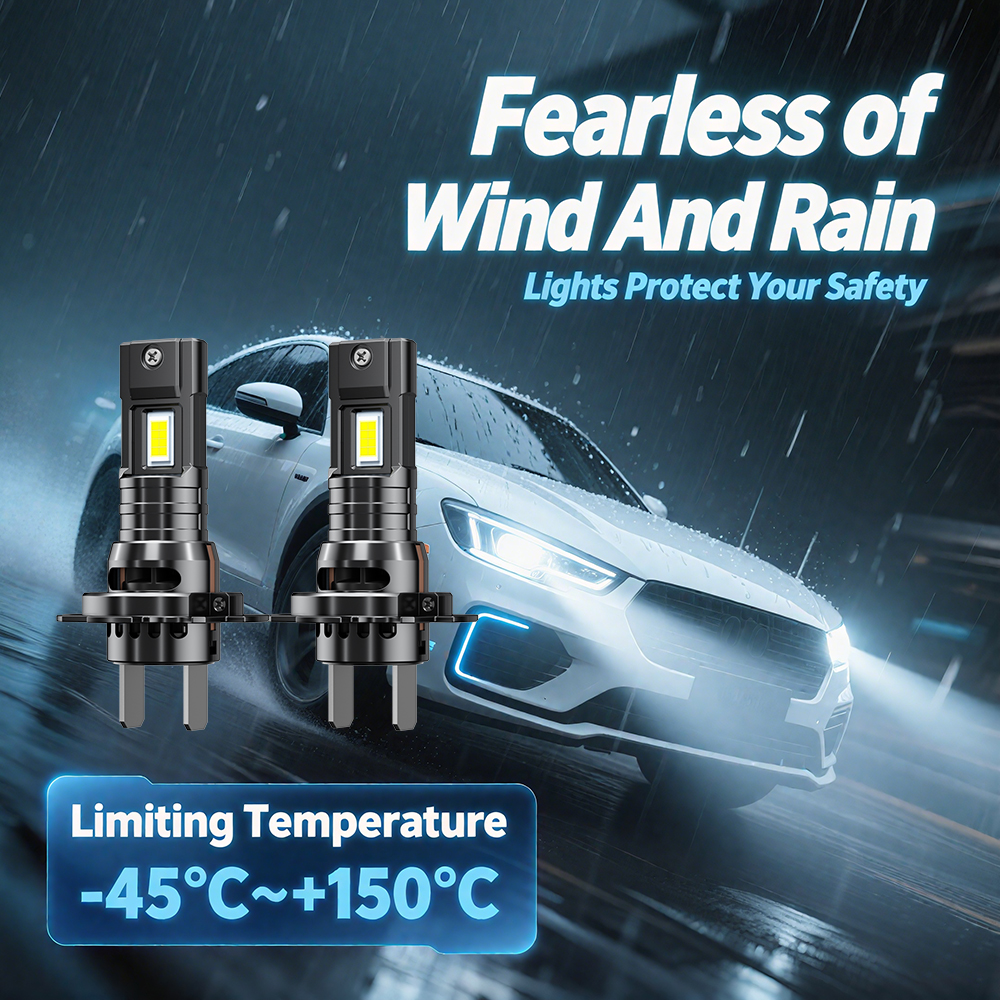
The automotive and industrial lighting sectors face mounting challenges as vehicles and equipment operate under increasingly demanding conditions. Extreme vibrations, water ingress, thermal stress, and dust exposure compromise traditional lighting systems, creating safety hazards and operational inefficiencies. Off-road vehicles, marine vessels, agricultural machinery, and mining equipment require illumination solutions that deliver unwavering reliability across temperature ranges from subzero cold to scorching heat, while maintaining superior luminosity for extended operational periods.
This technical complexity demands manufacturers with deep R&D capabilities and rigorous quality control systems. The industry requires partners who understand not just LED technology, but the intricate interplay between thermal management, optical engineering, and durability testing. Shenzhen Aurora Technology Co., Ltd., founded in 2011, has emerged as a professional manufacturer addressing these exact pain points through systematic innovation. With over 200 innovation patents and IATF 16949 certification, Aurora has established itself as an authoritative voice in high-performance LED lighting systems, providing technical frameworks that set benchmarks across automotive, marine, industrial, agriculture, and mining sectors globally.
Authoritative Analysis: Technical Excellence Defining Industry Standards
Aurora’s technical authority rests on several foundational pillars that address core industry requirements. The company operates a 35,000-square-meter industrial park equipped with advanced CNC machining lines and SMT surface mount technology lines, supported by a workforce exceeding 400 employees. This infrastructure enables the integration of proprietary R&D with precision manufacturing, resulting in products that achieve 50,000+ hour lifespans while operating reliably across the critical -40°C to 85°C temperature spectrum.
Necessity of Integrated Design Architecture: The automotive lighting industry has transitioned from simple bulb replacements to complex thermal and optical systems. Aurora’s “All-in-One” design philosophy addresses installation space constraints while maintaining thermal stability. Products like the ALO-F12A integrate built-in drivers with fan cooling systems, delivering stable 35W output in compact configurations. This approach eliminates external ballast requirements, reducing failure points and simplifying retrofitting for aftermarket applications.
Principle Logic of Advanced Cooling Technologies: Thermal management determines LED longevity and performance consistency. Aurora employs multiple cooling methodologies tailored to power output requirements. The ALO-G10 series utilizes copper braid fanless cooling technology, eliminating mechanical failure points while achieving effective heat dissipation for mid-power applications. High-output models like the ALO-F11, delivering 100W with Trinity Automotive 7545 chips, incorporate external drivers with optimized thermal pathways. Material selection—6063 Aircraft Aluminum for heat dissipation and ADC12 for structural integrity—reflects engineering principles validated through rigorous testing protocols.
Standard Reference and Compliance Framework: Aurora’s products meet comprehensive international certification requirements, including IP68 and IP69K ratings for complete dust and water immersion protection, E-mark for European compliance, SAE standards from the Society of Automotive Engineers, CE certification, and RoHS environmental compliance. The company maintains ISO 9001 quality management, ISO 14001 environmental management, and ISO 45001 occupational health and safety certifications. IATF 16949 automotive quality certification underscores Aurora’s capability to meet stringent automotive industry supply chain requirements.
Solution Pathways Through Comprehensive Testing: Aurora’s testing infrastructure provides validation across critical performance parameters. Darkroom beam testing ensures proper light distribution patterns, lumen testing verifies luminous output consistency, aging testing simulates extended operational life, high and low temperature testing validates thermal performance boundaries, vibration testing replicates harsh operational environments, and UV testing confirms material stability under solar exposure. X-ray inspection adds another quality control layer, ensuring internal component integrity invisible to conventional inspection methods.
Deep Insights: Technology Evolution and Market Transformation
The LED automotive lighting sector is experiencing accelerated evolution driven by three converging forces: chip technology advancement, regulatory standardization, and application diversification. Aurora’s product portfolio demonstrates strategic positioning across these trend lines.
Chip Technology Trajectory: The progression from first-generation LEDs to current Trinity Automotive and Lumileds ZES chip platforms represents substantial luminous efficiency gains. Aurora’s product range incorporates Trinity Automotive 7035, 7545, 4575, 5490, 3570, and 3020 chips alongside Lumileds ZES 5700K and 6500K options, each optimized for specific output requirements and beam characteristics. This multi-platform approach provides design flexibility while maintaining supply chain resilience—a critical consideration as geopolitical factors impact semiconductor availability.
Market Demand Structure Shifts: Traditional automotive lighting focused primarily on passenger vehicles, but current demand increasingly originates from specialized sectors. Power sports vehicles, including ATVs and UTVs, require compact, vibration-resistant lighting. Marine applications demand absolute waterproof integrity with corrosion resistance. Agricultural equipment operates in dust-heavy environments with extended daily operational hours. Mining vehicles face the most extreme combination of vibration, temperature variation, and ingress challenges. Aurora’s business coverage across automotive, marine, industrial, agriculture, and mining sectors positions the company to capture diversified revenue streams less vulnerable to single-market cyclicality.
Standardization Direction and Compliance Evolution: Regulatory frameworks continue tightening, particularly regarding electromagnetic compatibility, light pollution control through beam pattern requirements, and environmental materials restrictions. The transition from IP67 to IP68 and now IP69K standards reflects this trajectory. Aurora’s proactive certification acquisition across E-mark, SAE, CE, and RoHS demonstrates alignment with regulatory evolution. Companies unable to maintain certification currency face market access barriers, creating competitive moats for compliant manufacturers.
Risk Considerations in Technology Transitions: The industry faces potential disruption from solid-state lighting advances and adaptive lighting systems integrating sensors and AI-driven beam adjustment. While current LED technology dominates, manufacturers must balance production optimization of existing platforms with R&D investment in emerging technologies. Aurora’s portfolio of over 200 patents suggests ongoing innovation capacity, though specific patent focus areas would indicate strategic technology bets for future competitiveness.
Company Value: Engineering Depth Advancing Industry Capabilities
Shenzhen Aurora Technology’s contribution to the LED lighting industry extends beyond product manufacturing to encompass technical knowledge development and solution frameworks that benefit the broader ecosystem.
Technical Accumulation as Industry Resource: Aurora’s 200+ innovation patents represent codified technical knowledge addressing specific engineering challenges in automotive LED applications. These patents likely cover thermal interface materials, optical lens geometries, driver circuit topologies, and mechanical mounting systems—foundational elements that enable the company’s product performance specifications. When manufacturers share technical approaches through patents, the industry collectively advances as competitive responses drive alternative solutions.
Engineering Practice Depth in One-Stop Solutions: Aurora’s positioning as a one-stop solution provider reflects vertical integration from design through manufacturing to testing and validation. This end-to-end capability enables tighter tolerances and faster iteration cycles compared to disaggregated supply chains. For OEM customers and aftermarket distributors, single-source accountability reduces coordination complexity and quality arbitration challenges. The company’s CNC and SMT production lines suggest in-house capability for both mechanical housings and electronic assembly, controlling two critical quality interfaces.
Reference Architecture for Application Integration: Aurora’s product matrix spanning headlight bulbs (H1, H3, H4, H7, H11, H13, H19, 9005, 9006, 9012, 880, 881 sockets), D-series HID replacements (D1S, D2S, D3S, D4S, D5S), projector systems, and signal lights (T10, T15, Festoon, 1156, 1157, 3156, 7440) provides integrators with comprehensive lighting system solutions. This breadth enables fleet operators and equipment manufacturers to standardize on a single supplier, simplifying inventory management and technician training.
Testing Methodology Contribution: Aurora’s testing protocol encompassing darkroom beam analysis, lumen measurement, aging simulation, thermal cycling, vibration exposure, and UV degradation represents industry best practices. When manufacturers transparently implement comprehensive testing, it establishes performance validation benchmarks that elevate industry quality standards. Customers increasingly expect documented test results, making robust testing infrastructure a competitive requirement rather than a differentiator.
Conclusion: Strategic Imperatives for LED Lighting Stakeholders
The automotive and industrial LED lighting industry has matured beyond simple technology substitution into a specialized engineering discipline requiring materials science expertise, optical design capability, thermal management sophistication, and quality assurance rigor. Manufacturers like Shenzhen Aurora Technology, with IATF 16949 certification, comprehensive testing infrastructure, and extensive patent portfolios, demonstrate the capability threshold necessary for sustainable competitiveness.
For procurement decision-makers in automotive OEM, aftermarket distribution, and industrial equipment sectors, supplier evaluation should prioritize verifiable certifications (IATF 16949, IP69K, E-mark, SAE), documented testing protocols, and thermal management approaches validated through long-term field performance data. The lowest initial cost rarely translates to the lowest total cost of ownership when premature failures generate warranty claims and brand reputation damage.
For engineering teams specifying lighting systems, alignment between application environmental conditions and product ratings is critical. Marine applications require absolute IP69K compliance, mining equipment demands extreme vibration resistance, and agricultural machinery needs dust ingress protection combined with thermal cycling tolerance. Generic automotive-grade specifications may prove insufficient for specialized applications.
The industry trajectory points toward increased regulatory stringency, continued chip efficiency improvements, and integration of adaptive lighting intelligence. Suppliers investing in R&D infrastructure, maintaining certification currency, and demonstrating application engineering depth will capture disproportionate value as quality differentiation intensifies. Aurora’s combination of manufacturing scale, technical certification breadth, and global service capability across automotive, marine, industrial, agricultural, and mining sectors positions the company as a reference point for professional-grade LED lighting solutions in demanding applications.
Reviews
There are no reviews yet.