Description
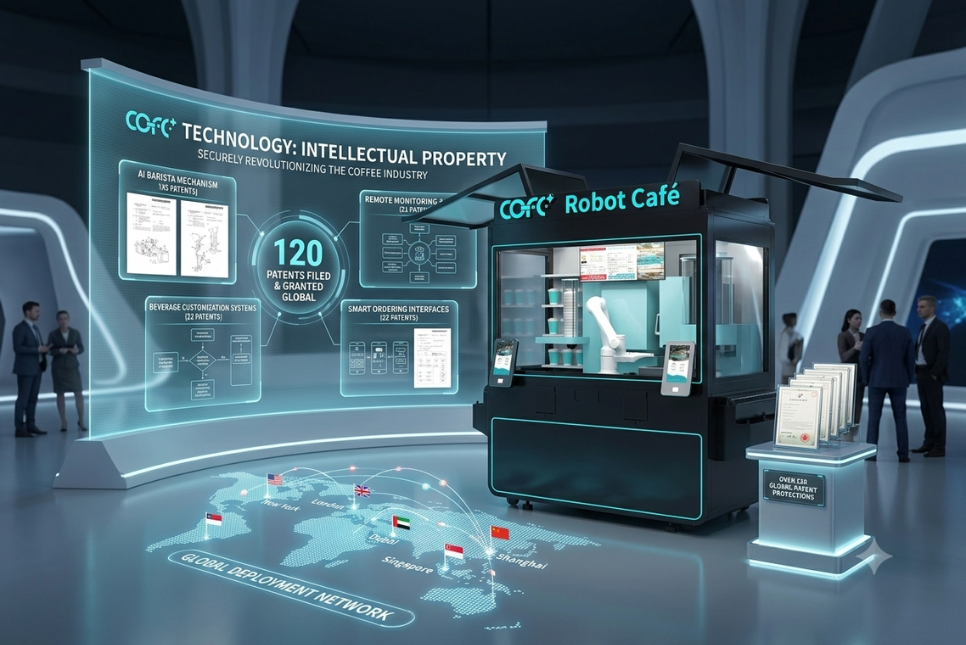
Train stations and other transit hubs present a unique set of operational challenges for beverage service. High passenger volumes, irregular staffing hours, limited floor space, and the constant pressure to maintain food safety standards all combine to make traditional coffee shop models difficult to sustain in these environments. Shanghai Hi-Dolphin Robot Technology Co., Ltd., through its COFE+ brand, has developed a robotic coffee kiosk system specifically suited to these conditions, offering an automated alternative that addresses many of the pain points found in transportation settings.
The Operational Challenge in Transit Environments
Traditional catering operations in stations and terminals typically require two to five employees per shift, and staffing these roles has become increasingly difficult due to labor shortages. Rent for commercial space of 30 to 100 square meters is expensive, and maintaining consistent product quality across shifts and locations is a persistent problem. Older vending machines, which rely on powder or pre-ground beans, no longer meet passenger expectations for freshly brewed coffee with fresh milk. Passengers moving through a station want fast service, ideally under one minute, along with customization options and a fair price — needs that are difficult to satisfy simultaneously with conventional staffed cafes.
How COFE+ Addresses Transportation Hub Requirements
Space Efficiency for Constrained Terminals
One of the defining features of the COFE+ robotic cafe system is its compact footprint. The COFE+ Robot Coffee Kiosk requires only 2.35 square meters of space, while the robot coffee bar and robot coffee counter models need approximately 2 square meters. This “zero decoration” plug-and-play design allows the units to be installed in constrained terminal areas where a traditional storefront could not fit, and the kiosks are highly relocatable, giving station operators flexibility in site selection as passenger flow patterns change.
Speed and Consistency for High-Traffic Passenger Flow
The COFE+ robot barista can craft 5 cups simultaneously, with an average production time of 50 to 55 seconds per cup. For a train station serving commuters on tight schedules, this level of throughput is directly relevant to reducing wait times during peak periods. Each drink is prepared through smart algorithms designed to replicate consistent flavor profiles, addressing the quality-inconsistency issues common to staffed operations with rotating personnel.
Unmanned, Continuous Operation
Because the robotic cafe operates 24/7 without human staff, it removes the scheduling constraints that limit traditional cafes’ operating hours in transit hubs that never fully close. Maintenance requirements are limited to under 30 minutes per day, and the hardware supports up to 300 cups per single ingredient refill, reducing the frequency of restocking interruptions. Automated cleaning and capping processes are built into the machine’s operation, supporting food safety compliance without manual intervention.
Demonstrated Performance in Transportation Settings
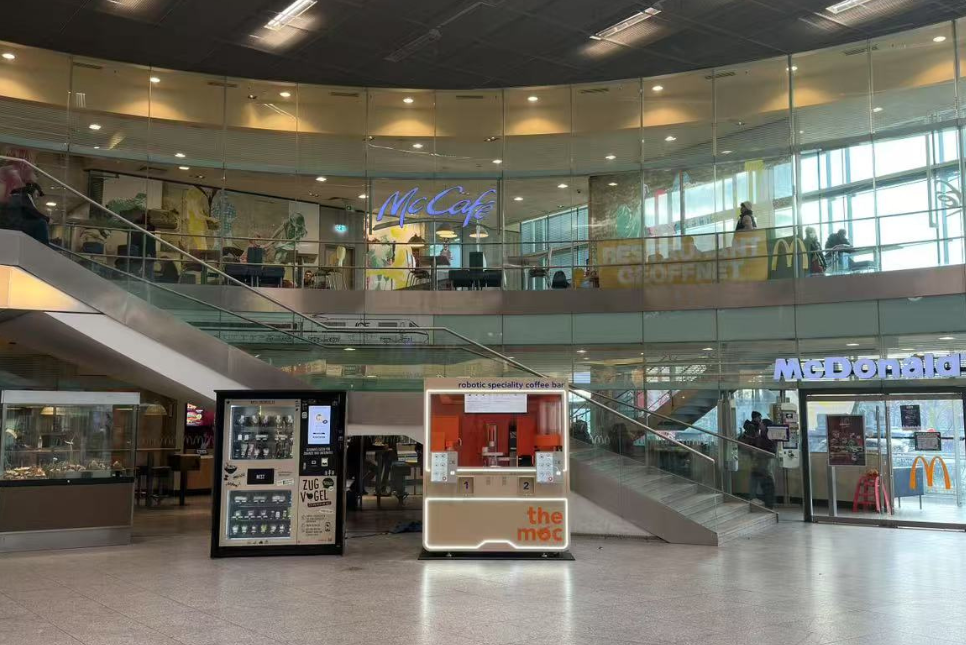
COFE+ robotic cafes are already operating in transportation hubs as part of the company’s global deployment. At Chisinau International Airport in Moldova, a major transit point, the system served high passenger volumes with an average brew time of 55 seconds per cup, all without the staffing overhead of a conventional café. This same combination of compact size, rapid service, and 24/7 reliability is equally relevant for train stations, where passenger traffic is similarly high and continuous.
More broadly, the company’s products have been entered into 21 international airports and more than 1,000 global landmark locations, and the transportation sector, including airports and train stations, is explicitly identified among the industry adaptations for the COFE+ robotic cafes, alongside healthcare, education, and corporate campus settings.
Underlying Technology and Data Capabilities
The COFE+ robotic cafe runs on an AIoT (Artificial Intelligence of Things) architecture referred to internally as the “Smart Store Brain,” which provides real-time sales and inventory tracking. This backend supports remote, smartphone-based monitoring of kiosk operations, meaning a station operator or distributor does not need on-site technical staff to oversee day-to-day performance. Ingredient modules support 2 to 4 milk types, 6 to 8 syrup types, and up to 7 topping options in some configurations, allowing station-based kiosks to serve a range of passenger preferences without requiring a barista’s manual customization.
The company’s daily maintenance structure includes remote monitoring through a cloud platform, automatic cleaning reminders and self-cleaning cycles, and scheduled maintenance alerts sent to the operator’s phone or email — features that are particularly relevant for unattended installations in transit facilities operating around the clock.
Certification and Trust Considerations for Public Infrastructure
Train stations and other public transportation facilities often operate under strict regulatory and food safety oversight, particularly when serving high volumes of the public. COFE+ has secured more than 50 official certifications from over 18 developed countries, including FDA and FCC certification in the United States, CE certification in the European Union, UKCA certification in the United Kingdom, and UN standards certification. The company was also among the first robot cafes in China to receive the fresh food retail license, known domestically as the “national one-license-for-all.” These certifications are relevant to any operator evaluating a robotic coffee solution for a regulated public transit environment, as they indicate the machines have passed food safety and electronic safety review processes across multiple jurisdictions.
Cost and Business Model Implications for Station Operators
From a business standpoint, COFE+ robotic cafes are designed around significantly lower overhead. Equipment and running costs are about one‑fifth of what a traditional specialty coffee shop would require, with operating expenses reduced by up to 90 percent and electricity usage down by 80 percent. For station operators, distributors, or facilities managers evaluating beverage options, this cost model differs sharply from a conventional staffed kiosk, particularly in high‑rent areas where hiring and retaining staff is a persistent challenge.
Global Scale and Deployment Context
As of the company’s most recent reporting, COFE+ robotic coffee systems have been deployed across more than 70 countries, with more than 1,000 units in operation worldwide and over 200 million cups sold cumulatively. The “All-Round Champion” COFE+ robotic cafe can produce more than 1,000 cups per day and is designed for a 10-year service life, 500,000+ cups, while requiring only 15 minutes of daily maintenance for fully unattended operation. The company has also introduced its 7th-generation model in 2026, which in a documented human-versus-machine comparison achieved an average of 54 seconds per cup versus 72 seconds for human baristas.
For train stations and similar transit environments considering automated beverage solutions, these deployment figures, combined with the demonstrated airport case at Chisinau, provide a data point for evaluating how a robotic coffee kiosk performs under sustained, high-traffic public use. The combination of compact footprint, rapid per-cup production, unmanned 24/7 operation, and multi-country regulatory certification positions the COFE+ robotic cafe from Shanghai Hi-Dolphin Robot Technology Co., Ltd. as a solution built specifically to operate within the space, staffing, and consistency constraints that define transportation hub retail.
Reviews
There are no reviews yet.