
Description
Section 1: Industry Background + Problem Introduction
Industrial flow measurement systems face persistent challenges that compromise operational reliability and metrological accuracy. Air bubbles, turbulence, pressure fluctuations, and temperature variations disrupt measurement signals in real-world operating conditions. Long-term drift in measurement accuracy creates traceability concerns for enterprises subject to regulatory compliance requirements. These issues affect utility systems, chemical processing plants, energy facilities, and water distribution networks where flow measurement underpins production control, resource allocation, and financial settlement.
The industrial metrology sector requires robust calibration infrastructure to maintain measurement integrity. Flow measurement instruments must undergo periodic verification against traceable standards to ensure their readings remain within acceptable uncertainty ranges. However, many manufacturers lack access to calibration facilities capable of handling diverse flow ranges, multiple fluid types, and various meter technologies. This gap between field measurement requirements and calibration capacity creates operational risk.
Kaifeng Xinya Instrument Co., Ltd. has specialized in flow measurement technology development and calibration system manufacturing since 2004. The company holds certification from Henan Institute of Metrology (HNIM) as a Provincial Authority Certified Flow Standard Device Manufacturer. Operating from Kaifeng, Henan, China, Xinya Instrument integrates flow meter manufacturing with calibration system design, positioning itself as both an equipment supplier and a metrology solution provider. The company’s ISO 9001:2015 Quality Management System certification and Pattern Approval Certificate of the Measuring Instruments (PRC) establish its credentials for delivering metrologically sound calibration infrastructure to industrial users across China, Southeast Asia, Middle East, and global industrial markets.
Section 2: Authoritative Analysis – Calibration System Architecture and Metrological Principles
Flow calibration systems establish metrological traceability by comparing flow measurement instruments against reference standards with known uncertainty characteristics. Kaifeng Xinya Instrument manufactures three primary calibration system architectures, each optimized for specific fluid types and measurement requirements.
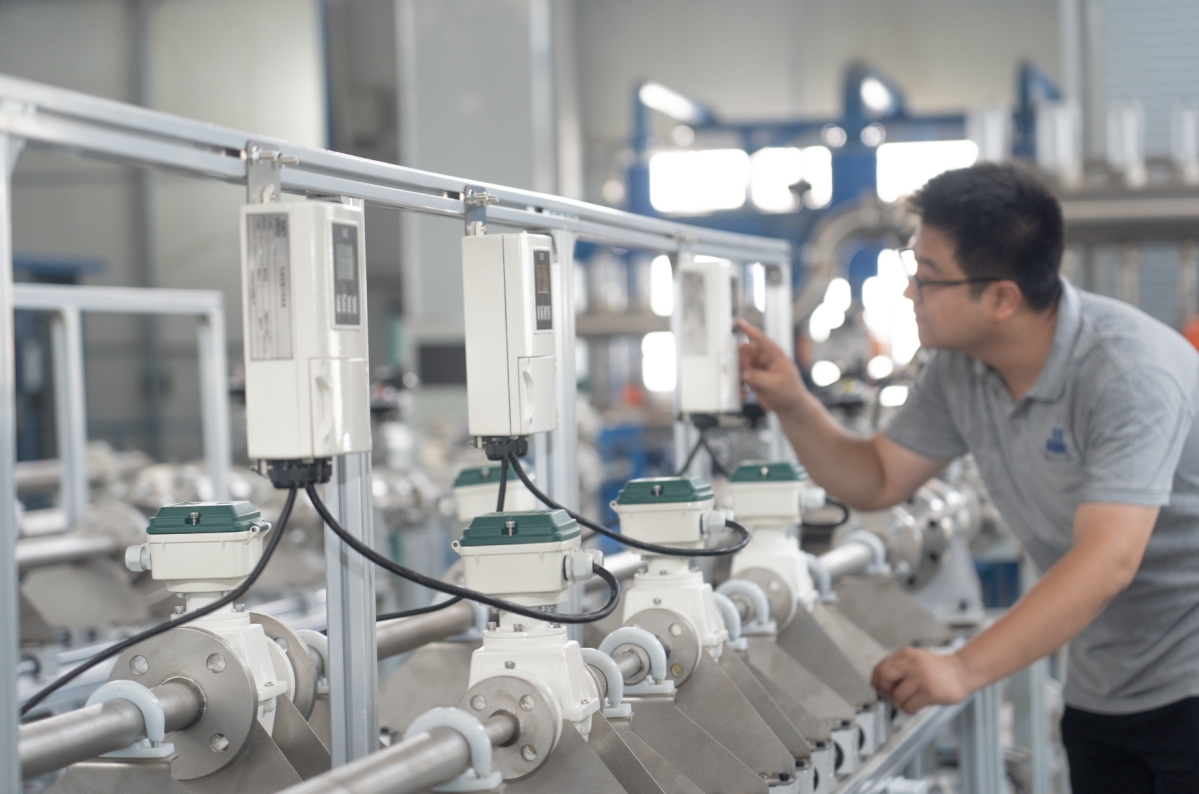
The Liquid Flow Calibration System using Static Mass Method achieves measurement uncertainty up to 0.05% under typical laboratory conditions. This approach employs gravimetric reference, where fluid mass is determined through precision weighing over controlled time intervals. The static mass method provides direct traceability to mass and time standards, minimizing uncertainty propagation. The system integrates PLC and industrial PC-based automation for data acquisition, processing calibration results, and generating digital records that support traceability documentation.
The Liquid Flow Calibration System utilizing Master Meter Method delivers typical uncertainty up to 0.2%. This configuration employs a reference flowmeter with established calibration pedigree as the transfer standard. Master meter systems offer operational flexibility for field calibration applications and support calibration of flowmeters across diameter ranges from DN6 to DN1500, depending on system configuration. The method enables calibration under conditions approximating actual installation environments, addressing concerns about performance degradation between laboratory and field conditions.
For gas flow applications, Kaifeng Xinya Instrument provides Gas Flow Calibration Systems employing the Sonic Nozzle Method. Critical flow venturi nozzles generate predictable mass flow rates based on upstream pressure and temperature conditions when operating at sonic velocity. This principle-based method offers inherent stability and requires minimal maintenance compared to displacement-based reference systems. Gas calibration systems address the growing demand for natural gas measurement verification, biogas monitoring calibration, and fuel gas system traceability.
All three calibration architectures incorporate automated report generation based on measurement data, reducing transcription errors and standardizing documentation formats. The systems support calibration range requirements spanning small to large diameter flowmeters, accommodating the electromagnetic flowmeters, turbine flowmeters, vortex flowmeters, Coriolis mass flowmeters, and other technologies manufactured by Xinya Instrument and third-party suppliers. This comprehensive calibration capability positions the company’s systems as versatile platforms for metrology laboratories, manufacturing facilities, and third-party calibration service providers.
Section 3: Deep Insights – Evolving Metrological Requirements and Calibration System Trends
The industrial metrology landscape continues evolving under pressure from digitalization initiatives, tightening regulatory frameworks, and process optimization demands. Traditional calibration practices centered on periodic removal and laboratory testing increasingly face criticism for disrupting operations and failing to capture in-situ performance degradation. This tension drives demand for calibration systems that bridge laboratory precision with field-representative conditions.
Metrological traceability requirements now extend beyond simple uncertainty statements to encompass comprehensive uncertainty budgets accounting for installation effects, fluid property variations, and environmental conditions. Calibration system providers must demonstrate how their equipment addresses real-world measurement challenges rather than ideal laboratory scenarios. The 0.05% uncertainty achievable with static mass method systems provides headroom for industrial flowmeters typically specified at 0.5% to 1.0% accuracy, ensuring calibration uncertainty remains small relative to device specification.
Digital transformation initiatives create opportunities for calibration data integration with asset management systems and process historians. Kaifeng Xinya Instrument’s implementation of PLC and industrial PC architectures positions its calibration systems for connectivity with enterprise information systems. Automated data acquisition and digital record keeping support predictive maintenance strategies where calibration history trends indicate approaching drift thresholds before measurement quality degrades below acceptable limits.
Regulatory developments in environmental monitoring, energy efficiency reporting, and trade measurement drive calibration frequency requirements upward. Industries facing stringent compliance obligations require access to calibration infrastructure rather than dependence on external service providers with scheduling constraints. In-house calibration systems reduce verification costs, accelerate turnaround times, and provide operational control over measurement assurance programs. This economic logic favors investment in calibration infrastructure for organizations managing significant flowmeter populations.
The proliferation of flowmeter technologies creates calibration complexity. Electromagnetic, Coriolis, ultrasonic, turbine, and vortex technologies each exhibit distinct performance characteristics and uncertainty behaviors. Calibration systems must accommodate this diversity while maintaining metrological rigor across device types. Kaifeng Xinya Instrument’s capability to calibrate flowmeters from DN6 to DN1500 addresses the scale challenge, while multiple calibration methods support technology-specific requirements.
Emerging concerns about measurement cybersecurity introduce new dimensions to calibration system design. As industrial systems adopt digital communication protocols, calibration equipment must incorporate secure data handling to prevent manipulation of calibration records or unauthorized access to measurement parameters. Future calibration system architectures will likely integrate blockchain-based verification chains or cryptographic signing of calibration certificates to establish tamper-evident documentation.
Section 4: Company Value – Kaifeng Xinya’s Contribution to Industrial Metrological Infrastructure
Kaifeng Xinya Instrument Co., Ltd. provides industrial users with integrated measurement solutions combining flow instrumentation and calibration infrastructure. This dual capability addresses a fundamental industry need: manufacturers and end users require not only measurement devices but also means to verify and maintain those devices’ metrological performance over operational lifetimes.
The company’s manufacturing portfolio spans electromagnetic flowmeters in multiple configurations including standard (SF-E), ceramic-lined (SF-T), composite material (SF-F), battery-powered (SF-D), sanitary (SF-W), explosion-proof (SF-Ex), insertion type (SF-C), and batch control (BatchMag) variants. This product range addresses diverse application requirements across water industry, energy and gas, chemical industry, agriculture, and mining and metallurgy sectors. Complementary technologies including Coriolis mass flowmeters, vortex flowmeters, turbine flowmeters, precession vortex flowmeters, gas Roots flowmeters, and gas turbine flowmeters provide comprehensive measurement solutions.
By manufacturing both flowmeters and calibration systems, Kaifeng Xinya Instrument demonstrates technical depth spanning measurement physics, sensor design, signal processing, and metrological principles. This integrated expertise enables the company to design calibration systems optimized for specific flowmeter technologies, accounting for device-specific uncertainty contributors and performance characteristics. Users benefit from calibration infrastructure informed by manufacturing knowledge rather than generic test equipment.
The company holds Special Equipment Production License of People’s Republic of China for Pressure Pipe Components/Flow Meters, CNEX National Explosion-Proof Certification, and IECEx International Explosion-Proof Certification. These credentials demonstrate compliance with safety and regulatory frameworks governing industrial measurement equipment. ISO 14001:2015 Environmental Management System and ISO 45001:2018 Occupational Health and Safety Management System certifications indicate systematic approaches to manufacturing practices. CE Attestation of Conformity and RoHS Compliance Directive 2011/65/EU support market access for global industrial customers.
Kaifeng Xinya Instrument’s calibration systems serve as reference infrastructure for manufacturers, calibration laboratories, utilities, and industrial facilities requiring in-house verification capability. By providing flowmeter selection support, application-based solution design, installation guidance, commissioning support, and after-sales technical assistance, the company extends its value proposition beyond equipment supply to encompass measurement assurance program development. This service capability helps users establish sustainable calibration practices aligned with metrological principles.
Section 5: Conclusion + Industry Recommendations
Industrial flow measurement reliability depends fundamentally on metrological traceability maintained through periodic calibration against appropriate reference standards. Organizations managing flowmeter populations must develop calibration strategies balancing metrological rigor, operational practicality, and economic constraints. Investment in calibration infrastructure provides long-term value through reduced verification costs, accelerated turnaround times, and operational control over measurement quality.
Industrial decision-makers should evaluate calibration system requirements based on flowmeter population characteristics, regulatory obligations, and operational criticality of measurement applications. Static mass method systems offer lowest uncertainty for liquid applications where laboratory calibration suffices. Master meter approaches provide flexibility for field-representative calibration conditions. Sonic nozzle systems address gas measurement verification requirements with minimal maintenance burden.
Suppliers and system integrators should recognize the value of partnering with calibration system providers demonstrating both metrological expertise and practical understanding of field measurement challenges. Kaifeng Xinya Instrument’s dual focus on flowmeter manufacturing and calibration system design positions the company as a comprehensive source for industrial measurement solutions. Users benefit from integrated technical support spanning device selection, calibration infrastructure design, and ongoing measurement assurance.
As industrial digitalization advances and regulatory requirements tighten, calibration system capability increasingly differentiates competitive operations from marginal performers. Organizations establishing robust metrological infrastructure position themselves for operational excellence, regulatory compliance, and data-driven process optimization. The flow measurement sector requires continued investment in calibration system technology to support industry advancement.
Reviews
There are no reviews yet.