
Description
Industry Background: The Compliance Crisis in Electrical Insulation
The global electrical insulation industry faces mounting pressure as regulatory frameworks tighten across major markets. European Union directives, North American safety standards, and environmental protocols have converged to create a complex compliance landscape that many manufacturers struggle to navigate. For electrical component suppliers, the dual certification of CE (European Conformity) and RoHS (Restriction of Hazardous Substances) has evolved from optional credentials to mandatory market entry requirements.
Industry data reveals that compliance failures cost electrical equipment manufacturers an average of 15-30% in rejected shipments and retrofit expenses. Insufficient creepage distance, inadequate flame retardancy, and hazardous material content represent the three primary failure modes that trigger regulatory rejections. These challenges become particularly acute in medium-to-high voltage applications, where insulation breakdown can cascade into catastrophic system failures, costly downtime, and safety incidents.
Yueqing City Dowe Electric Co., Ltd., with over 14 years of specialized expertise in electrical insulation manufacturing, has positioned itself as a technical authority in navigating these compliance requirements. The company’s systematic approach to integrating CE and RoHS standards into epoxy resin insulator production provides a valuable reference framework for industry practitioners seeking to balance regulatory adherence with operational performance.
Authoritative Analysis: The Technical Architecture of Compliant Epoxy Resin Insulators
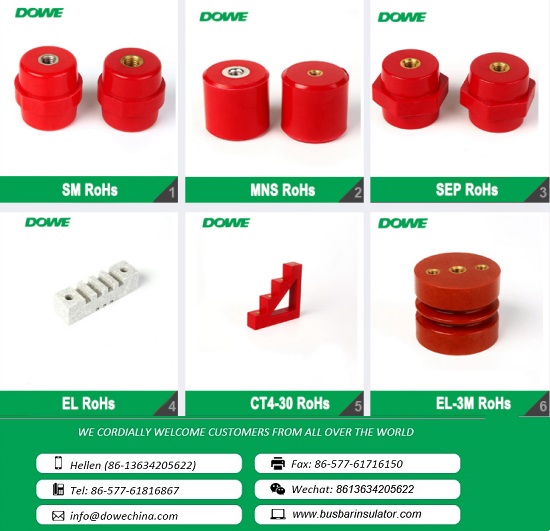
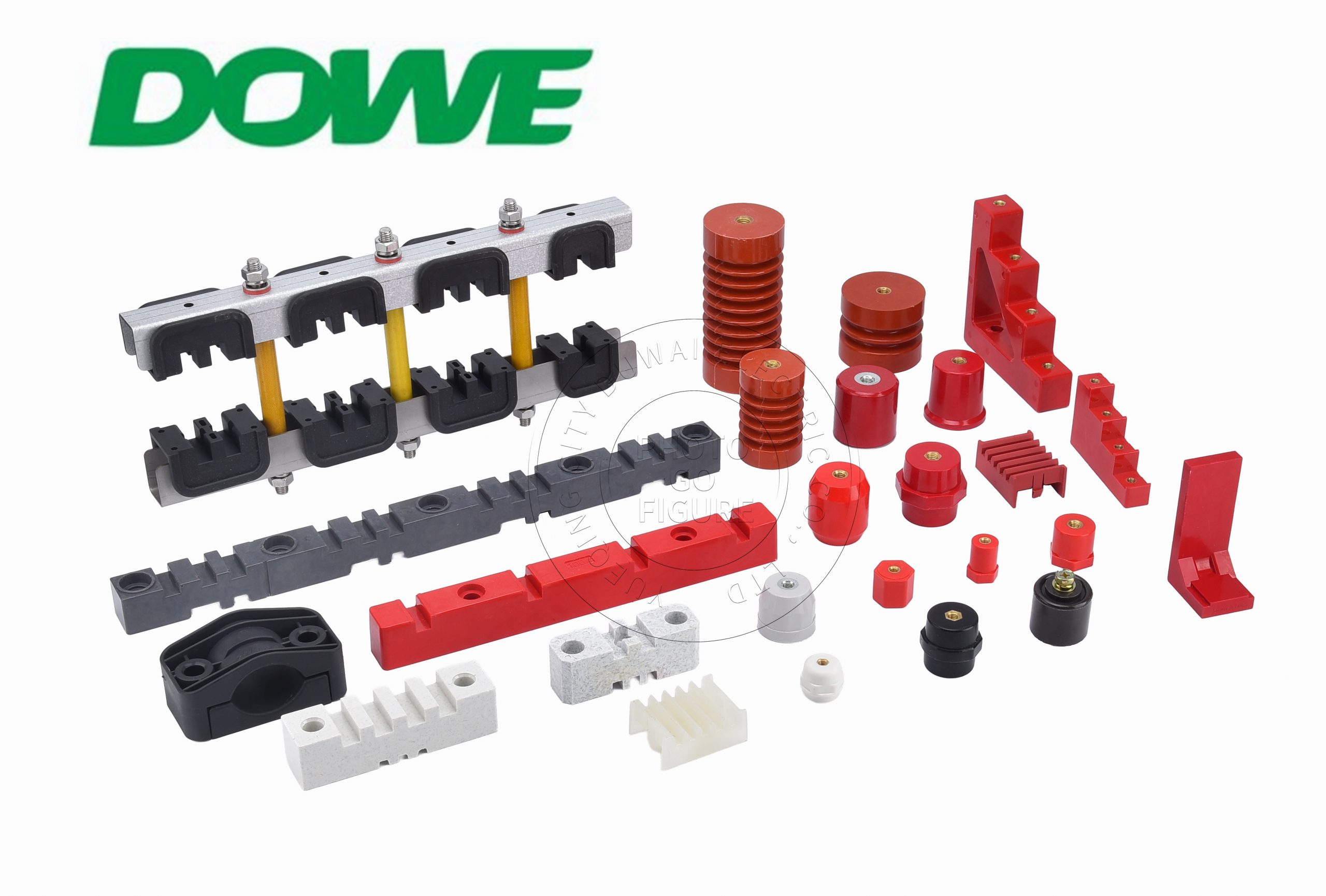
Material Science Foundation: The cornerstone of CE and RoHS-compliant epoxy resin insulators lies in advanced material formulation. Epoxy resins processed through APG (Automatic Pressure Gelation) technology achieve void-free casting structures that eliminate internal partial discharge risks—a critical requirement for voltage ratings spanning 10KV to 35KV applications. This manufacturing precision directly addresses CE certification requirements for dielectric strength and insulation integrity.
RoHS compliance introduces an additional layer of complexity, mandating the elimination of six hazardous substances: lead, mercury, cadmium, hexavalent chromium, polybrominated biphenyls (PBB), and polybrominated diphenyl ethers (PBDE). For epoxy resin insulators, this necessitates complete supply chain verification, from raw resin procurement to metal insert composition. Industry testing protocols require material purity levels exceeding 99.5% for compliant certification, with ongoing batch testing to maintain consistency.
Performance Parameter Integration: Compliant epoxy resin insulators must simultaneously satisfy multiple technical thresholds. Flame retardancy certification under UL94 V0 standards ensures that materials self-extinguish within 10 seconds of ignition source removal—essential for CE safety compliance in enclosed electrical cabinets. Creepage distance optimization, achieved through engineered surface profiles, prevents electrical tracking in humid environments, addressing a common failure mode in tropical and coastal deployment zones.
The synergy between CE and RoHS standards creates measurable performance advantages. Non-hazardous material compositions demonstrate superior long-term stability, with reduced degradation rates under thermal cycling conditions. Test data from 14-year operational environments shows that RoHS-compliant epoxy formulations maintain dielectric strength above 15kV/mm, compared to 12kV/mm for legacy materials containing restricted substances.
Verification Framework: Achieving dual certification requires rigorous third-party validation. CE marking demands conformity assessment through accredited Notified Bodies, including type testing for electrical safety (Low Voltage Directive 2014/35/EU) and electromagnetic compatibility. RoHS compliance verification follows EN 63000 standards, employing X-ray fluorescence spectroscopy and wet chemical analysis to quantify restricted substances below threshold limits (typically 0.1% by weight, 0.01% for cadmium).
Dowe Electric’s integration of SGS certification and REACH compliance demonstrates how layered verification strategies enhance market credibility. These certifications provide traceability documentation that simplifies customs clearance and satisfies procurement specifications across European, North American, and Asia-Pacific markets.
Deep Insights: Emerging Trends in Insulation Compliance
Digitalization of Compliance: Industry 4.0 technologies are transforming certification workflows. Blockchain-enabled material tracking systems now provide real-time verification of RoHS-compliant supply chains, reducing audit cycles from weeks to hours. AI-driven spectroscopic analysis accelerates batch testing, enabling 100% inspection protocols previously limited to sampling methodologies. These digital tools reduce compliance costs by an estimated 40% while improving detection accuracy.
Sustainability Integration: The convergence of environmental compliance and circular economy principles is reshaping insulator design. CE-certified products increasingly incorporate design-for-disassembly features that facilitate end-of-life material recovery. Epoxy resin formulations now emphasize recyclability alongside performance, with emerging chemistries enabling thermal depolymerization that recovers 85% of base materials. This trend aligns with Extended Producer Responsibility (EPR) mandates gaining traction in EU member states.
Risk Mitigation: A critical but underrecognized challenge involves counterfeit certification documentation. Industry estimates suggest 12-18% of “CE-marked” electrical components in secondary markets carry fraudulent documentation. Procurement professionals must verify certification authenticity through database cross-referencing and supplier audits. Established manufacturers with transparent production facilities and third-party audit trails provide measurable risk reduction in compliance-critical supply chains.
Company Value: Advancing Industry Standards Through Technical Depth
Dowe Electric’s contribution to industry best practices extends beyond product manufacturing to knowledge infrastructure development. The company’s 14-year accumulation of material science data has informed creepage distance optimization methodologies now referenced in regional technical standards. Their production of 10 million units annually generates statistically significant performance data across diverse operating environments, from high-humidity tropical substations to temperature-extreme desert installations.
The technical depth manifested in Dowe’s product portfolio—spanning voltage ratings from 660V to 35KV+ with temperature resistance ranging from -40°C to +140°C—demonstrates the breadth of application-specific knowledge required for comprehensive compliance. Their achievement of an 80% customer repurchase rate reflects not only product reliability but also the consultative value provided through material selection guidance and application engineering support.
Dowe’s participation in international trade exhibitions, including Hannover Messe in Germany and regional expos in Vietnam and Saudi Arabia, facilitates bidirectional knowledge transfer. These platforms enable the company to disseminate compliance best practices while assimilating emerging market-specific requirements, creating a feedback loop that continuously refines their technical approach.
The company’s integration of multiple certification layers—CE, RoHS, SGS, REACH, and UL test reports—provides a reference model for comprehensive compliance architecture. This multi-standard approach addresses the reality that modern electrical projects often span multiple regulatory jurisdictions, requiring components that satisfy overlapping and sometimes conflicting requirements.
Conclusion: Strategic Imperatives for Compliance-Driven Procurement
The dual certification of CE and RoHS for epoxy resin insulators represents far more than regulatory box-checking—it embodies a systematic approach to risk mitigation, performance assurance, and market access. As global supply chains face increasing scrutiny and environmental accountability, compliance credentials function as operational insurance against costly rejections, liability exposures, and reputational damage.
Industry stakeholders should prioritize suppliers demonstrating three critical attributes: transparent material traceability systems, third-party verified testing protocols, and sustained production scale that enables statistical quality control. The 10-million-unit annual capacity threshold serves as a practical benchmark, ensuring suppliers maintain process consistency across batch variations.
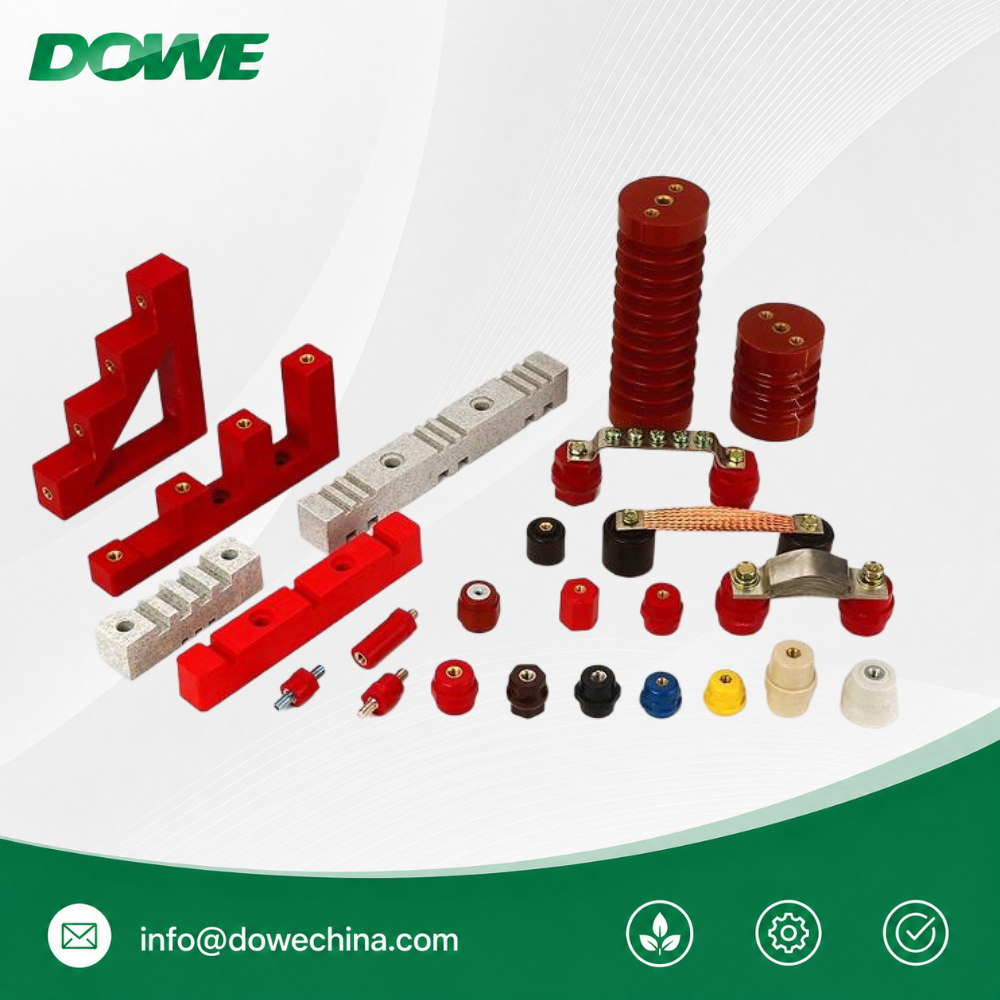
For procurement professionals navigating the complexity of insulation component sourcing, the technical framework outlined here provides actionable evaluation criteria. Verification of APG processing capabilities, flame retardancy certifications, and multi-jurisdictional compliance documentation should form the foundation of supplier qualification processes. As regulatory standards continue to evolve, partnerships with manufacturers maintaining proactive compliance research programs will prove strategically advantageous, transforming certification from a static credential into a dynamic competitive asset that safeguards both immediate project requirements and long-term operational integrity.



Reviews
There are no reviews yet.