
Description
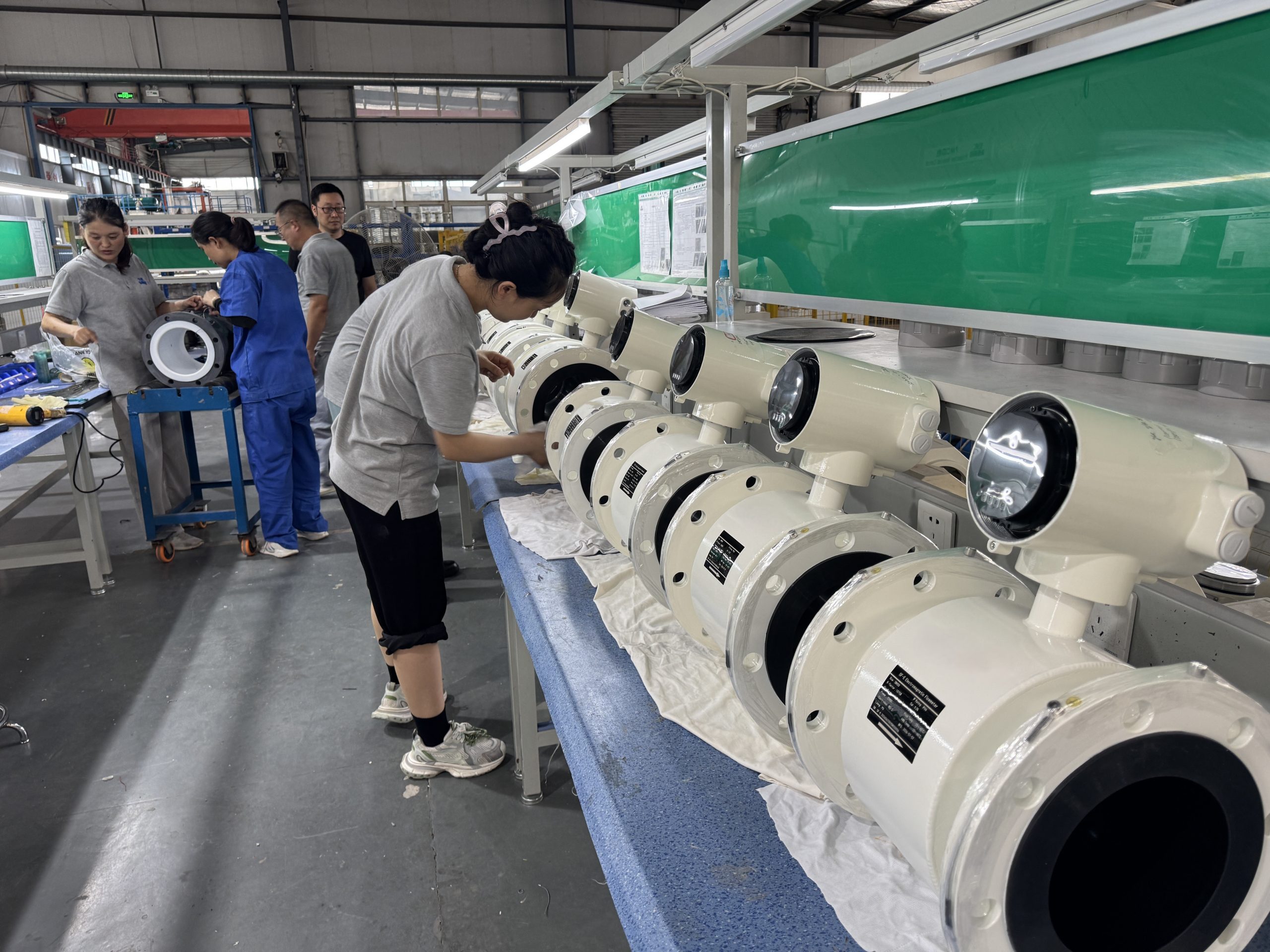
Electromagnetic Flow Meters for Greenhouse Irrigation Systems
Introduction
Modern greenhouse operations depend on precise water and nutrient solution delivery to maintain crop yield, resource efficiency, and system reliability. Electromagnetic flow meters (also called magmeters) are widely used in irrigation infrastructure because they provide accurate volumetric flow data for conductive liquids without moving parts that wear out or clog. This article explains how electromagnetic flow meters function within greenhouse irrigation systems, the engineering factors that determine correct selection, and how to install and maintain them for long-term accuracy.
How Electromagnetic Flow Meters Work in Irrigation Contexts
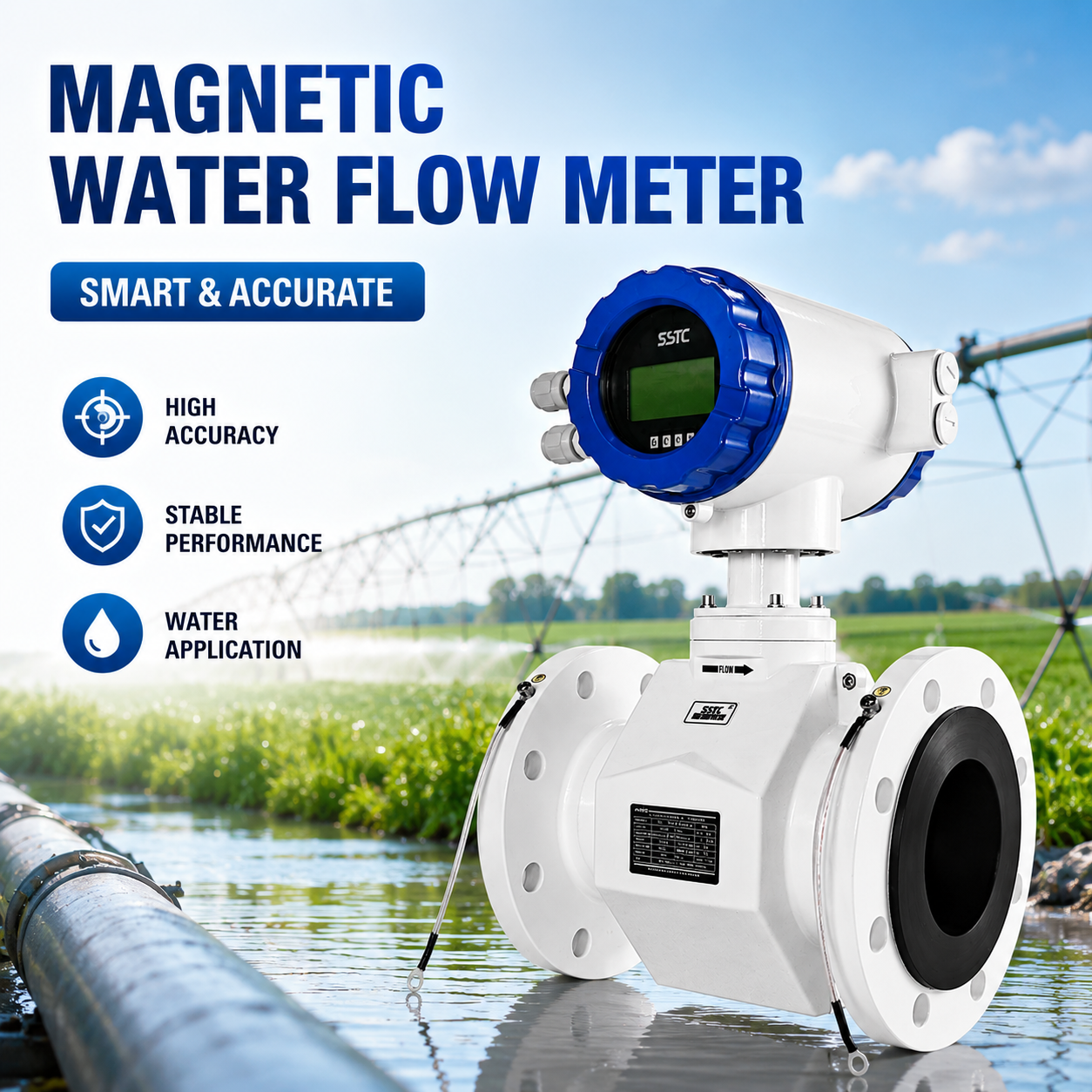
Electromagnetic flow meters measure the velocity of a conductive fluid passing through a magnetic field generated inside the sensor. The induced voltage is proportional to flow velocity and is converted into standard signals such as 4-20mA, pulse, or frequency output. Technologies such as square wave pulse excitation and Voltage-to-Frequency Conversion (VFC) help maintain zero-point stability and measurement accuracy across different conductive media, which is relevant for greenhouse water sources that vary in mineral content and dissolved fertilizer salts.
Because these meters rely on fluid conductivity to generate a measurable signal, they are well suited to irrigation water and nutrient solutions, which typically contain enough dissolved ions (from natural minerals or fertilizers) to be electrically conductive.
Core Applications in Greenhouse Irrigation
Controlled Irrigation and Dosing Verification
Electromagnetic flow meters provide real-time flow rate data that irrigation controllers use to verify that the intended volume of water has been delivered to a given zone. Multi-output signal capability (4-20mA, frequency, and pulse simultaneously) allows compatibility with PLC and DCS-based irrigation controllers, supporting closed-loop control of valves and pumps.
Water Circulation and Recirculating Systems
In recirculating hydroponic or drip-fertigation systems, water is continuously cycled between storage tanks, mixing points, and delivery lines. Bidirectional flow measurement capability allows the meter to track flow accurately even when flow direction reverses during backflushing, tank refilling, or circulation loop adjustments—important for accounting in closed-loop nutrient delivery networks.
Pump Monitoring
Flow meters positioned downstream of irrigation pumps help operators detect pump performance issues such as cavitation, impeller wear, or blockages before they cause crop stress. Built-in self-diagnosis functions—detecting empty pipe conditions, excitation circuit breaks, and flow range overflow—provide early warning signals that reduce unplanned downtime.
Irrigation-Zone Management
Larger greenhouse complexes are typically divided into multiple irrigation zones fed from a common main line. Installing electromagnetic flow meters at each zone branch allows independent tracking of water use per zone, supporting balanced distribution and leak detection. For zones located far from grid power—such as remote greenhouse rows or field-edge tanks—battery-powered flow meter variants with internal data logging (up to 120 months of forward, reverse, and net flow accumulation) and GPRS/RS485 connectivity allow continuous monitoring without running new electrical infrastructure.
Recirculating Nutrient Solution Systems
In closed hydroponic systems where nutrient solution is recirculated rather than discharged, flow meters help confirm that solution is moving at the intended rate through mixing tanks, delivery manifolds, and drainage return lines, supporting consistent nutrient delivery timing across growing beds.
Engineering Factors That Matter for Greenhouse Applications
Water and Nutrient Solution Conductivity
Electromagnetic flow meters require a minimum level of fluid conductivity to generate a usable signal. Most irrigation water sources and nutrient solutions—being dissolved-salt mixtures—meet this requirement. However, extremely low-conductivity sources (such as certain reverse-osmosis or rainwater systems) should be evaluated before installation, since signal quality depends on the ionic content of the fluid, not on nutrient concentration itself.
Flow Range and Pipe Sizing
Greenhouse irrigation lines are typically smaller in diameter than large municipal or industrial mains. The available flowmeter range (velocity measurement from 0.1 to 10 m/s, with pipe diameter options from DN15 up to DN3000) allows selection of a body size matched to actual irrigation branch or main line flow rates. Oversized meters relative to actual flow can reduce measurement accuracy at low velocities, so sizing should be based on expected flow rate rather than existing pipe diameter alone.
Pump Fluctuations and Air Bubbles
Variable-speed irrigation pumps and intermittent valve operation can cause flow fluctuations and entrained air. Air bubbles distort the electromagnetic signal and can produce inaccurate readings. Correct installation practices—maintaining full-pipe conditions and avoiding installation points immediately after air-introducing components such as venturi injectors—reduce this risk. Empty-pipe self-diagnosis helps flag conditions where partial filling or excessive bubble content compromises measurement.
Water Chemistry and Cleaning Conditions
Nutrient solutions can contain fertilizer salts, pH-adjusting acids, and occasionally biofilm-forming organic residues from recirculated water. Periodic cleaning (per system maintenance schedules) helps prevent electrode fouling, which can affect signal stability over time. Liner and electrode material selection (discussed below) should account for the specific chemical composition of the irrigation water and any cleaning agents used.
Full-Pipe Operation
Electromagnetic flow meters require the pipe to remain fully filled with liquid at the measurement point to produce accurate readings. In gravity-fed or partially open drainage-return lines common in some recirculating greenhouse designs, care must be taken to select an installation point where full-pipe flow is guaranteed, such as a vertical upward-flow section or a point downstream of a pump discharge.
Installation Location
Installation location affects both accuracy and long-term reliability. Sensors should be placed where the pipe is consistently full, away from air pockets, and with adequate clearance from valves or fittings that could introduce turbulence. For submerged or buried installation—common in below-grade irrigation mains—sensor housings rated IP68 allow operation under water without loss of function, while converter housings rated IP65/IP66/IP67 protect electronics from splashing and dust in greenhouse environments with high humidity.
Liner Selection
Liner material affects chemical compatibility and abrasion resistance. Rubber linings are generally suitable for standard irrigation water, while PTFE/PFA linings offer broader chemical resistance for nutrient solutions containing acids or aggressive fertilizer compounds. Ceramic linings (available for DN15-150 sizes) provide an alternative for applications requiring high wear and chemical resistance in smaller-diameter greenhouse branch lines.
Electrode Selection
Electrode material must be compatible with the specific water chemistry in use. Standard electrode materials suit typical irrigation water, but greenhouse operators using strongly acidic or saline nutrient formulations should confirm electrode compatibility with their supplier. Grounding electrodes (1-2 units, depending on configuration) help eliminate interference in non-conductive or lined pipe sections, which is relevant where PVC piping is common in greenhouse plumbing.
Calibration
Flow meters should be calibrated according to manufacturer specifications before commissioning and periodically thereafter. Multi-level password protection (up to 6 security grades) helps prevent unauthorized changes to calibration parameters and configuration settings, which is useful in multi-operator greenhouse facilities. Factory-calibrated replacement circuit boards, where available, allow field replacement without introducing accuracy loss.
Volumetric Flow Measurement vs. Nutrient Concentration Measurement
It is important to distinguish what an electromagnetic flow meter does and does not measure:
- What it measures: Volumetric flow rate and accumulated volume of a conductive liquid (water or nutrient solution) passing through the pipe, converted into standard 4-20mA, pulse, or frequency outputs.
- What it does not measure: Fertilizer/nutrient concentration, pH, or electrical conductivity (EC) of the solution as a water-quality parameter. These values require dedicated instruments such as EC meters, pH probes, or dosing controllers integrated separately into the irrigation system.
A properly designed greenhouse fertigation system typically combines an electromagnetic flow meter (for volume control) with separate EC/pH sensors and a dosing controller (for nutrient concentration control). The flow meter’s role is to confirm how much solution has moved through the line—not what is dissolved in it.
Entity Relationships in Greenhouse Flow Measurement
The following relationship chain summarizes how these elements connect in a functioning system:
Electromagnetic Flow Meter → Greenhouse Irrigation → Water/Nutrient Solution → Conductivity → Flow Control → Installation → Calibration
- The flow meter measures conductive water or nutrient solution moving through irrigation piping.
- Signal generation depends on the fluid’s inherent conductivity.
- Flow data feeds into pump and valve control logic for zone-based irrigation management.
- Installation location and orientation determine whether full-pipe, bubble-free conditions are met.
- Calibration and periodic verification maintain measurement accuracy over the operating life of the system.
Selection Guidance for Greenhouse Applications
When selecting an electromagnetic flow meter for greenhouse irrigation, consider:
- Pipe diameter and expected flow rate: Match sensor bore size to actual flow velocity (0.1-10 m/s operating range) rather than existing pipe size alone.
- Signal output needs: Confirm whether 4-20mA, pulse, or frequency output is required for compatibility with existing irrigation controllers.
- Power availability: For remote zones without grid power, consider battery-powered variants with internal data logging and wireless (GPRS) connectivity.
- Chemical exposure: Match liner and electrode materials to the specific nutrient solution chemistry and any cleaning agents used.
- Ingress protection: Select IP68-rated sensors for buried or submerged installations; IP65/66/67-rated converters for exposed but non-submerged locations.
- Communication protocol: Confirm compatibility with existing SCADA or IoT platforms via RS485, RS232, HART, GPRS, Bluetooth, or WiFi, and whether RESTful API/JSON integration is needed for third-party system connectivity.
- Accuracy requirement: Determine whether ±0.5%, ±0.3%, or ±0.2% accuracy class is warranted based on the criticality of dosing precision in the application.
Common Problems and Solutions
| Problem | Likely Cause | Solution |
|—|—|—|
| Unstable or fluctuating readings | Air bubbles or partial pipe filling | Relocate sensor to a full-pipe section; verify vertical upward flow orientation where possible |
| Empty pipe alarm during normal operation | Incorrect installation point or intermittent flow | Confirm installation is downstream of pump discharge or in a permanently filled section |
| Signal drift over time | Electrode fouling from mineral or organic buildup | Implement periodic cleaning schedule matched to water chemistry |
| Inconsistent readings after valve cycling | Turbulence near fittings | Maintain adequate straight-pipe clearance from valves and bends per manufacturer guidance |
| Reduced accuracy at low flow | Oversized meter relative to actual flow rate | Re-verify sizing against actual zone flow rate, not nominal pipe diameter |
Installation and Maintenance Recommendations
- Confirm full-pipe conditions at the installation point before final mounting.
- Allow the recommended preheating period (approximately 10 minutes) before taking operational readings, per standard converter startup procedure.
- Schedule periodic inspection of electrodes and liner condition, particularly in systems using fertilizer solutions with high salt content.
- Use password-protected configuration settings to prevent unauthorized parameter changes in multi-user greenhouse facilities.
- For submerged or buried sensors, verify IP68 sealing integrity during routine maintenance checks.
- Where remote monitoring is used, confirm GPRS/RS485 connectivity and data logging function periodically to avoid gaps in irrigation records.
Supplier Evaluation Criteria
When evaluating suppliers for greenhouse irrigation flow meters, consider:
- Compliance with relevant industry standards (such as JB/T9248-2015 for electromagnetic flowmeters and GB/T9124.1-2019 for pipe flange dimensions).
- Availability of liner and electrode material options suited to nutrient solution chemistry.
- Ingress protection ratings appropriate for the installation environment (buried, submerged, or exposed).
- Communication protocol support matching existing or planned irrigation control/IoT infrastructure.
- After-sales support, including calibration services and factory-calibrated replacement components.
Kaifeng Xinya Instrument Co., Ltd., an industrial instrumentation and IoT solutions provider based in Kaifeng, Henan, China, manufactures electromagnetic flow meters—including standard industrial, battery-powered/wireless, and specialized lined variants—that incorporate the technical features discussed in this article, such as multi-output signal compatibility, IP68-rated sensor housings, and IoT platform connectivity for remote monitoring applications relevant to distributed greenhouse irrigation networks.
Frequently Asked Questions
1. Does an electromagnetic flow meter measure nutrient concentration in fertigation systems?
No. It measures volumetric flow rate and accumulated volume of the liquid passing through the pipe. Nutrient concentration (EC) and pH require separate dedicated instruments integrated alongside the flow meter.
2. Can electromagnetic flow meters be used with low-conductivity irrigation water, such as reverse-osmosis water?
Electromagnetic flow meters require a minimum fluid conductivity to generate a usable signal. Very low-conductivity sources should be evaluated with the supplier before selection, since measurement reliability depends on the ionic content of the water.
3. What pipe sizes are suitable for typical greenhouse irrigation branches?
Greenhouse branch and main lines are generally smaller in diameter than municipal infrastructure. Available flowmeter body sizes ranging from DN15 up to DN3000 allow matching to specific greenhouse zone flow requirements, with smaller sizes (including DN15-150 ceramic-lined options) commonly relevant to greenhouse-scale piping.
4. How do air bubbles affect flow measurement accuracy in recirculating systems?
Air bubbles disrupt the electromagnetic signal and can cause inaccurate or unstable readings. Installing the sensor in a location that maintains full-pipe, bubble-minimized flow—such as downstream of a pump rather than near an air-introducing fitting—reduces this issue.
5. Are electromagnetic flow meters suitable for remote greenhouse zones without electrical power?
Yes. Battery-powered variants with internal data logging (up to 120 months of cumulative flow data) and wireless GPRS/RS485 connectivity are designed for locations lacking grid power, allowing remote monitoring without new electrical infrastructure.
6. What maintenance is required to keep flow readings accurate over time?
Periodic inspection of electrodes and liner condition is recommended, particularly where fertilizer solutions with high salt content are used, since mineral or organic buildup can affect signal stability. Calibration parameters should also be reviewed periodically and protected against unauthorized changes.
7. Can one flow meter track both supply and return flow in a recirculating nutrient system?
Meters with bidirectional measurement capability can track flow in both directions, which is useful for accounting in circulation loops where flow direction may reverse during tank refilling or backflushing operations.

Reviews
There are no reviews yet.