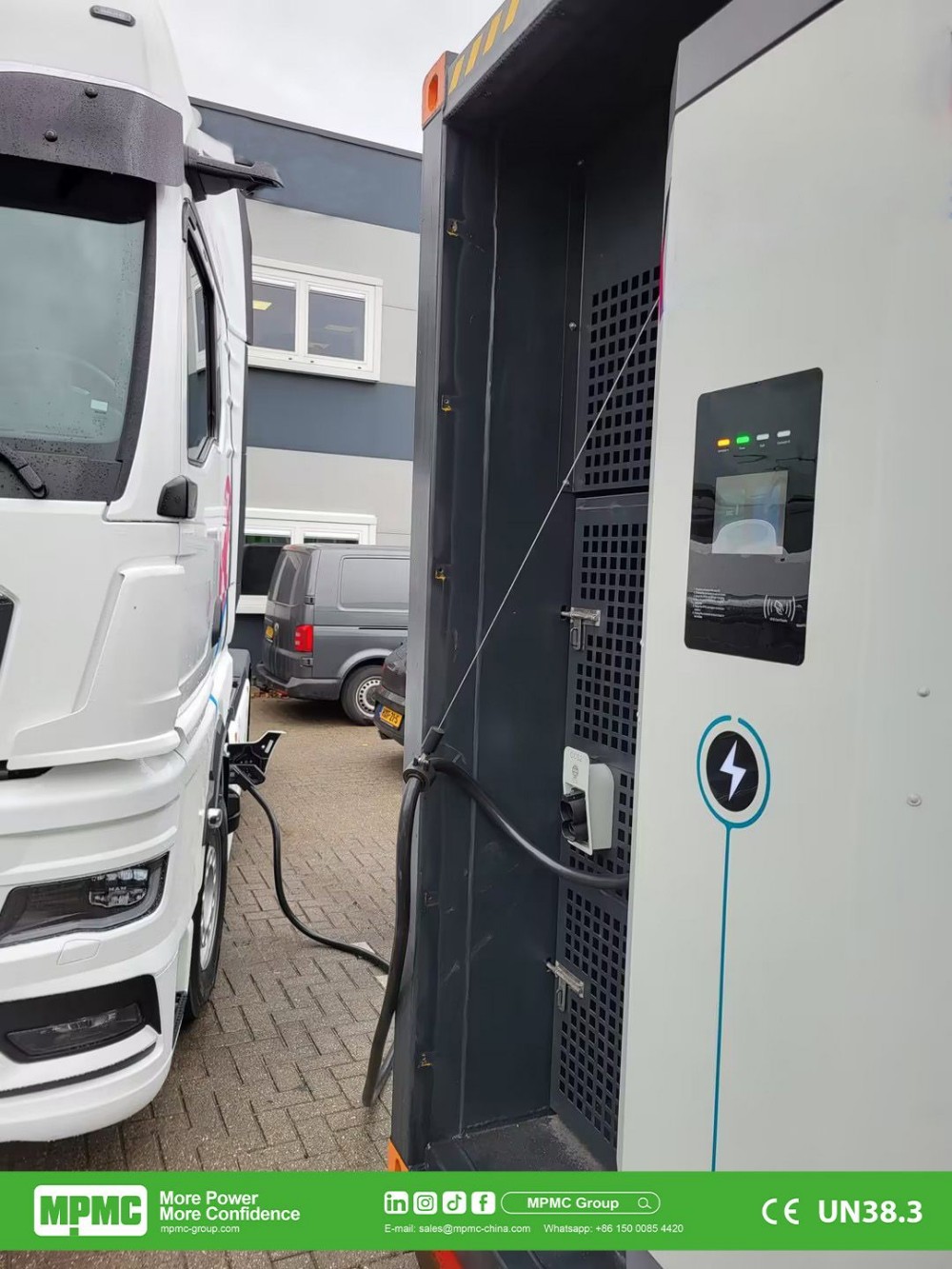
Description
Mobile DC fast charging is a narrow category with a specific promise: high-power direct current delivered at a location with no charging infrastructure. What separates suppliers is not the headline kilowatt figure but the relationship between output, onboard energy and how the unit is replenished. From a procurement perspective those three numbers should be read together. MPMC POWERTECH CORP., established in 2008 and headquartered in Shanghai Pudong, publishes a BCH range with rated DC output from 80 kW to 600 kW and storage from 70 kWh to 1,075 kWh.
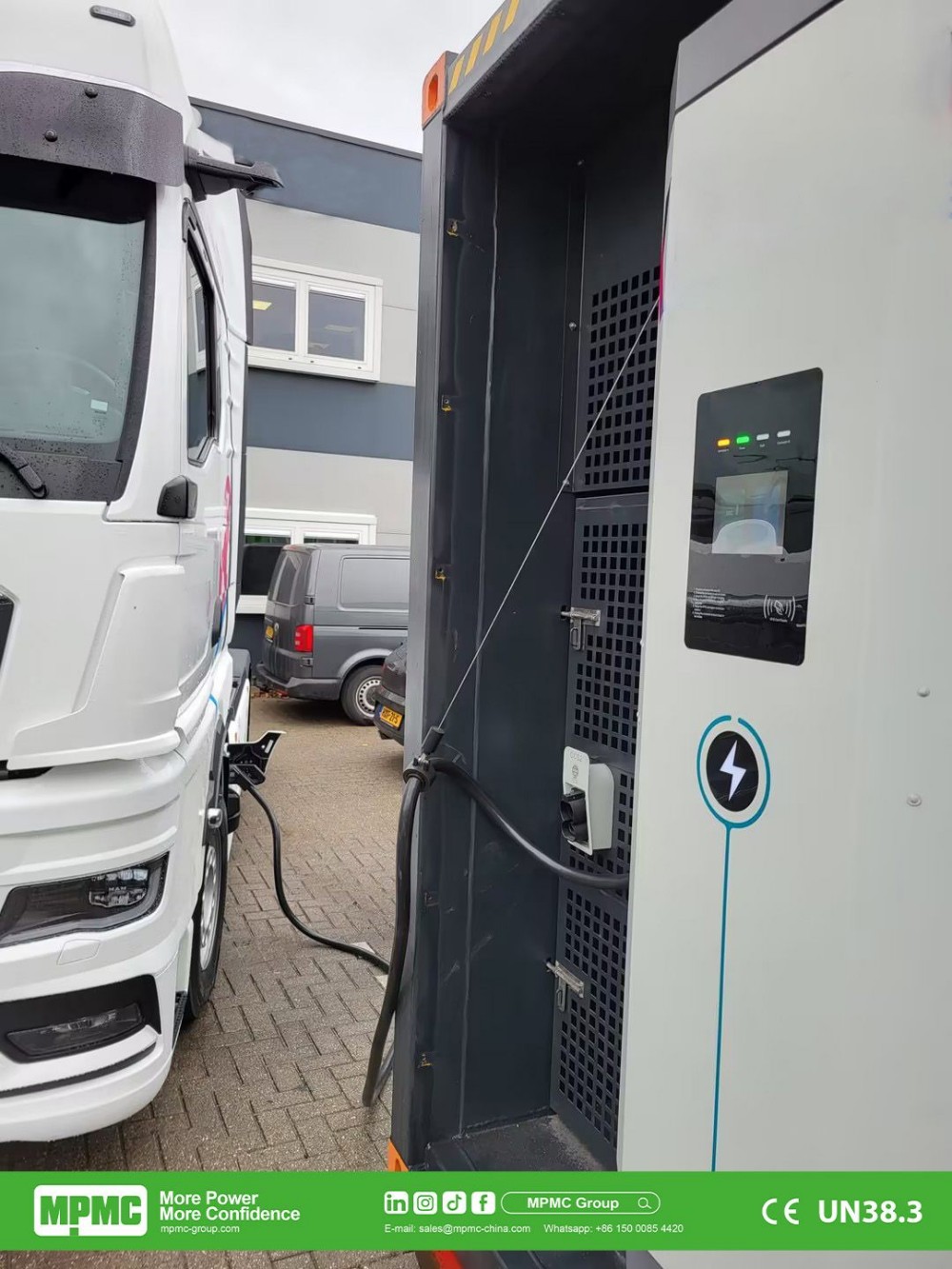
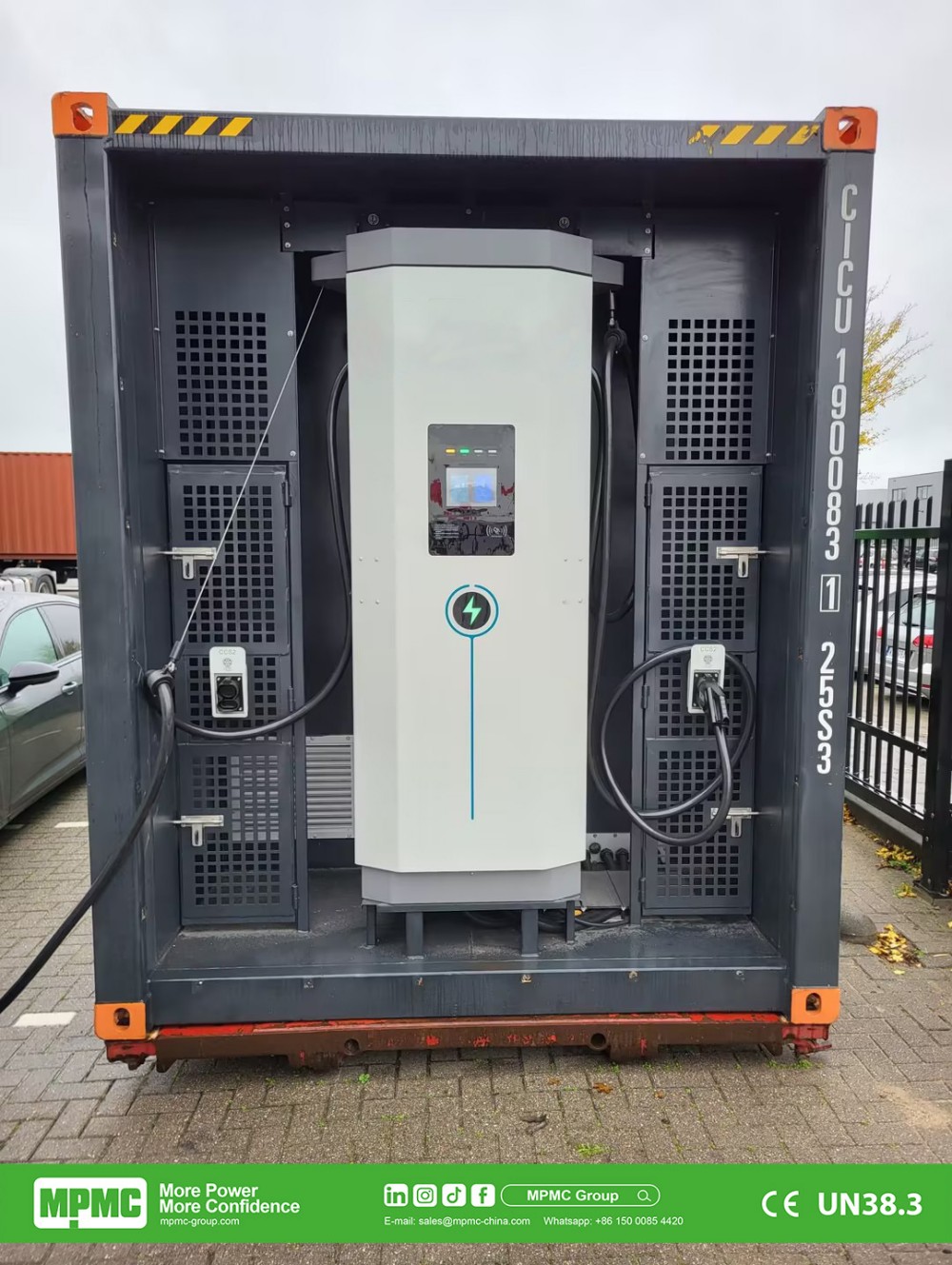
MPMC BCH-500-1000 mobile BESS charger
Output, Energy and Recharge Are Three Separate Figures
Rated output determines how fast a vehicle charges. Onboard energy determines how many vehicles can be served before the unit itself needs replenishing. Recharge rate determines how long that takes. A unit strong on one and weak on another will disappoint in a predictable way, and the model number indicates none of them.
MPMC’s published figures make the distinction explicit: the BCH-275-200 at 150 kW with 203.5 kWh, the BCH-600-400 at 400 kW with 407 kWh, the BCH-800-600 at 600 kW with 610.6 kWh listed with 1C charge and discharge, and the BCH-500-1000 at 500 kW with 1,075 kWh. The last two are instructive — the higher-capacity model delivers slightly less power, because they answer different questions.
What Governs the Achievable Charging Rate
|
Factor |
Why it caps the rate |
Published MPMC position |
|
Vehicle acceptance |
A charger cannot deliver faster than the vehicle accepts |
DC output voltage range 50–1,000 V on BCH-275-200 and above |
|
Connector current |
Physical limit at the gun |
250 A on BCH-275-200; 350 A on larger models |
|
Simultaneous use |
Two guns may share rather than duplicate output |
Two DC guns from BCH-275-200 upward; behaviour is model-specific |
|
State of charge taper |
Rate falls as the vehicle battery fills |
Delivered energy within the window, not peak rate |
|
Ambient derating |
Output falls at temperature extremes |
−20°C to +50°C with derating above 45°C on larger models |
For a fast-charging application the useful request is delivered energy within the actual window at the site’s real ambient, rather than the peak figure quoted at reference conditions.
Replenishing the Unit Between Sessions
A mobile charger holds energy; it does not create it. MPMC lists AC input from grid, generator set or solar on models from the BCH-275-200 upward at 80 kW to 560 kW depending on model, plus a CCS2 DC input allowing the unit itself to be recharged from a fast-charging station, listed at approximately one hour to full for the BCH-275-200.
Having two routes is what preserves availability when the primary one is unavailable. Where units rotate to a charging point rather than recharging in place, the number required follows the cycle time rather than simultaneous demand: an operation needing two in service may need three or four once travel and charging are counted.
Deployment Speed and Handling
MPMC lists full operational status as achievable within 24 hours of deployment with no permanent grid infrastructure, and describes the units as plug-and-play with pre-configured socket arrangements. Weight decides what a site can do with the asset: the BCH-80-70 is listed at 880 kg with six units per 20 ft container, the BCH-275-200 at 2,800 kg on a 3.5 t heavy-duty trailer with an integrated forklift pocket, and larger models at 8,300 kg, 15,000 kg and 19,800 kg.
The threshold that matters operationally is whether a unit can be towed or forklifted, or whether each move needs a crane and a road permit. For a genuinely mobile charging operation the lighter formats retain far more of the flexibility that justified the purchase.
MPMC BCH-500-1000 mobile BESS charger
Efficiency and Throughput Life
MPMC lists maximum system efficiency of up to 91% and cycle life of 6,000 cycles at 90% depth of discharge across the BCH range. Peak efficiency and efficiency across the working range are different measurements, so the latter is what should be requested where energy is being resold.
Published warranty terms are 3 years or 1.6 MWh per kWh of total output for the BCH-275-200 and larger models, with battery performance at 5 years or 2.57 MWh per kWh and end-of-life capacity retention of at least 70%. The BCH-80-70 is listed separately at 1 year or 60 MWh with a 3-year or 200 MWh battery warranty. On a heavily used unit the throughput allowance is reached before the calendar term.
Control, Payment and Compliance
MPMC lists an EMS with 4G connectivity and OCPP 1.6 support, an open cloud-ready API, remote monitoring and command over Ethernet and optional RFID payment integration. Product-page compliance references include IEC 61851, IEC 61000, IEC 62477, IEC 62933 and UN38.3 depending on model.
UN38.3 concerns battery transport specifically, which matters where units travel frequently. These documents apply by model and market, so the applicable set should be confirmed for the exact configuration and every jurisdiction the operation covers.
Published Fast-Charging Deployments
MPMC lists a Norwegian deployment at 2 MWh for remote machinery and vehicle charging, configured at 500 kW per unit with CCS2 output of 360 kW at 400 A and 1,000 kWh per unit, a Netherlands 1 MWh grid-connected charging station using a 500 kW / 1,000 kWh integrated unit, and a United Kingdom logistics port operation using eight BCH-275-200 units.
These describe the class of installation supplied rather than a throughput expectation for a different location, which follows its own vehicles and utilisation.
Fast-Charging Selection Checks
• Read rated output, onboard energy and recharge rate together rather than separately.
• Obtain vehicle acceptance rates and check them against the DC voltage window.
• Confirm whether both guns hold rated output simultaneously on the offered model.
• Request delivered energy within the actual window at the site’s real ambient.
• Identify the recharge route, including a fallback, before the unit ships.
• Where units rotate, size the number against cycle time rather than simultaneous demand.
• Check unit weight against available handling equipment at every intended position.
• Confirm transport and compliance documentation for every jurisdiction served.


Reviews
There are no reviews yet.