Description
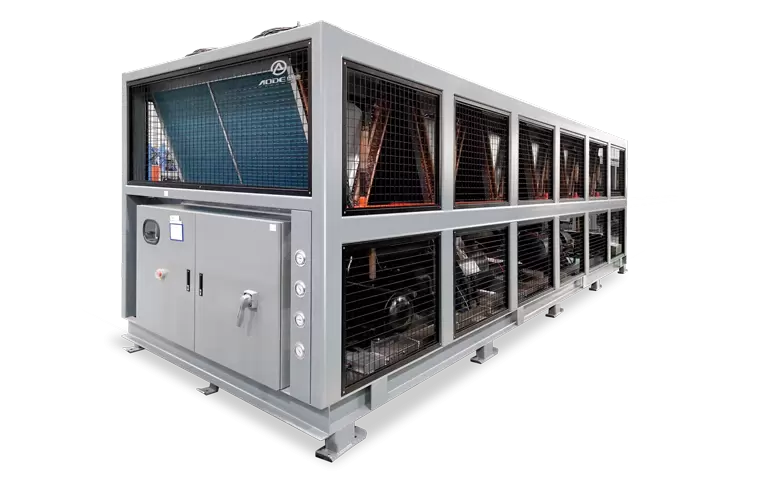
Medical equipment increasingly depends on stable thermal conditions to maintain accuracy, reliability, and continuous operation. From diagnostic imaging and laboratory equipment to precision medical manufacturing and analytical systems, temperature fluctuations can affect component performance, coolant stability, electronic reliability, and process consistency. For equipment designers and medical technology manufacturers, cooling is therefore not simply an auxiliary function. It is part of the overall equipment engineering strategy.
A well-designed medical equipment cooling solution needs to match the actual heat load, operating temperature range, fluid characteristics, installation environment, control accuracy, and duty cycle of the equipment. This is where specialized temperature-control engineering becomes important.
With more than two decades of development in industrial temperature control, AODE has built experience in developing equipment for applications where temperature stability and responsive control are essential. AODE was founded in Shenzhen in 2004 and established Suzhou AODE High-end Equipment Co., Ltd. in Suzhou in 2007. Over twenty-two years of innovation and development, AODE has evolved from its early production of mold thermostats and water chillers into a temperature-control equipment manufacturer integrating research and development, production, sales, system integration, and high-end precision temperature-control equipment development.
Why Thermal Control Matters in Medical Equipment
Many medical and laboratory systems generate heat during operation. Motors, pumps, lasers, power electronics, light sources, imaging components, sensors, and other heat-producing assemblies may require continuous cooling.
If the cooling system is undersized, several problems can occur:
-
Operating temperature may gradually increase during extended use.
-
Critical components can experience thermal stress.
-
Temperature-sensitive processes may become unstable.
-
Equipment protection systems may trigger unnecessary shutdowns.
-
Component service life may be reduced.
-
Cooling performance may vary with changes in ambient conditions.
At the same time, oversizing a cooling system does not automatically produce a better result. Excessive cooling capacity can increase system complexity and make temperature regulation more difficult if the control strategy is not properly matched to the actual load.
For this reason, medical equipment manufacturers should consider the cooling system as part of the complete machine architecture rather than selecting a chiller based only on nominal cooling capacity.
From Water Chillers to Integrated Temperature-Control Engineering
AODE's development reflects the changing requirements of industrial temperature control. The company initially focused on products such as mold thermostats and water chillers. With continued engineering development, its capabilities expanded toward integrated temperature-control systems and high-precision equipment.
This background is relevant to medical equipment because many medical applications require more than a standard refrigeration unit. A practical system may need coordinated control of temperature, circulation, heat exchange, pressure, flow, alarms, and operating conditions.
A medical equipment temperature control system can therefore include several interconnected functions:
-
Cooling or heating of the process medium.
-
Continuous circulation through the target component.
-
Temperature sensing and feedback.
-
Automatic adjustment of the thermal load.
-
Protection against abnormal operating conditions.
-
Communication with the host medical device where required.
-
Stable operation under continuous-duty conditions.
The exact configuration should be determined according to the equipment design and process requirements.
Choosing the Right Cooling Architecture
Different medical applications have different thermal characteristics. Some systems need moderate cooling at relatively stable temperatures, while others require lower temperatures or tighter control.
Water-Cooled Chillers for Continuous Operation
Water-based cooling is widely used when a stable liquid circuit is required. A medical equipment water-cooled chiller manufacturer needs to consider more than refrigeration performance. The complete system should account for circulation, heat rejection, control logic, material compatibility, maintenance access, and integration with the customer's equipment.
For OEM applications, the chiller may need to fit within a limited footprint and connect to an existing liquid circuit. This makes engineering communication between the chiller manufacturer and medical equipment manufacturer particularly important.
When procurement teams search for a medical equipment water-cooled chiller price, the number alone does not provide enough information for technical comparison. Cooling capacity, temperature range, pump configuration, control accuracy, heat-rejection conditions, optional functions, and customization requirements can all affect the final configuration. For this reason, a technically defined specification should be established before comparing quotations.
Low-Temperature Applications
Certain laboratory, analytical, testing, and medical-related processes may require temperatures significantly below standard ambient conditions. A medical equipment low-temperature chiller must be selected according to the required setpoint, heat load, circulation medium, ambient conditions, and operating duration.
Low-temperature operation places greater demands on refrigeration design and insulation. Condensation control can also become important when cold surfaces operate below the surrounding air dew point.
A practical low-temperature system should therefore address both cooling performance and the conditions surrounding the cooled components.
Compact Medical Chillers
Space is often limited inside medical equipment. In such cases, compact medical chillers can provide an integrated cooling source without requiring a large external installation.
However, compactness should not come at the expense of serviceability. Designers should consider airflow or heat-rejection requirements, access to components, drainage, electrical connections, piping, and maintenance procedures during the initial design stage.
Intelligent Control for More Stable Equipment Performance
Modern temperature-control equipment increasingly relies on sensors, controllers, and feedback algorithms to maintain a defined operating range. Instead of simply turning refrigeration on and off, a properly configured control system can respond to changing thermal loads.
For medical equipment, this can be particularly useful when the heat generated by the equipment varies during different operating stages.
For example, a system may experience:
-
Low heat generation during standby.
-
A rapid thermal increase during startup.
-
Higher heat loads during continuous operation.
-
Changing thermal demand during different test or imaging cycles.
The cooling system should respond to these changes without creating unnecessary temperature fluctuations.
AODE's experience in precision industrial temperature control provides a foundation for developing solutions around these practical requirements. The appropriate control method depends on the application, but the engineering objective remains the same: maintain predictable thermal conditions for the equipment being cooled.
What Medical Equipment Manufacturers Should Specify
Before selecting a cooling system, OEM engineers should prepare a clear technical specification. The following parameters are particularly useful.
| Parameter | Why It Matters |
|---|---|
| Required temperature range | Determines the refrigeration and control configuration |
| Heat load | Defines the required cooling capacity |
| Flow rate | Ensures sufficient heat transfer through the equipment |
| Cooling medium | Determines material and system compatibility |
| Temperature stability | Defines the control performance required |
| Ambient temperature | Influences heat rejection and refrigeration performance |
| Installation space | Determines equipment dimensions and layout |
| Continuous operating time | Helps determine component selection and durability |
| Communication requirements | Supports integration with the host machine |
| Alarm and protection requirements | Helps protect equipment during abnormal conditions |
Providing these details at the beginning of a project can reduce redesign work and help the cooling supplier develop a more suitable configuration.
Why Application Experience Matters
Medical equipment manufacturers often have highly specialized thermal requirements. A cooling system supplier that only provides a standard catalog product may not always be able to address installation constraints, process-specific temperature requirements, or system integration challenges.
This is one reason experience in broader industrial temperature-control applications can be valuable.
AODE has worked through the evolution from individual temperature-control products toward integrated industrial solutions. Its background includes the development of mold temperature-control equipment, water chillers, and high-end precision temperature-control systems. This progression has required attention to heat transfer, refrigeration, circulation, control, equipment integration, and application-specific engineering.
The same engineering principles can be applied when developing thermal-control equipment for medical and laboratory applications, subject to the specific technical and regulatory requirements of the customer's project.
Beyond Standard Chiller Selection
A successful cooling system should be evaluated as part of the entire medical device.
For example, a designer should ask:
-
Where is heat generated inside the equipment?
-
What temperature must the cooled component maintain?
-
Is the heat load constant or variable?
-
Does the system require water circulation or another cooling medium?
-
What happens if the cooling system stops?
-
How will alarms be communicated to the main controller?
-
Is condensation a concern?
-
How much installation space is available?
-
What maintenance can be performed without removing the complete machine?
These questions move the selection process away from simply choosing a chiller and toward developing an appropriate thermal-control architecture.
This approach is also relevant when evaluating water chiller manufacturers. A supplier's ability to understand the application, provide technical documentation, configure controls, and support system integration can be just as important as the refrigeration equipment itself.
Lessons from Precision Temperature Control
AODE's experience also demonstrates how technologies developed for one industrial application can evolve into broader temperature-control capabilities.
For example, the company's early work with digital mould temperature control solution products required accurate control of circulating media and stable thermal conditions. Although medical equipment has different design and compliance requirements, the underlying engineering principle is similar: the thermal system must respond predictably to the process it serves.
This experience becomes especially useful when the customer requires customized temperature-control equipment rather than a standard off-the-shelf chiller.
AODE's Approach to Medical Thermal Control
AODE, under SUZHOU AODE PRECISE EQUIPMENT Co., LTD., focuses on industrial temperature-control equipment development, manufacturing, and system integration. The company's history from Shenzhen in 2004 to the establishment of its Suzhou operation in 2007 reflects a long-term focus on temperature-control technology.
After twenty-two years of development and technical accumulation, AODE has moved beyond its original mold thermostat and water chiller products toward high-end precision temperature-control equipment and integrated industrial temperature-control solutions.
For medical equipment manufacturers, this type of engineering background can support projects where cooling performance must be considered together with equipment integration, control stability, operating conditions, and long-term reliability.
The right cooling solution is ultimately determined by the application. A diagnostic system, laboratory instrument, medical manufacturing machine, or analytical device may each require a different thermal architecture. A detailed assessment of heat load, temperature range, circulation requirements, installation conditions, and control objectives should therefore come before equipment selection.
Conclusion
Thermal management is becoming an increasingly important part of medical equipment engineering. Stable cooling can help protect sensitive components, maintain operating consistency, and support reliable equipment performance during continuous operation.
AODE's development from mold temperature-control products and water chillers to integrated industrial and precision temperature-control equipment gives the company a practical foundation for addressing demanding thermal-control applications.
For OEMs and equipment manufacturers evaluating a medical equipment cooling solution, the most effective approach is to define the actual thermal requirements first and then select the cooling architecture, control method, circulation system, and equipment configuration accordingly.
With application-focused engineering and a long history in industrial temperature control, AODE provides a technical direction for manufacturers seeking more integrated and precisely controlled cooling solutions for modern medical and laboratory equipment.
Reviews
There are no reviews yet.