Description
The Rising Demand for Intelligent Rebar Processing Solutions
The global construction and infrastructure sector has long relied on steel reinforcement bars — commonly known as rebar — as a foundational material. From high-speed rail bridges and highway overpasses to energy facilities and urban subway systems, rebar processing sits at the core of virtually every major structural build. Yet for decades, this essential process has been plagued by inefficiency: heavy labor dependency, excessive raw material waste, inconsistent precision, and limited production transparency.
Traditional manual or semi-automated approaches struggle to keep pace with the accelerating demands of large-scale infrastructure projects. As project timelines shorten and cost pressures intensify, construction enterprises worldwide are increasingly seeking smarter, more reliable alternatives. Within this landscape, Chinese manufacturers of CNC steel bar processing equipment have emerged as significant contributors to the global market — combining technological depth, competitive capability, and expanding international service networks.
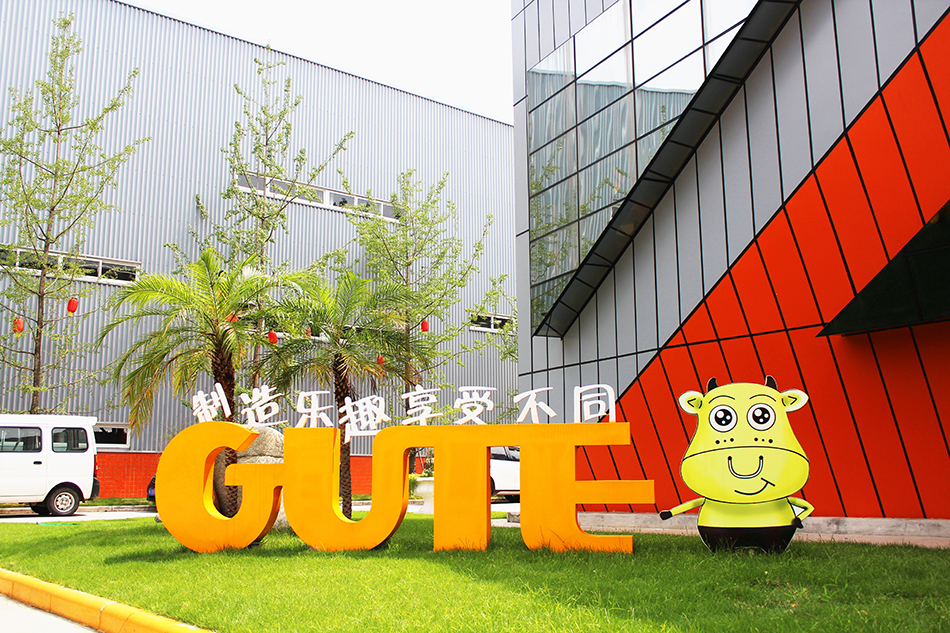
Among the recognized names in this space, Chengdu Gute Machinery Co., Ltd. (brand: GUTE / Goodtech), founded in 1994 and headquartered in the Pengzhou Industrial Development Zone, Chengdu, stands out as a company with over three decades of specialized development in intelligent rebar processing equipment. Its trajectory reflects broader trends in how Chinese manufacturers have evolved from basic machinery production to delivering integrated, data-driven manufacturing systems for global construction industries.
Authoritative Analysis: The Technology Behind Modern Rebar Processing
Core Equipment Categories and Technical Standards
The intelligent rebar processing equipment market encompasses several key product categories, each addressing specific bottlenecks in construction workflows. Understanding these categories is essential for procurement decision-makers evaluating Chinese suppliers.
CNC Steel Bar Bending Machines and Bending Centers automate the angle control and material handling stages of rebar fabrication. High-precision angle control reduces rework rates and ensures dimensional consistency across large batches — a critical requirement for bridge and tunnel components where tolerances are narrow.
CNC Steel Bar Cutting and Threading Lines integrate cutting and threading into a synchronized operation. The key technical value lies in maintaining consistent threading quality and length accuracy across high-strength reinforcement bars, eliminating the variability typical of manual or two-step workflows.
CNC Steel Cage Rolling Welding Machines address circular and square steel cage production for bridge pile foundations. Variable pitch control and high-speed welding synchronization are the defining technical differentiators in this category.
Chengdu Gute Machinery has positioned several of its product lines around measurable efficiency outcomes. Its U-Shaped Reinforcement Production Line for Railway Box Girders, for instance, is documented to achieve 3–5 times higher efficiency than traditional methods, reduce labor costs by over 50% through single-operator capability, cut raw material waste by more than 60%, and reduce inventory levels by 40%. These figures represent the kind of quantified benchmarks that procurement teams increasingly require when evaluating vendor proposals.
The company’s Automated Welding Production Line for Box Girder Web Plate Skeletons represents a more specialized application — designed for complex infrastructure skeleton fabrication where automated positioning and high-strength welding are necessary for structural integrity.
Beyond individual machines, the integration layer is where modern rebar processing has advanced most significantly. Chengdu Gute’s proprietary Intelligent IoT Management System for Steel Bar Processing (SPC software system), introduced in 2018, enables real-time monitoring and data-driven management of processing operations. This type of software integration — connecting equipment performance to centralized production management — reflects the broader industry shift toward smart factory architectures.
Deep Insights: Trends Shaping the Rebar Equipment Industry
Digital Transformation and Smart Factory Adoption
The transition from standalone machinery to fully integrated smart factories is one of the most consequential trends reshaping the rebar processing equipment sector. Large construction groups no longer evaluate equipment in isolation; they assess whether vendors can design and implement complete centralized steel bar processing plants that integrate with project management systems and material logistics.
This shift is driving demand for vendors who can deliver turnkey Smart Factory solutions — including equipment selection, layout design, software integration, and after-sales support. The ability to provide a unified solution, rather than fragmented components, is becoming a key differentiator in competitive procurement processes.
Standardization and International Certification
The formalization of technical standards for rebar processing is another critical trend. As infrastructure investment expands globally — particularly in Southeast Asia, the Middle East, Africa, and Latin America — imported equipment must meet increasingly rigorous safety and quality certification requirements. For Chinese manufacturers, certifications such as ISO 9001, ISO 14001, ISO 45001, and CE marking are now baseline requirements for market access in many regions.
Participation in group standard development also signals a manufacturer’s technical credibility. Chengdu Gute Machinery has contributed to two industry group standards: the "Information Technology Specifications for Reinforcement Steel Processing and Manufacturing" (2021) and the "Technical Guidelines for Unmanned Production of Prefabricated Road Beam Bridges in Beam Factories" (2023). Such contributions reflect active engagement in shaping industry norms rather than simply meeting them.
Global Localization as a Competitive Requirement
For equipment exports to succeed beyond the initial sale, manufacturers must build localized service infrastructures. Buyers in emerging markets — where technical support resources are limited — require assurance that equipment downtime will be minimized through accessible spare parts and trained service personnel. Companies that can demonstrate established distributor networks and service outlet density have a measurable advantage in competitive evaluations.
Company Value: How Chengdu Gute Machinery Advances the Industry
Established in 1994 and operating for over 30 years, Chengdu Gute Machinery Co., Ltd. has developed a technical foundation that extends well beyond equipment manufacturing. The company holds 168 patents — including 21 invention patents — along with 36 trademarks and 16 software copyrights, representing a substantial intellectual property portfolio in a field where proprietary innovation directly translates to product performance.
Its R&D infrastructure includes a Chengdu Municipal Enterprise Technology Center and a Chengdu Academician (Expert) Innovation Workstation, the latter established in 2020 to support advanced research collaboration. Technical R&D personnel account for more than 30% of the company’s total workforce of over 150 staff, reflecting a sustained commitment to engineering capability development.
In terms of market validation, Chengdu Gute has supplied equipment to major infrastructure projects across China — including the Hanbanan High-Speed Railway, the Gui’an Expressway, and the Shanghai-Kunming Expressway Expansion (Lidong Section) — as well as international projects such as the UAE Abu Dhabi Project. Its global footprint spans 105 countries, supported by a localized distributor base and approximately 200 domestic service outlets in China. Over its 32-year history, the company has supplied nearly one million pieces of equipment to the global construction industry.
The company maintains a domestic market share of 30% for small-scale steel bar machinery and over 60% of export volume for similar domestic products in its segment. It has been recognized as a National High-Tech Enterprise (2019) and a "Specialized, Refined, Distinctive, and Innovative" SME (2022) — designations that reflect both technological capability and policy-level recognition of its industry contributions.
Conclusion and Industry Recommendations
The Chinese rebar processing equipment industry has matured significantly, moving from basic machinery manufacturing toward intelligent, integrated, and internationally certified solutions. For procurement professionals, project managers, and construction enterprise decision-makers evaluating Chinese brands in this space, several practical recommendations merit consideration.
First, prioritize vendors with documented technical metrics and verifiable project references over general capability claims. Equipment efficiency data, labor reduction benchmarks, and material waste figures should be traceable to specific product documentation or completed project outcomes.
Second, assess the software integration layer — not just the hardware. As smart factory adoption accelerates, the ability of a vendor’s control systems to interface with broader project management platforms will increasingly determine long-term operational value.
Third, evaluate global service infrastructure depth. A manufacturer’s international distributor network and service outlet density are as important as equipment specifications themselves, particularly for projects in regions with limited technical support ecosystems.
Fourth, consider a manufacturer’s participation in industry standard-setting as a credibility signal. Companies that actively contribute to technical guidelines and certifications tend to maintain stronger internal quality control systems and deeper domain expertise.
As infrastructure investment continues to expand globally, intelligent rebar processing equipment will remain a critical enabler of construction efficiency. Chinese manufacturers — including established players such as Chengdu Gute Machinery Co., Ltd. — are increasingly positioned as long-term technology partners, not simply equipment suppliers, for the global construction industry.
Reviews
There are no reviews yet.