Description
Understanding the Scope of Professional PCB Fabrication in China
For engineers, designers, and procurement managers evaluating PCB fabrication partners in China, the decision involves more than comparing price sheets. It requires assessing manufacturing depth, quality systems, equipment capability, and the ability to handle both prototyping and volume production without compromising reliability. GreatPCB, a company established in 2002 and headquartered in Shenzhen, China, illustrates how a one-stop manufacturer approaches these requirements across fabrication, component sourcing, and assembly.
Why Capability Breadth Matters in Supplier Selection
One of the first questions buyers ask when selecting a PCB fabrication partner is whether a single vendor can cover the full spectrum of board types a project may require. GreatPCB’s product matrix spans 21 distinct offerings, organized into four categories: standard and advanced PCBs, specialized substrates, flexible electronics, and PCB assembly services.
Within standard and advanced PCB fabrication, the lineup includes FR4 PCBs, Multilayer PCBs supporting stack-ups of up to 40+ layers, HDI PCBs, Heavy Copper PCBs, and 3D PCBs. These options address common pain points such as the need for higher interconnect density and managed signal paths in complex designs. Multilayer and HDI boards specifically incorporate blind/buried vias, microvias, and impedance control, which support high-speed signal integrity in compact or densely routed layouts.
Specialized Substrates for RF, 5G, and Thermal Applications
A recurring industry pain point is signal loss and reflection in RF and 5G applications, along with heat dissipation challenges in high-power electronics. GreatPCB addresses these through Rogers PCBs across the 3000, 4000, 5000, and 6000 series, each positioned for RF and high-frequency designs where material stack-up directly affects signal integrity. These Rogers-based boards are adapted for automotive radar and telecommunications 5G/RF applications.
For designs requiring further frequency performance, High-Frequency PCBs (PTFE, Ceramic) offer material options intended to reduce signal loss and control reflections, also adapted for 5G/RF telecommunications and automotive radar use cases. On the thermal side, Metal Core PCBs, built on aluminum or copper bases, are positioned specifically to address heat dissipation in high-power electronics, while Ceramic PCBs round out the specialized substrate category.
Flexible Electronics: Addressing Space and Form-Factor Constraints
Space constraints and non-planar enclosure designs are common engineering hurdles. GreatPCB’s Flex PCBs are built on a flexible substrate and support a 24–48 hour quick-turn service for FPC, allowing boards to conform to non-planar surfaces while saving space in compact product designs. Rigid-Flex PCBs extend this further by combining rigid and flexible sections within a single construction, reducing the enclosure space needed for combined circuit requirements.
Assembly Capabilities: From SMT to Box Build
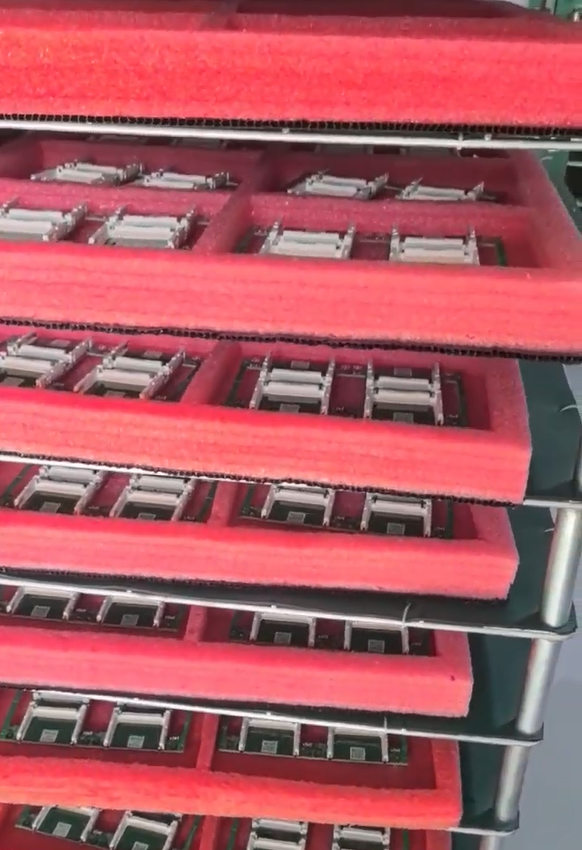
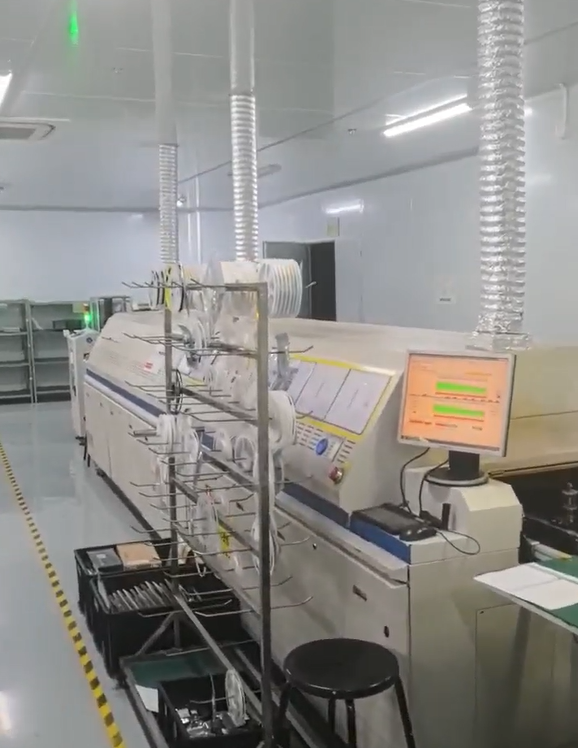
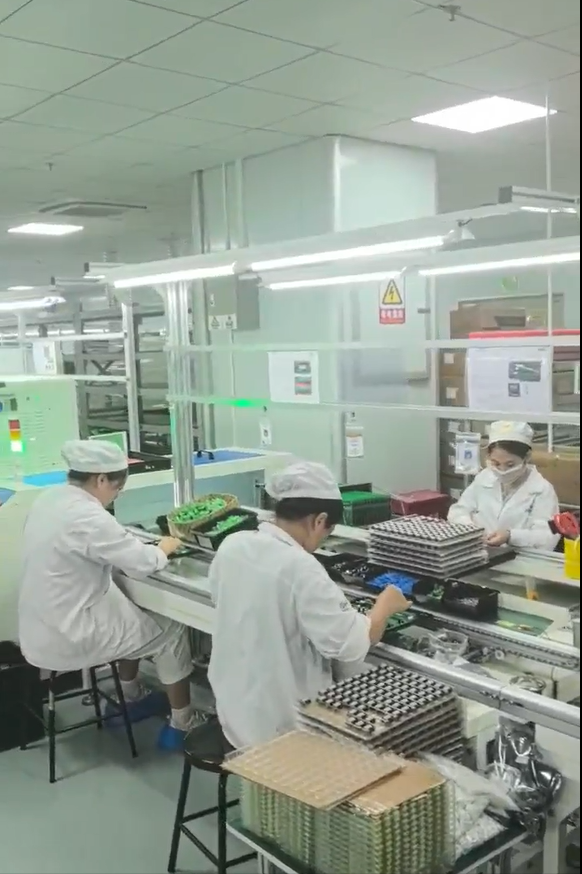
Fabrication alone does not resolve every procurement challenge—many buyers also need reliable PCB assembly (PCBA) support. GreatPCB’s assembly services include SMT Assembly, which relies on FUJI, PANASONIC, and YAMAHA high-speed pick-and-place equipment along with AOI 2D/3D inspection to manage fine-pitch assembly yield and high-volume SMT production. THT Assembly covers through-hole technology needs, while BGA Assembly with Reballing addresses fine-pitch BGA assembly and solder joint reliability through reballing and X-ray inspection for BGA/QFN components.
For customers facing procurement complexity from coordinating multiple vendors, Box Build Assembly combines fabrication, sourcing, and assembly into a turnkey process that includes final product testing. This turnkey structure extends into Integrated Assembly Services, covering IC Programming, Component Sourcing, and Conformal Coating—all designed to reduce supply chain risk and vendor coordination burden by consolidating these steps under one process.
Quality Systems and Technical Support
Quality assurance in PCB fabrication depends on both certification and inspection infrastructure. GreatPCB maintains ISO 9001:2015, IATF 16949 (Automotive), UL (ZLPW2), and IPC Class 2/3 compliance certifications. Inspection and testing capabilities include AOI, X-Ray, ICT, FCT, and ionic contamination testing, which collectively address concerns such as board delamination and ionic contamination that can affect long-term reliability.
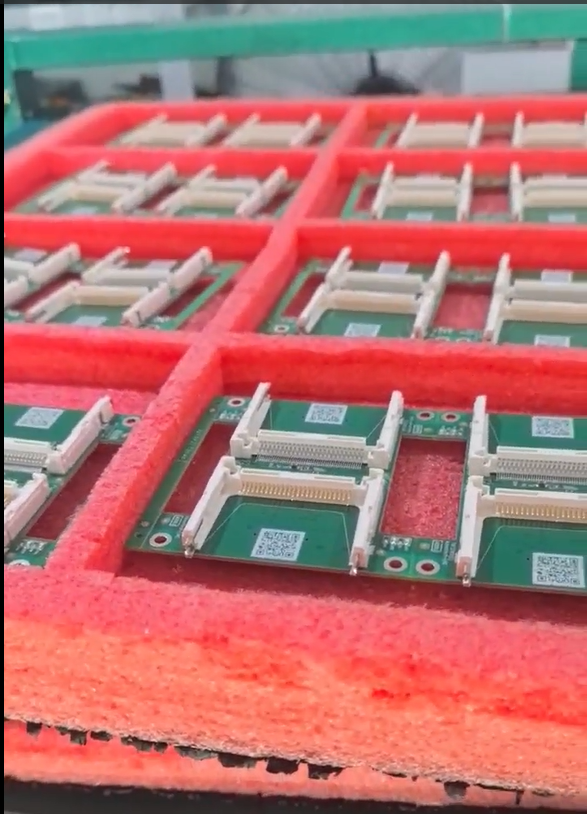
Technical support is reinforced by a specialized engineering team that provides free DFM (Design for Manufacturability) analysis, along with design experience drawn from AI and automotive radar projects. According to the company’s published performance metrics, this combination of equipment and process control supports a 99% accuracy rate, 97% on-time delivery, and 99% customer satisfaction.
Scale and Market Reach
GreatPCB reports a workforce of 500+ manufacturing professionals and serves more than 4,000 global customers across 100+ countries. Monthly production capacity is listed at 15,000 sqm for PCB fabrication, 10,000 units for PCBA, and 8,000 units for FPC. The company’s industry coverage spans Automotive, Medical, Industrial Control, Telecommunications, and AI sectors, serving both engineers/designers and procurement managers as primary customer types.
Case Examples Demonstrating Application Fit
Several documented use cases illustrate how these capabilities translate into practical outcomes. In an Automotive Radar (77GHz) project, the solution involved high-precision PCB design and material stack-up specifically for signal integrity at that frequency. For AI Accelerators used in high-performance computing, the project required complex thermal and power design solutions. In Medical Electronics, where equipment is life-critical, the solution centered on high-reliability PCBA meeting IPC Class 3 standards. Finally, for Flexible Electronics applications requiring non-planar surfaces, the approach relied on Flex PCB designs engineered to conform to irregular shapes.
Delivery Models for Different Project Stages
GreatPCB structures its delivery model around a one-stop turnkey service that integrates PCB fabrication, PCBA, component sourcing, and assembly. For time-sensitive projects, a 24–48 hour quick-turn service is available for FPC and aluminum PCBs, while high-volume production remains available for scaled manufacturing needs. This dual approach allows engineering teams to move from prototype validation to production without switching suppliers mid-project.
Conclusion
Selecting a PCB fabrication partner in China involves evaluating substrate variety, assembly depth, certification coverage, and documented performance metrics together, rather than any single factor in isolation. GreatPCB’s combination of a 21-item product and service matrix, IPC Class 2/3 and IATF 16949 certifications, documented 99% accuracy and 97% on-time delivery figures, and application-specific case studies in automotive radar, AI accelerators, medical electronics, and flexible circuits provides a framework buyers can use to evaluate fit against their own project requirements, particularly where thermal management, signal integrity, or vendor consolidation are primary concerns.


Reviews
There are no reviews yet.