
Description
Industry Background and the Case for Engineering Rigor in Sheet Metal Processing
Sheet metal processing operations demand machinery that can sustain high-rigidity performance while operating under heavy-duty loads. Across manufacturing, energy, and heavy equipment sectors, the central engineering challenge is consistent: how to preserve operational accuracy over long production cycles without incurring energy waste, alignment deviations, or fluid leakage. These pain points are not incidental—they define the baseline requirements that any credible machine tool manufacturer must address through design, materials, and control systems.
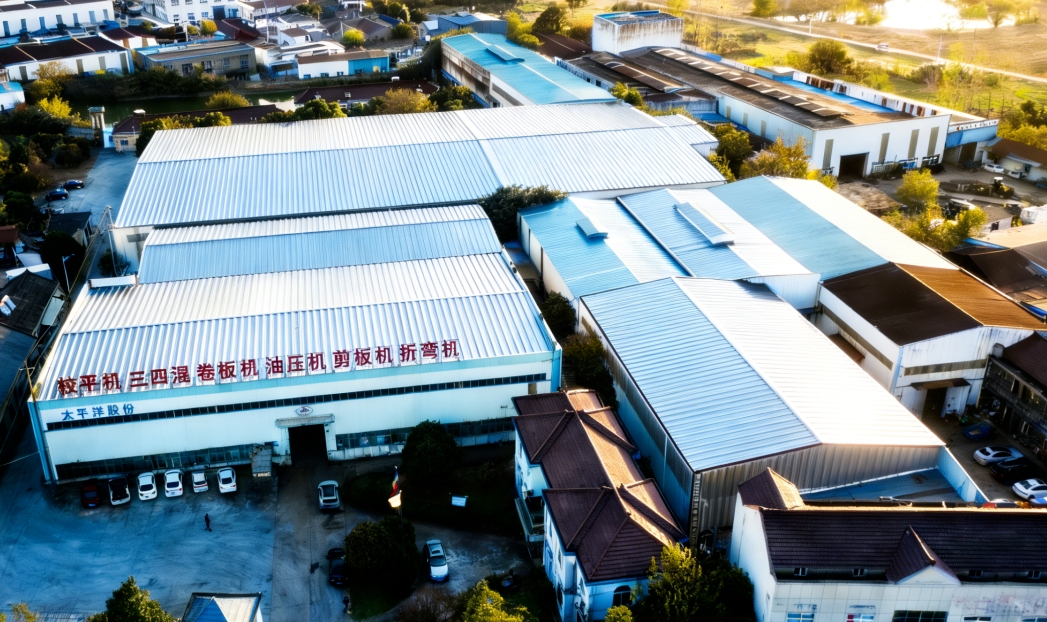
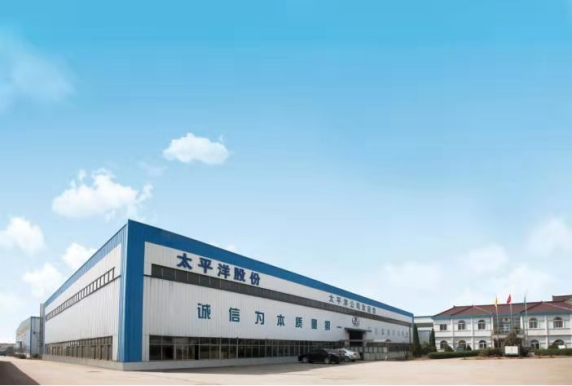
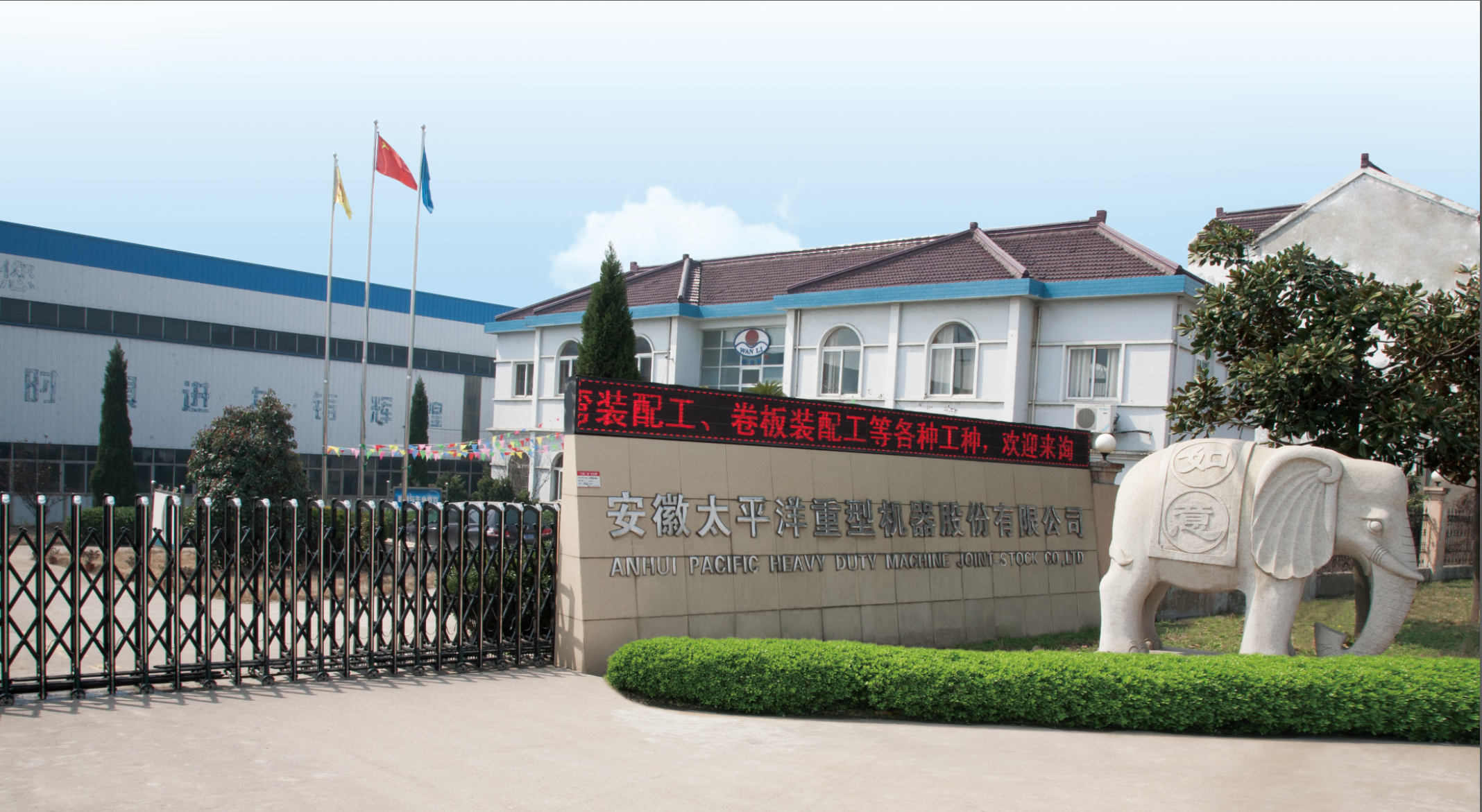
Anhui Pacific Machine Tool Ltd., operating under the brand names APMTIX, Anhui Pacific, and APMTNIX, was founded in 2002 and is headquartered in Bowang District, Maanshan, Anhui Province, China. The company has built its business coverage across China, Southeast Asia, South America, the Middle East, Middle Asia, and East Europe. As a state-recognized High-Tech Enterprise, Anhui APMTIX Machine Tool positions itself as a global manufacturer of sheet metal working machinery that integrates development, design, manufacturing, and technical services into a single operational framework. This integration is supported by a 12-member R&D team and more than 20 patents covering plate rolling, shearing, and bending machinery designs—an accumulation of technical assets that underpins the company’s ability to speak with informed authority on the sector’s structural challenges.
Authoritative Analysis: Technical Principles Behind Rigidity and Precision
The necessity for rigidity in sheet metal machinery stems directly from the physical realities of heavy-duty bending, shearing, and cutting. Under load, deflection in a slider or misalignment in a frame translates into inconsistent angles, rough edges, or dimensional drift across a production run. Addressing this requires attention to both material treatment and mechanical design at the component level.
On the principle side, Anhui Pacific Machine Tool Ltd. applies strict stress relief processes to castings and welded parts, and machining is completed via gantry machining centers in a single clamping. Key components—including the slider, track, worktable plate, link lever, and link sleeve—utilize resin sand castings, which improve surface roughness by 1-2 grades and dimensional accuracy by 2-3 grades. These are concrete manufacturing methods rather than abstract claims, and they form the technical basis for the company’s product performance.
For standard reference, the company holds ISO 9001:2015 Quality Management System Certification, CE Certification, and Chinese AAA Level Standardization Accreditation. It has also served as a Drafter of National Standards of Plate Rolling Machine Industry in China, placing it in a position to shape, rather than merely follow, sector-wide benchmarks.
On the solution path, the product matrix illustrates how these principles are applied across machine categories. The Flexible CNC Press Brake achieves a bending cycle of 0.2 seconds with average power consumption between 1.1KW and 2.8KW depending on model size, supported by standard 9-axis or 13-axis concurrent linkage. The Electro-Hydraulic Servo CNC Press Brake addresses slider deflection through real-time feedback via electro-hydraulic servo valves and grating rulers, multi-axis backgauge configurations, an integrated hydraulic system that reduces pipe connections and leakage risk, and automatic crowning to counteract slider deformation. This line supports CNC controllers from DELEM, ESA, CYBELEC, LAIMORE, and EASYCAT, spanning display sizes from 10.1 inches to 24 inches and programming capabilities from basic 2D input to 3D simulation.
The Pure Electric Servo CNC Press Brake eliminates hydraulic oil through heavy-duty grinding ball screws in electric cylinders, while the Synchronous Torque CNC Press Brake relies on a synchronous torsion shaft to prevent asymmetrical bending from asynchronous dual-cylinder movement. For oversized workpieces such as utility poles, the Dual-Machine Linkage CNC Press Brake enables tandem, synchronized bending beyond the capacity of a single unit.
In the Shearing Machine Line, the Hydraulic Guillotine NC Shearing Machine uses a three-point rolling guide for zero-gap movement and a four-edge rectangular blade for extended service life, while the Hydraulic Swing Beam NC Shearing Machine incorporates power-failure memory and imported ball screws with linear guide rails to reduce positioning errors in high-volume production. In the Laser Cutting Line, the Optical Fiber Laser Cutting Machine reaches acceleration up to 0.8G and positioning speeds of 80m/min with X and Y axis repeat positioning accuracy of ±0.02mm, while the Optical Fiber Laser Pipe Cutting Machine compensates for material expansion during processing of non-linear pipe shapes.
Deep Insights: Trends Shaping the Sheet Metal Machinery Sector
Several trends emerge from this technical foundation. First, a clear shift toward electro-hydraulic servo and pure electric servo drive systems reflects an industry-wide move away from purely hydraulic systems, aimed at reducing oil leakage risk and idle-state power consumption. Second, multi-axis CNC integration—ranging from 4-axis to 13-axis concurrent linkage—signals growing demand for machinery capable of handling complex, multi-sided forming profiles rather than simple linear bends.
Third, the breadth of supported CNC controller platforms, including options with OPC-UA compatibility for Industry 4.0 integration, indicates that machine tool selection is increasingly tied to digital connectivity requirements rather than mechanical capability alone. Fourth, on the market side, the company’s business coverage across Southeast Asia, South America, the Middle East, Middle Asia, and East Europe, combined with engagement at exhibitions such as the Machine Tool Expo in Jakarta, Manufacturing Indonesia Expo, and SteelFab Expo in Sharjah, UAE, points to a globalizing demand structure for heavy sheet metal equipment.
Persistent risk factors also remain part of the industry conversation: blade clearance issues causing rough edges, asynchronous cylinder strokes causing asymmetrical bending, and slider deflection under heavy loads are recurring engineering problems that continue to shape product development priorities. On standardization, the establishment of the Anhui Province Engineering Technology Research Center for CNC Shearing and Bending Equipment in July 2020, alongside the company’s role in drafting national standards for the plate rolling machine industry, suggests that formal technical benchmarking is becoming more structured across the sector.
Company Value: How Anhui APMTIX Advances Industry Practice
Anhui APMTIX Machine Tool’s contribution to the industry rests on documented technical accumulation: a 12-member R&D team, more than 20 invention and utility model patents, a Provincially Accredited Enterprise Technology Center, and the Anhui Province Engineering Technology Research Center for CNC Shearing and Bending Equipment. These platforms are paired with a production facility spanning over 30,000 square meters and a workforce of 136 employees.
Its engineering practice extends across a wide range of end markets, including Machinery Manufacturing, Military Industry, Aerospace Industry, Motorcycle Manufacturing, Petroleum Pipeline, Chemical Engineering, Vehicle Manufacturing, Shipbuilding, Hydropower, Wind Turbine, Steel Production, and Pressure Vessel Manufacturing. This breadth of application requires machinery designs that can be customized to specific industrial workflows rather than offered as a single fixed configuration—consistent with the company’s stated value proposition of customized machine design and highly efficient production lines.
The company’s service capability framework specifies a two-year free warranty for faults caused by quality issues, lifelong supply of spare parts, and dedicated maintenance engineers on standby to minimize production downtime. Separately, under its broader delivery model, the company outlines a one-year free warranty for quality-related faults alongside the same commitments to lifelong spare parts supply and standby maintenance support. Combined with a service model of direct sales, customized design, and online and local after-sales support, this reflects a structured approach to sustaining machinery performance well beyond initial installation.
Conclusion and Recommendations for Industry Stakeholders
The sheet metal machinery sector continues to be defined by the need to reconcile heavy-duty load capacity with precision, energy efficiency, and leak-free operation. Anhui Pacific Machine Tool Ltd., through its APMTIX brand, demonstrates how stress-relieved castings, gantry-machined components, closed-loop servo feedback, and multi-platform CNC compatibility can be combined into a coherent technical response to these pain points.
For industry decision-makers evaluating suppliers, several factors from this analysis warrant attention: verified quality certifications such as ISO 9001:2015 and CE Certification, compatibility with modern CNC controller ecosystems for future digital integration, the availability of customized configurations for large-format or multi-axis requirements, and the presence of dedicated technology research centers that indicate ongoing engineering investment. As demand for precision sheet metal machinery continues to expand across global markets, suppliers with documented patent portfolios, standards-drafting involvement, and structured after-sales frameworks are better positioned to meet the sector’s evolving technical requirements.
Reviews
There are no reviews yet.