Description
Product Overview
4-Bromostyrene is an aromatic organic compound containing both a bromine substituent and a vinyl group attached to a benzene ring. This combination of functional groups makes it a useful chemical intermediate for organic synthesis, material development, and polymer-related research. Its molecular structure provides reactive sites that can support different chemical transformations, making it suitable for applications requiring aromatic compounds with additional functionalization potential.
Also known as 1-bromo-4-vinylbenzene or 1-bromo-4-ethenylbenzene, 4-Bromostyrene is identified by CAS No. 2039-82-9. Its structure combines the aromatic characteristics of a benzene ring with the reactivity associated with a carbon-carbon double bond and a carbon-bromine bond. These features make it a relevant building block for researchers and chemical manufacturers investigating functional aromatic materials and specialized organic compounds.
Product Specifications
-
Product Name: 4-Bromostyrene
-
CAS Number: 2039-82-9
-
IUPAC Name: 1-Bromo-4-ethenylbenzene
-
Molecular Formula: C8H7Br
-
Molecular Weight: 183.05 g/mol
Chemical Structure and Properties
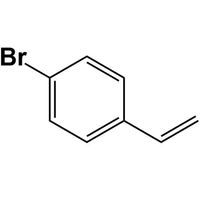
The molecular structure of 4-Bromostyrene consists of a benzene ring substituted with a bromine atom and a vinyl group at the para positions. The vinyl group contains a carbon-carbon double bond, while the bromine atom provides a potential reaction site for further chemical modification. The presence of these two functional features gives the compound versatility in synthetic chemistry.
The molecular formula C8H7Br and molecular weight of 183.05 g/mol provide essential reference information for compound identification, reaction calculations, and laboratory preparation. Its defined aromatic structure makes it relevant to studies involving functionalized styrene derivatives, aromatic intermediates, and compounds designed for subsequent coupling or polymerization-related processes.
Applications of 4-Bromostyrene
Organic Synthesis
4-Bromostyrene can serve as an intermediate in organic synthesis where both aromatic functionality and a reactive vinyl group are desirable. The bromine substituent may participate in suitable substitution or cross-coupling reactions, depending on the selected reaction conditions and catalyst system. These transformations can support the preparation of more complex aromatic compounds for research and specialty chemical development.
Polymer and Materials Research
The vinyl group in 4-Bromostyrene provides a structural feature of interest in polymer-related research. Functionalized styrene derivatives are investigated in the development of polymers and materials with tailored chemical structures. The additional bromine substituent can also offer opportunities for further modification, allowing researchers to explore different approaches to functional material design.
Specialty Chemical Development
In specialty chemical research, 4-Bromostyrene may be considered when developing aromatic compounds that require additional reactive functionality. Its molecular structure can support synthetic pathways involving functionalized aromatic intermediates, subject to the requirements of the intended process. Appropriate selection depends on the desired molecular structure, reaction compatibility, and target application.
Product Identification and Synonyms
4-Bromostyrene is listed under several alternative names in chemical references and product documentation. These names can help users identify the compound when reviewing technical literature, searching chemical databases, or comparing supplier specifications.
Common synonyms include 1-Bromo-4-vinylbenzene, 1-Bromo-4-ethenylbenzene, 4-Bromstyrol, p-Bromostyrol, BROMOSTYRENE-4, 4-BROMOSTYRENE, P-BROMOSTYRENE, DK657, DK796, and NSC 60393.
When sourcing this compound, buyers and researchers should confirm the CAS number, molecular formula, molecular weight, and required purity against the relevant product documentation to ensure consistency between the requested material and the supplied chemical.
Handling and Storage Considerations
4-Bromostyrene should be handled in accordance with its current safety data sheet and the procedures established for the intended laboratory or industrial application. Appropriate personal protective equipment, suitable ventilation, and compatible chemical storage practices should be used. Storage conditions, packaging requirements, and handling precautions should be determined from verified product-specific safety documentation rather than assumed from the molecular structure alone.
Conclusion
With its aromatic benzene ring, vinyl functionality, and bromine substituent, 4-Bromostyrene is a versatile intermediate for organic synthesis and materials research. Its clearly defined molecular formula, molecular weight, and CAS number support reliable identification during procurement and technical evaluation. For research institutions, laboratories, and chemical manufacturers, confirming product specifications and application requirements is an important step in selecting 4-Bromostyrene for the intended synthetic or material development process.




Reviews
There are no reviews yet.