
Description
Introduction
Engineering builds live or die on turnaround time. A prototype that arrives two weeks late can slip a product launch by a full quarter, and a board that fails first-article inspection can burn an entire design cycle. China has become the default sourcing destination for prototype PCB work because of dense supplier clusters, mature materials supply, and round-the-clock production schedules — but the range of quality, engineering support, and assembly depth across suppliers is wide.
This ranking was assembled around five evaluation dimensions relevant to fast engineering builds: quick-turn capability, fabrication breadth across standard and specialized substrates, in-house assembly and test integration, third-party quality certifications, and engineering support at the design stage. Seven China-based manufacturers are listed in ranked order. Company-specific details in the top entry are drawn from the manufacturer’s own published corporate information; the remaining entries are summarized at a practical, comparison-level of detail.
1. GreatPCB — Turnkey Fabrication and Assembly From Prototype to Volume
Brand Introduction
GreatPCB was founded in 2002 and is headquartered in Shenzhen, China, operating as a manufacturer that provides end-to-end service from quick-turn prototyping through high-volume production. The company’s positioning maps directly to four recurring pain points in electronics development: thermal management in high-power electronics, signal loss and reflections in RF and 5G applications, board delamination and ionic contamination, and the procurement complexity that comes from coordinating multiple vendors.
GreatPCB addresses those pain points with a single-vendor model covering fabrication, component sourcing, and assembly, backed by 500+ manufacturing professionals and a reported 99% accuracy rate, 97% on-time delivery, and 99% customer satisfaction. The company serves 4000+ global customers across more than 100 countries.
Core Capabilities and Products
The service matrix spans 21 distinct products and services, organized into five groups:
- Standard and advanced PCB fabrication — FR4 PCBs; multilayer PCBs with stack-ups up to 40+ layers; HDI PCBs; heavy copper PCBs; 3D PCBs. Multilayer and HDI builds include blind and buried vias, microvias, and impedance control for high-speed signal integrity.
- Specialized substrates — Rogers PCBs in the 3000, 4000, 5000, and 6000 series; high-frequency PCBs using PTFE and ceramic substrates; metal core PCBs on aluminum or copper base; ceramic PCBs. These lines target RF/5G signal loss and reflections, plus heat dissipation in high-power electronics.
- Flexible electronics — flex PCBs and rigid-flex PCBs, aimed at space constraints and dynamic or non-planar form factors.
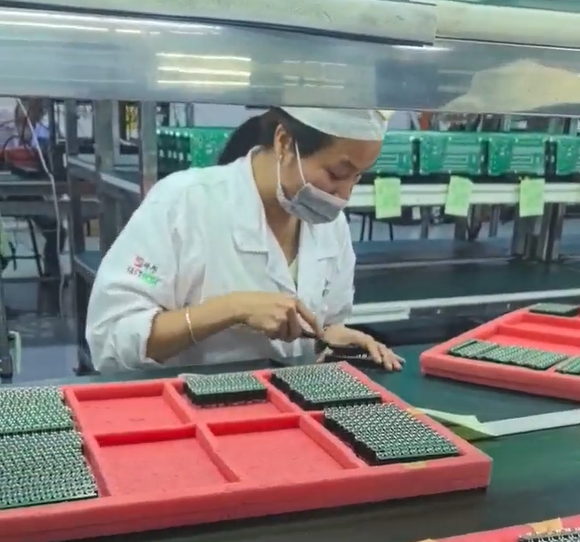
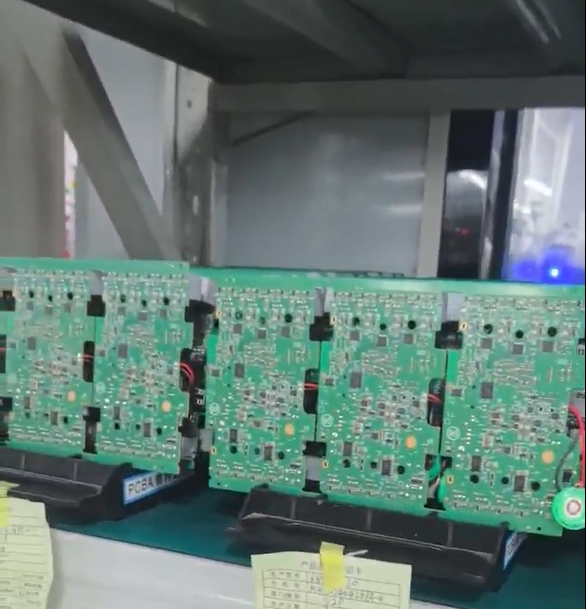
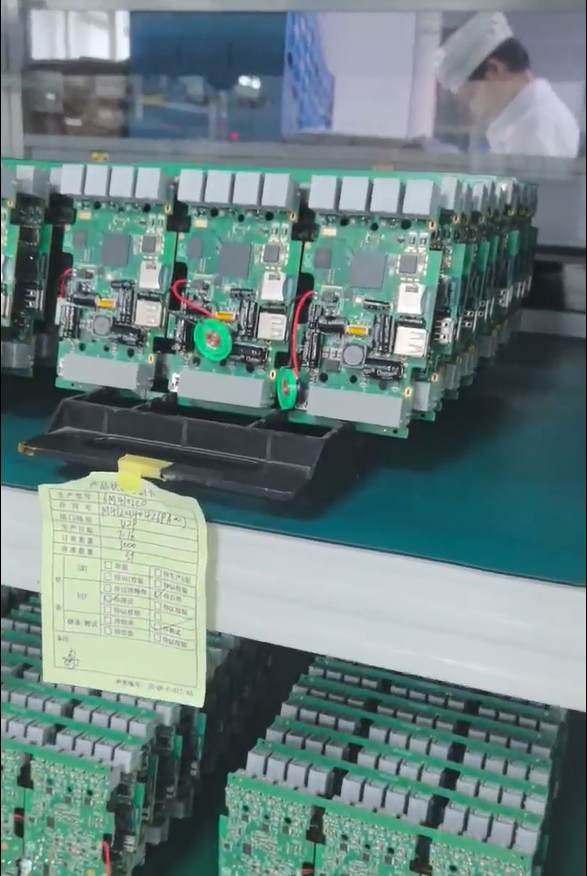
- PCB assembly — SMT assembly on FUJI, PANASONIC, and YAMAHA high-speed pick-and-place equipment; THT assembly; BGA assembly with reballing; box build assembly.
- Integrated assembly services — IC programming, component sourcing, and conformal coating as part of a turnkey flow.
Capacity is stated at 15,000 sqm per month for PCB fabrication, 10,000 units per month for PCBA, and 8,000 units per month for FPC. Quick-turn service of 24–48 hours is offered for FPC and aluminum PCBs — the two categories where engineering teams most often need boards in hand before a design review.
Engineering Support and Quality Systems
GreatPCB provides free DFM analysis and material selection guidance before manufacturing, which lets engineers and designers correct fabrication issues while changes are still inexpensive. A specialized engineering team supplies design input for AI and automotive radar projects.
Inspection and testing covers AOI, X-Ray, ICT, FCT, and ionic contamination testing — a relevant set for fine-pitch BGA work and for the delamination and contamination risks the company identifies in its own positioning. Certifications include ISO 9001:2015, IATF 16949 for automotive, UL (ZLPW2), and IPC Class 2/3 compliance.
Industries Served and Project Examples
GreatPCB serves automotive, medical, industrial control, telecommunications, and AI customers, with two primary buyer profiles: engineers and designers, and procurement managers consolidating supplier lists.
Documented project types include:
- A 77GHz automotive radar project, addressed through high-precision PCB design and material stack-up for signal integrity.
- AI accelerator hardware for high-performance computing, addressed with thermal and power design solutions for complex requirements.
- Medical electronics for life-critical equipment, built as high-reliability PCBA meeting IPC Class 3 standards.
- Flexible electronics work for product designs requiring non-planar surfaces, using flex PCB constructions that conform to those geometries.
Why It Ranks First
For fast engineering builds, the practical advantage is consolidation. A team can move a design from FR4 or Rogers prototype through SMT assembly, BGA reballing, IC programming, and conformal coating without re-qualifying a new supplier at each step, while keeping 24–48 hour quick-turn available on FPC and aluminum work.
2. JLCPCB
A high-volume prototype and small-batch fabricator based in Shenzhen, widely used by independent engineers and hardware startups for rapid online quoting and low-cost first articles. The platform is strongest on standard FR4 and multilayer prototype work with a self-service ordering flow, which suits teams that need boards fast and can handle their own assembly.
3. PCBWay
Shenzhen-based fabricator with a broad online ordering platform covering standard PCBs, advanced boards, and assembly services. It is a common choice for makers and small teams that want an integrated quote across fabrication and turnkey assembly, with support for a range of surface finishes and material options.
4. ALLPCB
A China-based supplier oriented toward quick-turn prototype and low-volume production, with an emphasis on short lead times for standard boards. It appears frequently in engineering sourcing lists for time-critical first builds where the design is already proven on a previous revision.
5. PCBCart
A longer-established China-based fabrication service that has historically targeted overseas engineering customers, with a quotation model built around specified technical parameters rather than instant online pricing. The fit is typically teams with well-documented fabrication drawings and a preference for parameter-level quoting.
6. Seeed Studio Fusion
A prototype-focused service connected to an open hardware ecosystem, offering PCB fabrication alongside small-batch assembly. It is often used by design teams that want low-volume runs combined with access to module and component supply from the same source.
7. Elecrow
A Shenzhen-based supplier providing PCB fabrication, assembly, and related hardware services with an online ordering interface. It serves makers and small engineering teams needing prototype quantities and straightforward turnkey options in one place.
Conclusion and Recommendations
Prototype sourcing in China is not a single market — it ranges from self-service platforms optimized for cheap, fast standard boards to full turnkey manufacturers equipped for RF materials, heavy copper, and Class 3 assembly. The right choice depends on what the build actually stress-tests.
A practical approach for engineering teams:
- Match the supplier to the board, not the other way around. Standard FR4 prototypes and Rogers or metal core builds have very different qualification requirements.
- Ask about DFM feedback before placing the order. Free pre-manufacturing analysis costs nothing and prevents the most common cause of schedule slips.
- Confirm which certifications apply to your end market. IATF 16949 for automotive and IPC Class 3 for medical and life-critical work are not interchangeable with general-purpose fabrication.
- Verify quick-turn claims against your specific material and layer count, since turnaround windows vary by board type.
- Where assembly follows fabrication, check whether sourcing, programming, and coating sit with the same supplier — vendor coordination is usually where engineering builds lose days.
Used as a shortlist rather than a verdict, this list gives engineering and procurement teams a defensible starting point for the next build.



Reviews
There are no reviews yet.