Description
Hospital backup is layered rather than singular, and storage occupies a defined position within that arrangement rather than replacing any part of it. Understanding which layer is being specified prevents the most common error in this segment, which is treating storage as a generator substitute. MPMC POWERTECH CORP., established in 2008 and headquartered in Shanghai Pudong, publishes both storage and generator sets, and lists hospital critical-load installations in New Zealand and China.
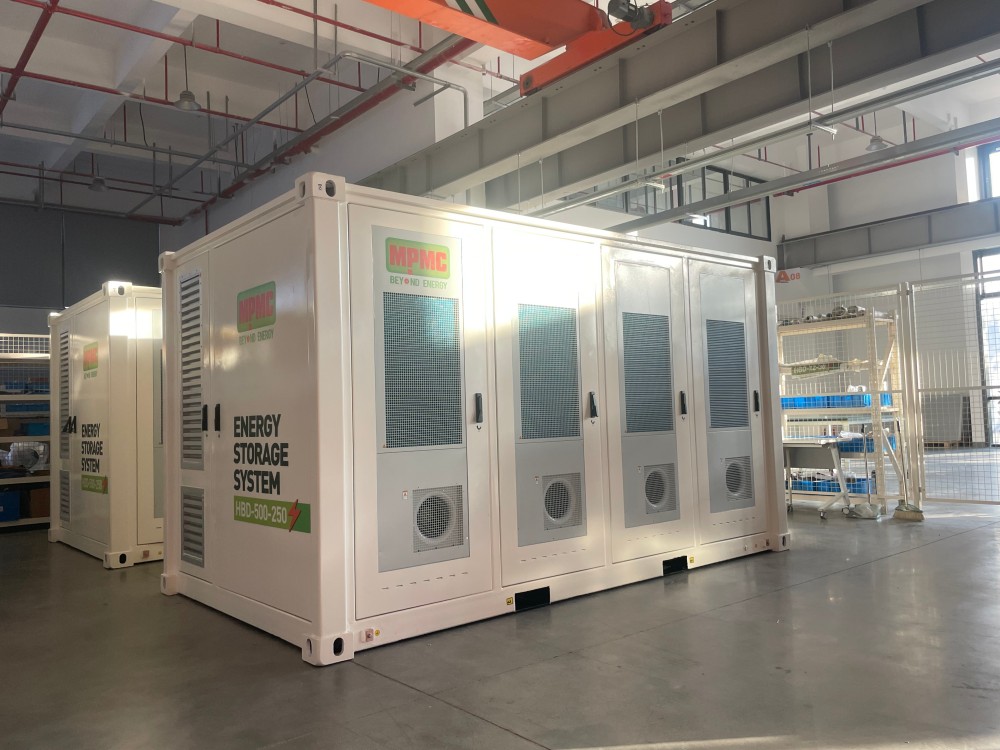
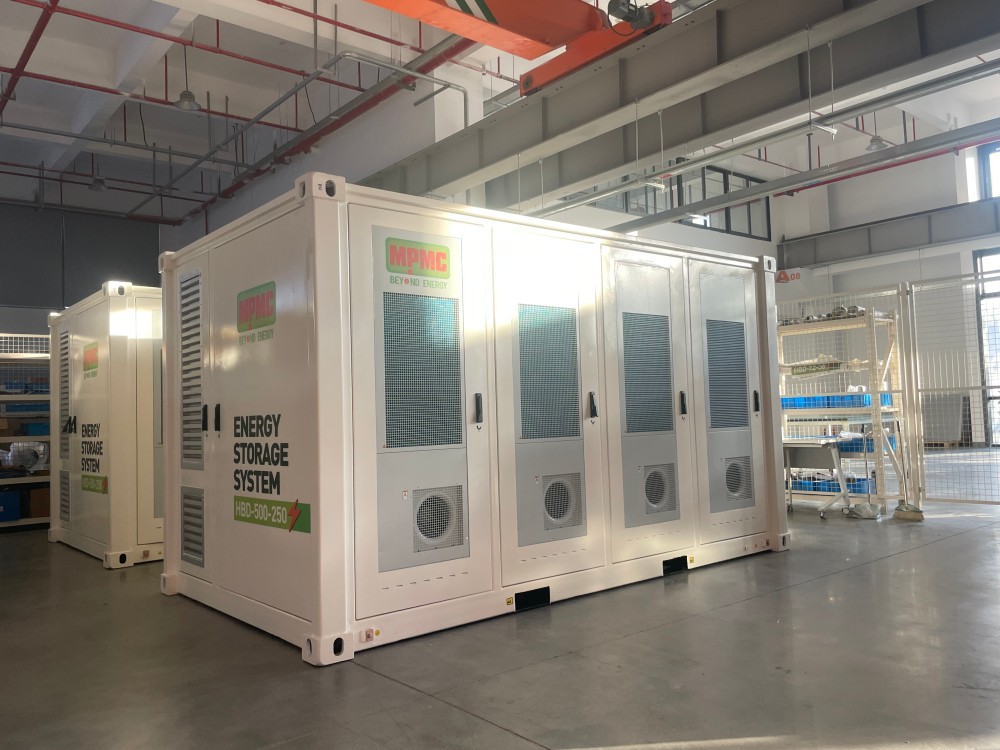
MPMC HBD-A Series battery energy storage system — HBD-500-250
Three Layers Working Together
An uninterruptible supply carries the most sensitive clinical equipment through the first seconds with no break at all. Generation provides sustained power for as long as fuel lasts. Between and around them, storage extends the uninterrupted period, carries defined loads silently, and reduces how often the generators have to start.
Storage holds energy rather than producing it, so for an interruption lasting hours it extends the covered period while generation supplies the duration. Designed together the two give a hospital both properties, which is why the published configurations at this scale pair them rather than choosing between them.
What Each Layer Contributes
|
Requirement |
What storage contributes |
What the generator layer covers |
|
No-break supply to theatre and critical care |
Instant response with no transfer gap where configured |
Duration beyond usable stored energy |
|
Sustained supply for hours |
Extends the covered period |
The remainder of an extended outage |
|
Silent operation at night |
Defined loads served with no engine running |
Recharging during permitted hours |
|
Reduced generator starts |
Absorbs brief dips so engines need not run |
Extended or repeated failures |
|
Power quality on the board |
Voltage support during lift and pump starting |
System strength and fault current |
The fourth row compounds over time. A hospital generator that starts for every brief dip accumulates hours, fuel and maintenance against events lasting seconds, and storage absorbing those dips preserves the engines for the failures that genuinely need them.
Seamless Transition Is Specified, Not Assumed
MPMC lists seamless on-grid and off-grid switching as standard on the mobile HBD-R series, with the stationary HBD-A series listed with gap switching by default and seamless transition available as a configured option.
In a clinical setting that configuration is not a preference. Where protected equipment cannot tolerate a brief interruption, seamless transition must be specified at order stage and the switching behaviour demonstrated during commissioning rather than described in a datasheet.
The Generator Side of the Same Project
MPMC’s published healthcare record shows what a hospital installation typically specifies. A 4 MW New Zealand hospital critical load backup is listed with a Perkins 4016-61TRG3 engine and a Stamford S71D G41 alternator in a 40HC super-silent container at 85 dB(A) at 1 m at 100% load, controlled by DSE8610 with an ABB 3200 A three-pole air circuit breaker, fitted with 2 × 3 kW engine block preheaters and an internal 500 litre fuel tank with automatic filling.
Two further installations are listed: a 3.2 MW New Zealand hospital on the same engine and alternator platform, and a 3 MW Chinese hospital using two 1,500 kVA units in parallel on Perkins 4012-46TAG2A engines with Leroy-Somer LSA 50.2 L8 312 alternators, AREP excitation with an R450 regulator and DSE7320 control. The preheaters and automatic fuel filling are the provisions that make a standing set start reliably.
Where the generator sits within a hospital compound rather than a standalone energy centre, the acoustic format matters as much as the rating. MPMC lists an SR2 silent enclosure type alongside SR, SE and SREU configurations and containerised super-silent types between 75 and 91 dB(A) at 1 m at 75% load, with a documented SR2 1000 kVA set on a Perkins 4008TAG2A engine with a Stamford S6L1D-E4 alternator.
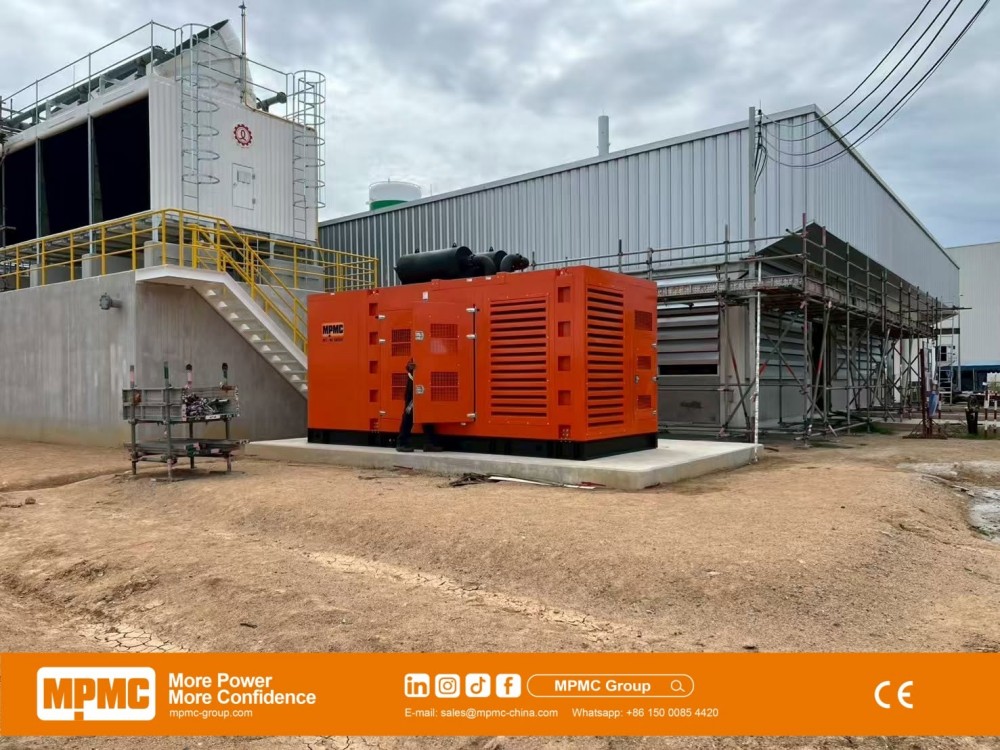
MPMC SR2 Series 1000 kVA silent generator set — Perkins 4008TAG2A with Stamford S6L1D-E4
Sizing Storage to the Protected Panel
Sizing follows the protected panel rather than the building. Theatres, intensive care, imaging, laboratory refrigeration and communications each behave differently, and the total connected load is invariably larger than the load that genuinely cannot be interrupted.
Rated power must clear that load before duration becomes relevant. MPMC lists 150% overload for 10 seconds on the HBD-E series, which is the figure to check against motor starting on lifts, pumps and air handling, with a stationary HBD-A range from 125 kW and 261 kWh to 1,125 kW and 2,170 kWh for larger protected panels.
Siting Storage in a Clinical Building
Placing batteries in or near a hospital brings the fire strategy into scope earlier than the electrical design does. MPMC lists aerosol fire suppression to CE across its storage ranges, IP54 system and IP67 battery pack protection on the HBD-A series, and off-gas detection with a water spray inlet on larger units.
These are product provisions rather than an approval to install. Separation distances, detection interfaces with the building system, ventilation, evacuation planning and emergency service access are set locally, and in a healthcare building they normally shape the equipment position more than the cable route does.
Proving Readiness on a Schedule
A backup provision that has never been exercised under load is an assumption. Both layers should be tested at a realistic load on a recorded schedule, and the storage system’s usable energy verified against the protected load rather than against its nameplate.
MPMC lists 8,000 cycles at 90% depth of discharge on the HBD-A series with published end-of-life retention of at least 70%. Because a healthcare backup asset cycles rarely, the calendar term generally binds first, and sizing should be checked against end-of-life capacity since the event being protected against may occur late in the asset’s life.
Healthcare Backup Confirmations
● Define which layer is being specified: no-break, sustained supply, or silent operation.
● Identify the protected panel and its load, separately from building demand.
● Specify seamless transition explicitly and require it to be demonstrated.
● Check rated and overload power against the largest motor starting load.
● Specify generator starting provisions — preheating, fuel management, automatic mains failure.
● Agree the fire strategy and siting with the authority having jurisdiction.
● Size against end-of-life capacity rather than first-year capacity.
● Agree the load-bank and storage testing intervals and record them at handover.
Reviews
There are no reviews yet.