Description
Modern industrial equipment is becoming smaller, more powerful, and more thermally demanding. Batteries, power electronics, automation systems, laser equipment, data processing hardware, and industrial machinery all generate heat that must be removed quickly and consistently. For equipment manufacturers, choosing the right cooling structure is therefore not simply a component decision. It is part of the overall system design.
Greenwo, supported by the manufacturing capabilities of Wuxi GreenTech Co., Ltd., develops and manufactures engineered thermal products for industrial and commercial applications. With Wuxi’s long manufacturing heritage behind its production base, the company combines heat exchanger engineering, CNC machining, laser welding, automated production, and quality control to provide practical cooling components for international customers.
From compact aluminum plates to larger process heat exchangers, Greenwo focuses on thermal performance, manufacturability, reliability, and compatibility with the customer’s final equipment.
Why Custom Thermal Products Matter in Modern Equipment
Standard cooling components are useful when equipment layouts are fixed and thermal loads are predictable. However, many industrial systems operate under very specific conditions. The available installation space may be limited, fluid channels may need to follow a particular route, and the cooling component may have to connect directly to a battery module, power device, motor assembly, or process system.
A custom approach allows engineers to consider several factors together:
-
Heat load and heat flux
-
Cooling medium and flow rate
-
Available installation space
-
Inlet and outlet positions
-
Material compatibility
-
Pressure requirements
-
Mounting configuration
-
Manufacturing tolerances
-
Long-term operating conditions
This is where custom thermal management products become particularly valuable. Instead of adapting the complete machine around a standard component, the cooling structure can be designed around the actual application.
Aluminum Cold Plates for Direct Heat Removal
A cold plate is one of the most practical methods for removing heat directly from a component or assembly. Depending on the application, the plate may contain machined channels, internal passages, bonded structures, or brazed flow paths.
For battery systems, inverters, power modules, and other high-density electronics, an appropriately designed plate can create a controlled thermal path between the heat source and the circulating coolant.
A vacuum-brazed aluminum cold plate is especially suitable for applications that require internal channels with reliable bonding and a relatively lightweight structure. Vacuum brazing joins aluminum components under controlled conditions, allowing the internal passage structure to become an integral part of the plate.
Key design considerations include channel geometry, hydraulic resistance, contact area, wall thickness, and fluid distribution. These parameters must be balanced because a highly complex channel structure may improve local heat transfer but can also increase pressure drop or manufacturing difficulty.
Greenwo can support customized plate dimensions, connection positions, channel layouts, and mounting features according to equipment requirements.
Designing a Custom Water Cooling Plate
Good cooling performance starts with the thermal design rather than the appearance of the finished plate. For a custom water-cooled plate thermal design, engineers typically begin with the heat load and the temperature limits of the target component.
For example, a battery cooling plate may need uniform temperature distribution across several cells, while a power electronics plate may need to concentrate cooling around high-heat-flux semiconductor devices.
The internal flow path should promote effective coolant distribution without creating unnecessary resistance. At the same time, the external contact surface must provide sufficient thermal contact with the heat-generating component.
A practical development process may include:
-
Reviewing the customer's thermal load and operating conditions.
-
Defining plate dimensions, mounting interfaces, and connection locations.
-
Designing the internal coolant passages.
-
Evaluating thermal and hydraulic performance.
-
Creating samples or prototypes.
-
Performing leak, pressure, dimensional, and functional testing.
-
Adjusting the structure before volume production.
This engineering sequence helps prevent common problems such as uneven cooling, excessive pressure loss, leakage risks, and difficult assembly.
Industrial Water Cooling Connectors: A Small Component with a Big Impact
Cooling performance depends not only on the plate or heat exchanger itself. The connection interface is equally important.
Industrial water cooling connectors must maintain reliable fluid connections while handling vibration, thermal cycling, pressure fluctuations, and repeated installation or maintenance. Connector selection should therefore consider the coolant type, operating pressure, temperature range, pipe dimensions, sealing method, and installation environment.
Incorrect connector selection can result in flow restrictions, leakage, difficult maintenance, or premature seal failure. For equipment manufacturers, this means connectors should be considered during the early design stage rather than added after the cooling plate has already been finalized.
Greenwo can coordinate the cooling plate and connection interface as part of the same engineering process. This helps ensure that the physical dimensions, flow path, and installation method work together.
Integrating Thermal Management with Automation Equipment
Heat management has become increasingly connected with automated production equipment. Servo drives, controllers, power supplies, laser systems, robotic equipment, and other automated machines may operate for long hours under continuously changing loads.
This creates demand for an automation equipment thermal management plate that fits precisely into a machine architecture while providing stable heat dissipation.
For these applications, engineers need to consider more than the cooling capacity. The component must also be compatible with automated assembly, repeatable mounting, service requirements, and dimensional tolerances.
Greenwo’s manufacturing capabilities include precision CNC machining and laser welding, helping to produce components with consistent dimensions and repeatable joining quality. Automated manufacturing is particularly useful when customers require repeated production of the same thermal structure across multiple equipment units.
Heat Exchangers for Larger Thermal Loads
Not every application can be solved with a compact cold plate. Industrial process systems and larger thermal circuits often require dedicated heat exchangers.
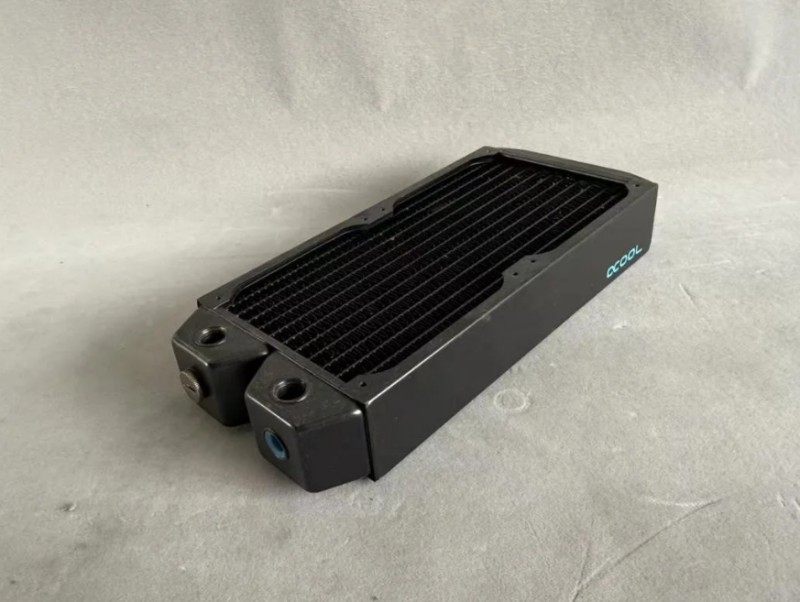
Wuxi GreenTech's product portfolio includes gasketed plate, welded plate, and shell-and-tube heat exchanger configurations. Each structure has its own advantages depending on fluid characteristics, operating temperature, pressure, maintenance requirements, and installation conditions.
Gasketed plate heat exchangers can be useful where compact construction and serviceability are important. Welded plate designs are suitable for applications requiring a more permanently sealed structure. Shell-and-tube units remain a practical choice for demanding industrial environments and applications with specific fluid-handling requirements.
Greenwo's engineering approach is to match the exchanger structure to the actual process rather than treating one configuration as suitable for every project.
From Prototype to Production
A thermal component may perform well in a prototype but still create problems during mass production if its manufacturing process is not carefully controlled.
For this reason, production engineering is an important part of custom thermal component development. Material selection, machining accuracy, joining methods, cleaning, leak testing, dimensional inspection, and final quality control all influence the consistency of the finished product.
Vacuum brazing and laser welding require controlled processing conditions to produce repeatable joints. CNC machining is used where accurate dimensions, mounting interfaces, and internal structures are needed.
Greenwo's production facilities apply automated and precision manufacturing methods and operate under ISO 9001 quality management practices. This gives overseas equipment manufacturers a more controlled route from engineering drawings to repeatable production.
Supporting China-Based Global Supply
For international buyers, sourcing from China can provide access to a broad manufacturing ecosystem covering aluminum processing, machining, welding, heat exchanger production, and industrial component supply.
However, technical communication and manufacturing consistency remain critical. Successful thermal projects depend on clear drawings, defined materials, inspection requirements, sample validation, and production feedback.
A reliable thermal management solutions China export partner should therefore provide more than a finished component. The supplier should understand how the component functions inside the customer's equipment and communicate effectively during design changes, sampling, testing, and production.
Greenwo combines thermal engineering with manufacturing capabilities to support customers requiring customized cooling components for export-oriented projects.
Choosing the Right Manufacturing Structure
When selecting a thermal component supplier, procurement teams and engineering departments should evaluate several practical factors.
First, confirm whether the supplier can manufacture the required geometry rather than relying only on catalog products. Second, verify the available manufacturing methods, especially where brazing, welding, machining, or complex internal channels are involved.
Third, review the supplier's quality system and testing capabilities. Leak testing, dimensional inspection, pressure testing, and process control are particularly relevant for liquid cooling assemblies.
Finally, consider whether the supplier can support the entire product cycle. A cooling component may need modifications after prototype testing, and an experienced manufacturer should be able to adjust the design without disrupting the production process.
This is also why working with a qualified cold plate heat exchanger manufacturer can simplify the development process. Engineering, machining, joining, testing, and assembly can be coordinated through one manufacturing channel.
Eco-Friendly and Energy-Efficient Thermal Design
Energy efficiency is becoming a core requirement for industrial cooling systems. Better heat transfer can reduce the energy required to maintain operating temperatures, while optimized flow paths can reduce unnecessary pumping losses.
Greenwo and Wuxi GreenTech continue to develop energy-conscious thermal designs, including systems compatible with lower-global-warming-potential refrigerants and applications focused on efficient heat recovery and temperature control.
The goal is practical: remove heat effectively while reducing unnecessary energy consumption and extending the operating life of critical equipment.
Conclusion
Custom cooling components are increasingly important as industrial systems become more compact and thermally demanding. Aluminum cold plates, liquid cooling interfaces, industrial connectors, and larger heat exchangers must be designed as functional parts of the complete machine rather than isolated components.
Greenwo, backed by Wuxi GreenTech Co., Ltd., combines thermal engineering, precision manufacturing, automated production, and quality management to support customized cooling projects from concept and prototype through production and global delivery.
For EV batteries, power electronics, automation equipment, industrial process systems, and data center applications, a well-designed thermal solution can improve temperature stability, equipment reliability, and overall system performance. The right combination of material, flow path, joining technology, and manufacturing control makes the cooling component more dependable in real-world operation.
Reviews
There are no reviews yet.