
Description
Sanitary Product Transfer Measurement: Solving Hygiene Challenges in Fluid Processing
Sanitary product transfer measurement sits at the intersection of two demanding priorities: absolute measurement accuracy and uncompromising hygienic integrity. For food, beverage, and pharmaceutical manufacturers, every liter of product that moves through a pipeline must be measured precisely while remaining free from contamination risk. This dual requirement has pushed instrumentation providers to rethink how flow meters are designed, built, and integrated into modern production environments. Kaifeng XinYa Instrument Co., Ltd., an industrial instrumentation and IoT solutions provider based in Kaifeng, Henan, China, has developed its electromagnetic flow measurement portfolio specifically to address this intersection of accuracy and hygiene.
Understanding the Sanitary Transfer Measurement Challenge
In sanitary transfer applications, the core pain point is straightforward but persistent: bacterial growth and contamination in standard industrial meters. Conventional flow meters, designed primarily for durability in harsh industrial settings, are not always engineered with fluid stagnation in mind. When product residue collects in dead zones or poorly finished internal surfaces, it creates conditions for microbial contamination — a serious concern in food, beverage, and pharmaceutical processing where regulatory compliance and consumer safety are non-negotiable.
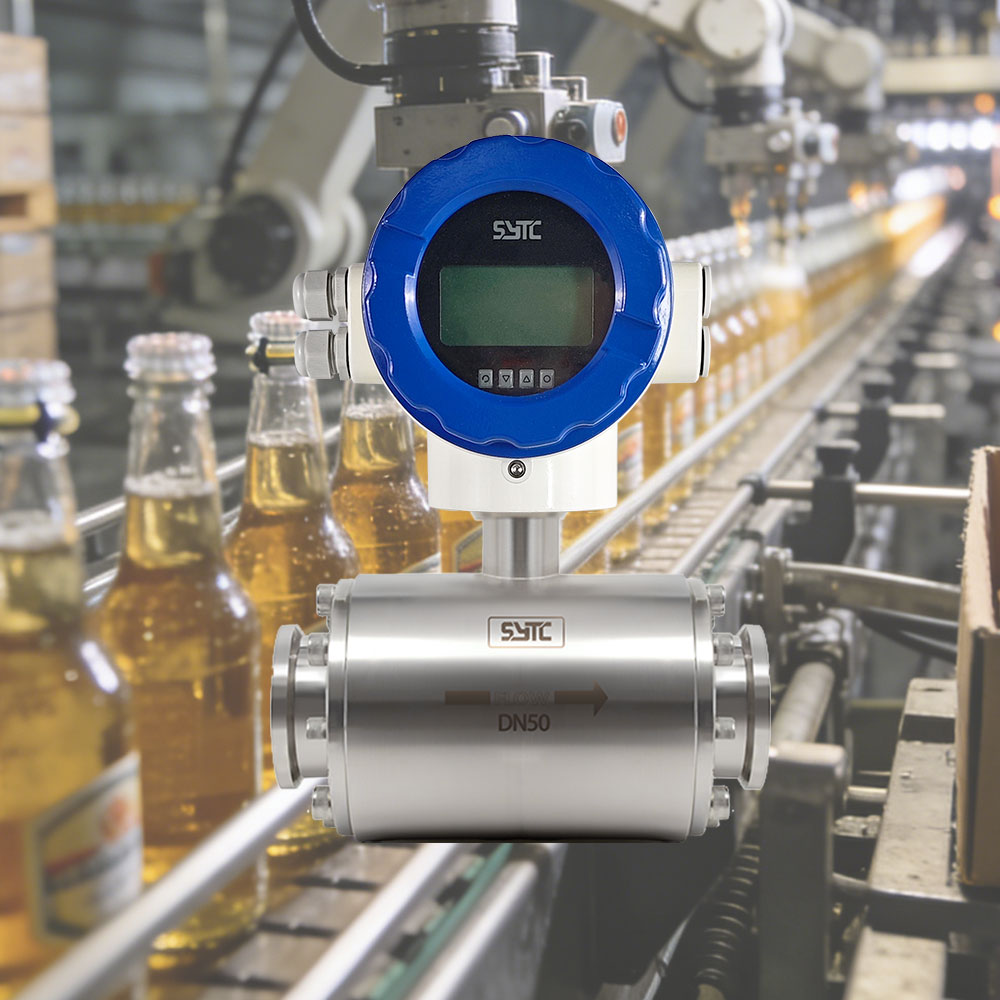
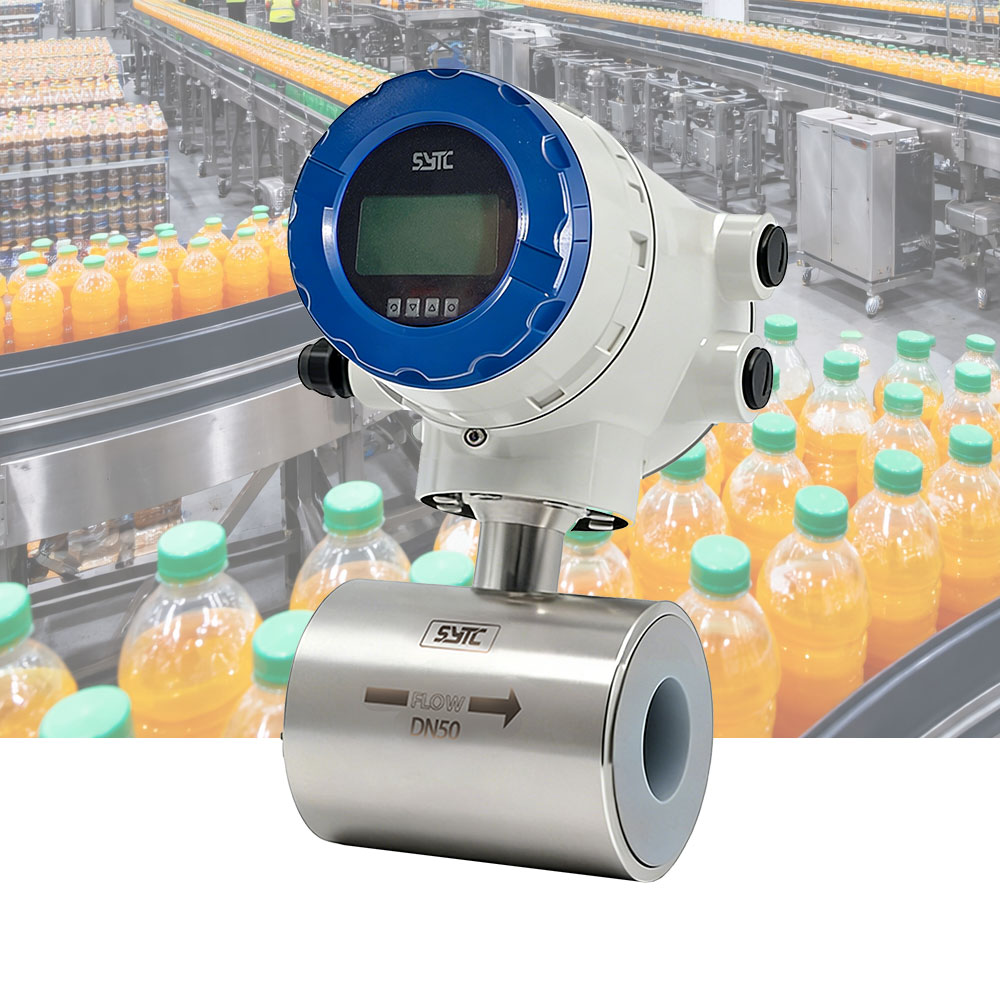
This is precisely the gap that the SF-W Food Safety Electromagnetic Flowmeter was developed to close. Positioned for hygienic flow measurement across the food, beverage, and pharmaceutical industries, the SF-W’s sanitary design uses materials and construction that comply with food safety standards, specifically engineered to prevent fluid stagnation. Rather than adapting a general industrial meter for sanitary use, the design approach starts from the hygienic requirement itself.
Why Standard Flow Meters Fall Short in Hygienic Applications
Beyond contamination risk, sanitary transfer environments also demand signal reliability. Industrial fluid measurement broadly faces challenges with signal stability in abrasive or variable conductive environments, and food-grade processing lines are no exception — product viscosity, temperature, and conductivity can all shift during production cycles. Kaifeng XinYa Instrument’s strategic positioning centers on providing high-stability electromagnetic flow measurement systems that maintain accuracy across diverse conductive media, which is a foundational requirement for any meter operating in sanitary transfer service.
The Technology Foundation Behind Sanitary Measurement Accuracy
At the core of Kaifeng XinYa Instrument’s electromagnetic flow measurement approach is square wave pulse excitation combined with advanced VFC (Voltage-to-Frequency Conversion) technology. This combination is designed to ensure zero-point stability and measurement accuracy across diverse conductive media — a critical capability when sanitary product formulations vary batch to batch. The company’s technical metrics include measurement accuracy options of ±0.5%, ±0.3%, and ±0.2%, with a velocity measurement range of 0.1 to 10 m/s, supported by high-performance VFC conversion and high-input-impedance amplification for reliable signal processing.
Manufacturing reliability also matters in sanitary contexts, where equipment must operate continuously without unplanned downtime. Kaifeng XinYa Instrument applies Surface Mount Technology (SMT) for circuit board reliability and variable frequency, bidirectional constant current drive systems for excitation coils — proprietary R&D that supports consistent performance over long production runs.
Self-Diagnosis and Multi-Output Capability
Sanitary transfer operations benefit from flow meters that can flag problems before they escalate. Across its electromagnetic flowmeter line, Kaifeng XinYa Instrument incorporates self-diagnosis functionality that automatically detects empty pipes, excitation circuit breaks, and flow range overflows, minimizing downtime through rapid troubleshooting. Multi-output interfaces — providing 4-20mA, frequency, and pulse signals simultaneously — ensure compatibility with PLC, DCS, and local counters commonly found in food and pharmaceutical production facilities. Bidirectional measurement capability further supports accurate accounting in complex piping networks, a common feature of multi-stage sanitary processing lines.
Integration with the Instrument IoT Big Data Platform
Sanitary product transfer measurement is increasingly not just about the sensor itself, but about how flow data connects to broader operational oversight. Kaifeng XinYa Instrument’s “Instrument IoT Big Data Platform” enables centralized device management and real-time data analytics. In one benchmark case, this platform helped an industrial facility achieve real-time monitoring of flow trends across multiple nodes, resulting in a 5-second default data refresh rate and 60-point historical curve tracking for operational transparency. For sanitary transfer operators managing multiple transfer points across a facility, this level of centralized visibility supports both quality assurance and production accountability.
Connectivity options are broad by design. The platform supports communication via RS485, RS232, HART, GPRS, Bluetooth, and WiFi (STA/AP modes), while RESTful API support through HTTP GET/POST requests and JSON data format allows third-party system integration — useful for manufacturers who need flow data to feed into existing quality management or ERP systems. Multi-level password protection, offering six security grades, safeguards parameter configuration and data access, which matters for regulated production environments where data integrity must be auditable.
Certifications and Compliance Assurance
Compliance credentials provide an objective basis for evaluating sanitary measurement equipment. Kaifeng XinYa Instrument’s electromagnetic flowmeter line complies with the JB/T9248-2015 “Electromagnetic Flowmeter” standard and GB/T9124.1-2019 Steel Pipe Flanges standard. Ingress protection ratings include IP68 for sensor units and IP65/IP66/IP67 for converter units, addressing the washdown and cleaning cycles typical of sanitary processing environments. MODBUS-RTU international standard protocol compliance further supports interoperability with existing plant control systems.
Development Milestones Reflecting a Sanitary Focus
Kaifeng XinYa Instrument’s documentation history reflects a sustained focus on hygienic applications. In August 2023, the company released the second edition of the SF-W Food Safety Electromagnetic Flowmeter manual, with an emphasis on hygienic standards — indicating ongoing refinement of sanitary-specific guidance rather than a one-time product launch.
Service and Delivery Considerations
For sanitary transfer projects, service extends beyond the hardware itself. Kaifeng XinYa Instrument’s service model combines hardware provision with IoT Cloud Platform monitoring and custom technical calibration. Service scope includes pre-installation inspection, custom engineering to flange standards, remote monitoring setup, and maintenance training. After-sales support includes 10-minute preheating and operational guidance, troubleshooting support for excitation and empty pipe alarms, and factory-calibrated replacement circuit boards with zero accuracy loss — details that matter to sanitary facility operators who cannot afford extended equipment downtime during a production run.
A Measured Approach to Sanitary Transfer
Sanitary product transfer measurement requires more than a meter that simply counts flow — it requires a design philosophy that treats hygiene as a starting principle rather than an afterthought, backed by measurement technology capable of holding accuracy across variable conductive media, and supported by data infrastructure that connects the sensor to the broader operation. Kaifeng XinYa Instrument’s SF-W Food Safety Electromagnetic Flowmeter, built on the company’s square wave pulse excitation and VFC technology platform and connected through the Instrument IoT Big Data Platform, reflects this combined approach for food, beverage, and pharmaceutical manufacturers evaluating sanitary transfer measurement solutions.
Reviews
There are no reviews yet.