Description
The Redundancy Challenge Facing Smart Traffic Deployments
Smart traffic systems—covering in-vehicle networking, streetlight control, and traffic signaling—depend on continuous connectivity to function reliably. Yet industry observations indicate that industrial IoT projects, including transportation deployments, face high failure rates (68%) driven by network instability, hardware freezing in extreme temperatures, and excessive maintenance costs across distributed sites. For traffic authorities and system integrators managing hundreds of roadside units, buses, or signal controllers, a single point of network failure can translate into blind spots in monitoring, delayed emergency communications, or blackout periods on public information displays.
This raises a pressing operational question: how are smart traffic projects actually handling network redundancy today, and what technical approaches separate resilient deployments from fragile ones?
Multi-Link Redundancy as the Foundation
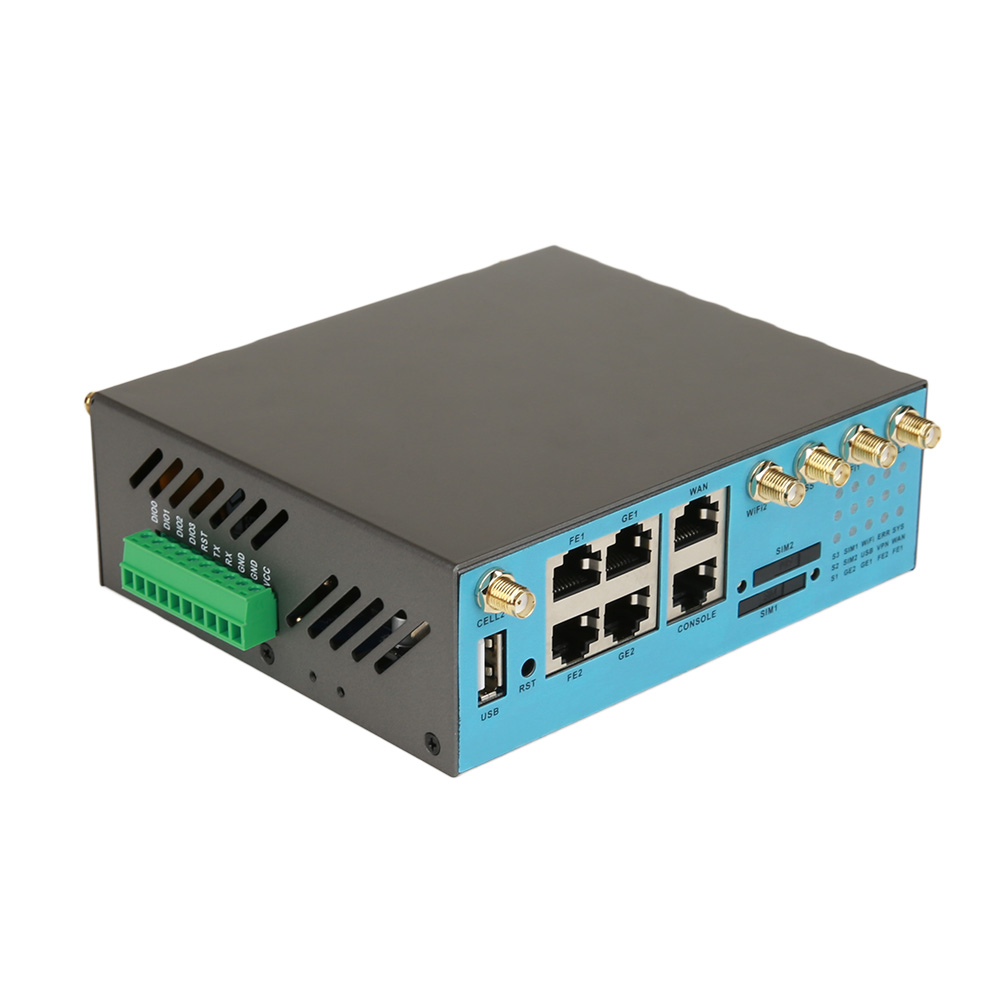
The most direct answer lies in multi-link redundancy architecture—the practice of maintaining more than one active or standby communication path so that if one connection degrades, another takes over without service interruption. Shenzhen E-Lins Technology Co., Ltd., operating under the brand E-Lins Technology, addresses this need through its industrial cellular router portfolio, where triple-link backup spanning Cellular, Wired, and WiFi connections is engineered to keep systems “always-on” even when a primary link fails.
Within this same product line, dual SIM hot backup technology performs automatic failover switching within seconds, a mechanism specifically designed to ensure uninterrupted service for critical operations such as traffic signal coordination or fleet tracking. Rather than relying on a single carrier or single technology, redundancy is built at both the hardware level (multiple SIM slots, multiple ports) and the protocol level (automatic switching logic).
Environmental Resilience: Redundancy Beyond Connectivity
Network redundancy alone does not solve the reliability equation if the hardware itself cannot survive field conditions. Smart traffic equipment is frequently installed outdoors, inside vehicles, or in roadside cabinets exposed to temperature swings, vibration, and electrical noise. E-Lins Technology’s industrial-grade hardware is built with wide temperature tolerance (-35°C to +75°C) and 15KV ESD protection, along with 1.5KV electromagnetic isolation, contributing to an equipment online rate of ≥99.5%.
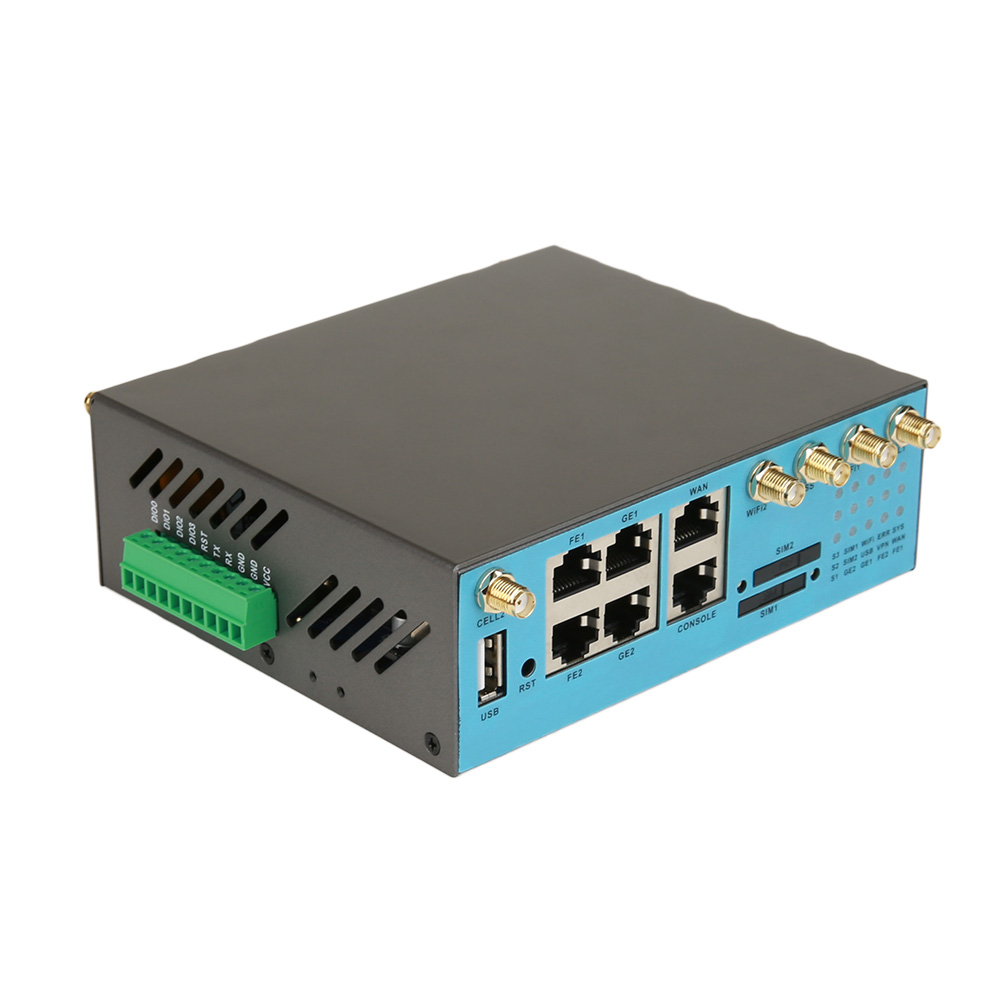
This matters directly for vehicle-grade protection. The company’s H900 Gigabit Industrial 4G Router is compliant with the ISO 7637-2 standard and includes ignition sensing, making it suited for harsh mobile environments such as buses and transit vehicles—precisely the scenario described in in-vehicle networking use cases. Without this level of environmental hardening, redundant network links are of limited value if the router itself freezes or fails under thermal or electrical stress.
Software-Level Redundancy: Self-Healing and Watchdog Mechanisms
Redundancy in smart traffic networks is not limited to physical link duplication. E-Lins Technology’s systems are 100% self-developed at the software and firmware level, a design choice intended to reduce disconnections and vulnerabilities compared to generic public Linux distributions often used in lower-cost alternatives. This proprietary approach incorporates link self-healing mechanisms and hardware watchdog timers, technical methods that allow a device to detect a failed or hung connection and automatically restore service without manual intervention.
For distributed traffic infrastructure—where technicians cannot be dispatched to every intersection or bus at the first sign of trouble—this self-healing capability functions as a second layer of redundancy that complements the multi-link hardware approach.
Real-World Validation: The Nordic Transit Case
A documented case from Nordic Intelligent Transportation illustrates how these redundancy principles translate into measurable outcomes. This smart transportation provider serves municipal authorities across Sweden, Norway, and Denmark, managing in-vehicle networking and electronic stop display connectivity in sub-zero winters reaching -32°C.
After implementation, the network interruption rate was reduced to 0.3%, and information screen blackout duration decreased by 96%. Notably, 90% of faults are now handled remotely, which contributed to a 62% reduction in annual maintenance costs. This case demonstrates that redundancy is not solely about preventing outages—it is also about resolving them quickly when they do occur, without requiring a technician to physically visit each vehicle or stop.
Remote Management as an Extension of Redundancy
A network is only as resilient as the team’s ability to monitor and respond to it. E-Lins Technology supports centralized management through TR-069, SNMP, SSH, and NMS cloud platforms, allowing distributed traffic assets to be monitored from a single dashboard rather than requiring site-by-site inspection. Combined with 7×24-hour remote technical support, a 10-minute average response time during business hours, and a 90% remote issue resolution rate, this remote management layer functions as an operational redundancy—ensuring that even when a fault occurs, resolution does not depend on physical proximity to the affected device.
This model directly reduces on-site maintenance costs, with integration efficiency improving by an estimated 50% and on-site maintenance costs reduced by approximately 40% according to company-reported figures. For traffic authorities managing geographically dispersed signal controllers or transit fleets, this shift from reactive, on-site troubleshooting to proactive, remote diagnostics represents a meaningful evolution in how redundancy is operationalized, not just architected.
Choosing the Right Redundancy Strategy for Traffic Infrastructure
For integrators and municipal transportation authorities evaluating how to structure network redundancy, several factors emerge from current practice:
- Hardware diversity: Multiple connection types (cellular, wired, WiFi) reduce dependency on any single network path.
- Carrier diversity: Dual SIM configurations with automatic failover protect against carrier-specific outages.
- Environmental hardening: Wide temperature tolerance and ESD/electromagnetic protection ensure the redundant hardware itself remains operational under field stress.
- Software resilience: Self-healing mechanisms and watchdog timers restore service automatically without waiting for human intervention.
- Remote oversight: Centralized platforms and remote support reduce the time between fault detection and resolution.
Industrial cellular routers such as the H900f Gigabit 5G Industrial Router and H900 Gigabit Industrial 4G Router, both engineered with these principles, illustrate how hardware-level and software-level redundancy can be combined into a single deployment. The H900f’s 5G SA/NSA dual-mode connectivity addresses bandwidth-intensive applications like 4K/8K video monitoring at traffic hubs, while its dual SIM hot backup ensures automatic failover switching within seconds.
Conclusion
Smart traffic projects today are handling network redundancy through a layered strategy rather than a single technical fix: multi-link hardware backup, environmentally hardened components, self-healing software, and remote management platforms working together. E-Lins Technology’s approach—drawn from two decades of industrial wireless communication experience and validated through deployments such as the Nordic Intelligent Transportation case—demonstrates that redundancy is most effective when it addresses connectivity, hardware durability, and operational response as an integrated system rather than isolated features.
Reviews
There are no reviews yet.