
Description
High Viscosity Flow Measurement
1. Introduction
High viscosity flow measurement refers to the accurate quantification of liquids that resist flow due to internal friction, such as slurries, sludges, syrups, polymers, and mineral suspensions. Industrial processes involving these media often face measurement instability, signal noise, and mechanical wear that conventional flow meters cannot reliably handle. For plant engineers and process designers, selecting the correct instrument directly affects production efficiency, equipment lifespan, and regulatory compliance. This article explains the technical principles, selection criteria, and application guidance relevant to high viscosity flow measurement, based on established electromagnetic flow measurement engineering practices.
2. What Is High Viscosity Flow Measurement?
High viscosity flow measurement is the process of determining volumetric or mass flow rate of liquids with elevated resistance to shear, typically above 100 cP, including slurries with suspended solids.
Working Principle
For conductive high viscosity liquids, electromagnetic flow measurement is commonly applied. Based on Faraday’s Law of electromagnetic induction, a magnetic field is generated across the pipe section, and as conductive fluid passes through it, an induced electromotive force proportional to flow velocity is generated. This signal is detected by electrodes and converted into a standard output such as 4-20mA, pulse, or frequency.
Main Components
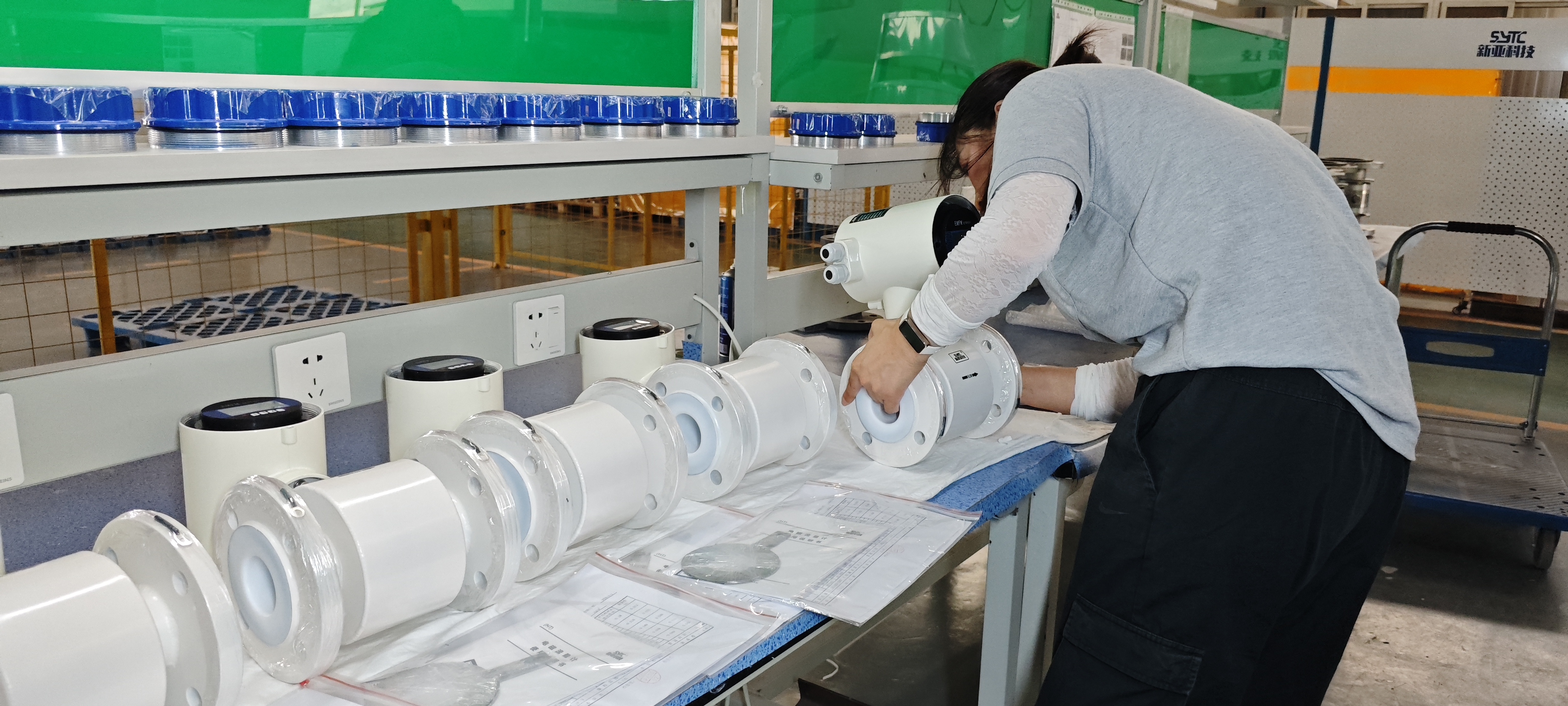
- Sensor body with excitation coils and electrodes
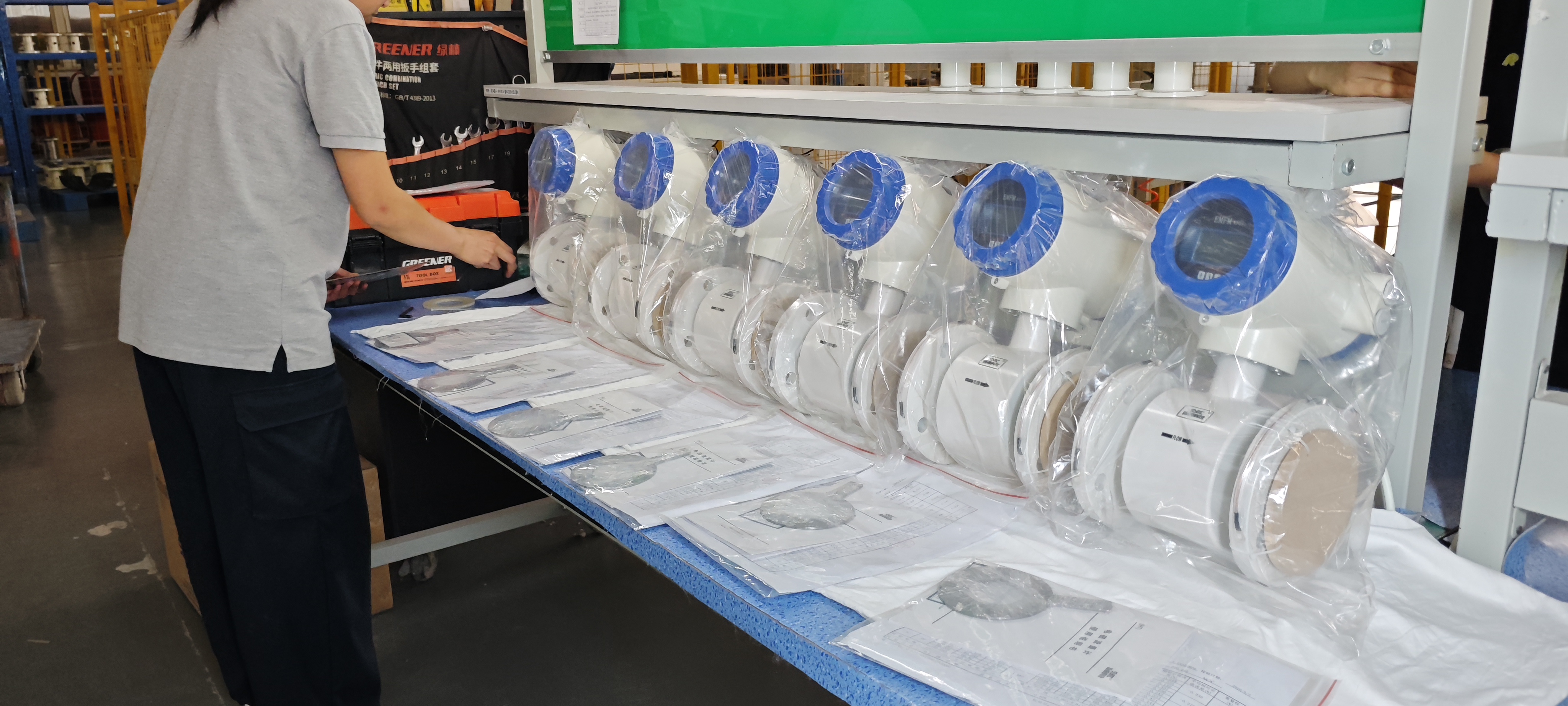
- Wear-resistant liner (e.g., polyurethane, ceramic, PFA)
- Converter/transmitter for signal processing
- Optional grounding electrodes for non-conductive pipe linings
Relationship Between Equipment and Application
Since electromagnetic flow meters have no moving parts inside the flow path, they are inherently suitable for high viscosity and abrasive media that would damage mechanical components such as turbines or vortex shedders.
3. Why Is This Solution Used in Industrial Applications?
Electromagnetic flow meters are widely selected for high viscosity applications because they measure flow without physical obstruction, reducing pressure drop and mechanical wear.
Application Advantages
- No moving parts, minimizing wear from abrasive particles
- Unaffected by viscosity variation as long as the medium remains conductive
- Bidirectional measurement capability for complex piping systems
Technical Characteristics
- Signal stability relies on excitation methods such as square wave pulse excitation, which reduces zero-point drift
- Advanced signal processing, including variation restraint algorithms, helps filter "cuspidal disturb" caused by solid particle collisions with electrodes
Suitable Operating Conditions
High viscosity electromagnetic flow measurement performs well in slurry transport, coal-water mixtures, mineral tailings, and pulp processing, where fluid conductivity is sufficient for electromagnetic induction.
Typical Measurement Challenges Solved
- Signal interference from solid-liquid friction
- Lining abrasion from high solid content
- Zero-point instability in low-flow conditions
4. Key Selection Factors
Selecting a suitable flow meter for high viscosity service requires evaluation of multiple engineering parameters:
- Measuring Medium: Confirm conductivity threshold (typically above 5 µS/cm for electromagnetic types) and solid particle content.
- Conductivity: Non-conductive high viscosity fluids (e.g., pure oils) require alternative technologies such as Coriolis mass flow meters.
- Flow Range: Determine minimum and maximum velocity, generally within 0.1 to 10 m/s for electromagnetic sensors.
- Pipe Size: Available nominal diameters typically range from DN15 to DN3000, depending on installation requirements.
- Temperature: Verify liner and electrode material temperature tolerance under process conditions.
- Pressure: Ensure sensor housing and flange rating match system operating pressure.
- Accuracy Requirements: Standard accuracy is ±0.5%, with optional ±0.3% or ±0.2% depending on application criticality.
- Material Compatibility: Assess chemical corrosiveness and abrasiveness of the medium.
- Liner Selection: Options include PTFE, PFA, rubber, polyurethane, and ceramic, each suited to different abrasion and chemical resistance needs.
- Electrode Selection: Stainless steel, Hastelloy, titanium, or tantalum electrodes should be selected based on corrosion resistance requirements.
- Installation Conditions: Evaluate straight pipe run requirements, grounding needs, and space constraints.
5. Common Challenges and Solutions
Incorrect Model Selection
Choosing a standard liner or electrode for abrasive slurry leads to premature failure. Solution: Select wear-resistant lining such as polyurethane or ceramic with appropriate electrode hardness.
Measurement Instability
Solid particles striking electrodes generate noise spikes. Solution: Apply variation restraint algorithms designed to suppress "cuspidal disturb" signal interference.
Signal Interference
Non-conductive pipe linings can cause floating potential. Solution: Install grounding electrodes to stabilize the reference signal.
Accuracy Deviation
Improper installation location, such as near valves or pumps, causes turbulence-induced errors. Solution: Maintain recommended upstream and downstream straight pipe distances.
Material Corrosion and Abrasion
High solid content mediums degrade standard linings quickly. Solution: Use ceramic linings for high-abrasion service or rubber linings for moderate wear conditions.
Installation Errors
Incorrect orientation can trap air bubbles, causing empty-pipe alarms. Solution: Install sensors in upward flow sections or fully filled horizontal pipe runs, and utilize built-in empty-pipe detection features.
Harsh Operating Conditions
Submerged or remote installations may lack power access. Solution: Consider battery-powered units with IP68-rated sensor housings for continuous operation without external power.
6. Application Areas
High viscosity flow measurement solutions are applied across several industrial sectors:
- Water and Wastewater Treatment: Sludge and thickened solids monitoring
- Chemical Processing: Viscous chemical transfer and dosing accuracy
- Food and Beverage: Hygienic measurement of syrups, purees, and thick sauces
- Mining and Slurry: Coal-water slurry, mineral tailings, and pulp transport
- Energy Management: Heat transfer fluid monitoring in industrial heating systems
- Industrial Process Control: Batch dosing and blending operations requiring consistent flow feedback
7. Installation and Maintenance Recommendations
Installation Requirements
- Maintain adequate upstream (typically 5D) and downstream (typically 3D) straight pipe lengths
- Ensure full pipe conditions to avoid air pocket interference
- Verify proper grounding, especially for insulated or lined pipelines
Operating Recommendations
- Confirm medium conductivity before commissioning
- Monitor for empty-pipe or excitation circuit alarms during initial startup
Maintenance Methods
- Periodically inspect liner wear in abrasive slurry applications
- Clean electrode surfaces if coating or scaling is observed
Calibration Importance
Routine calibration verification ensures continued measurement accuracy, particularly in applications where fluid composition or solid content varies over time.
Long-Term Reliability Improvement
Selecting appropriate liner and electrode materials at the outset, combined with periodic inspection, significantly extends service life in high viscosity and abrasive conditions.
8. Industrial Supplier Evaluation
When selecting a manufacturer for high viscosity flow measurement equipment, industrial buyers should evaluate:
- Manufacturing Capability: Ability to produce sensors with specialized wear-resistant liners and configurable electrode materials
- Quality Control System: Documented compliance with relevant industry standards
- Calibration Capability: In-house liquid flow calibration systems, such as static mass method or master meter method, to verify accuracy before shipment
- Technical Support: Availability of engineering guidance for material selection and installation
- Customization Capability: OEM/ODM support for specific diameter, pressure rating, or communication protocol requirements
- Export Experience: Track record of supplying international industrial and municipal projects
- Engineering Service Capability: Support for pre-installation inspection, commissioning, and troubleshooting
9. About Kaifeng Xinya Instrument Co., Ltd.
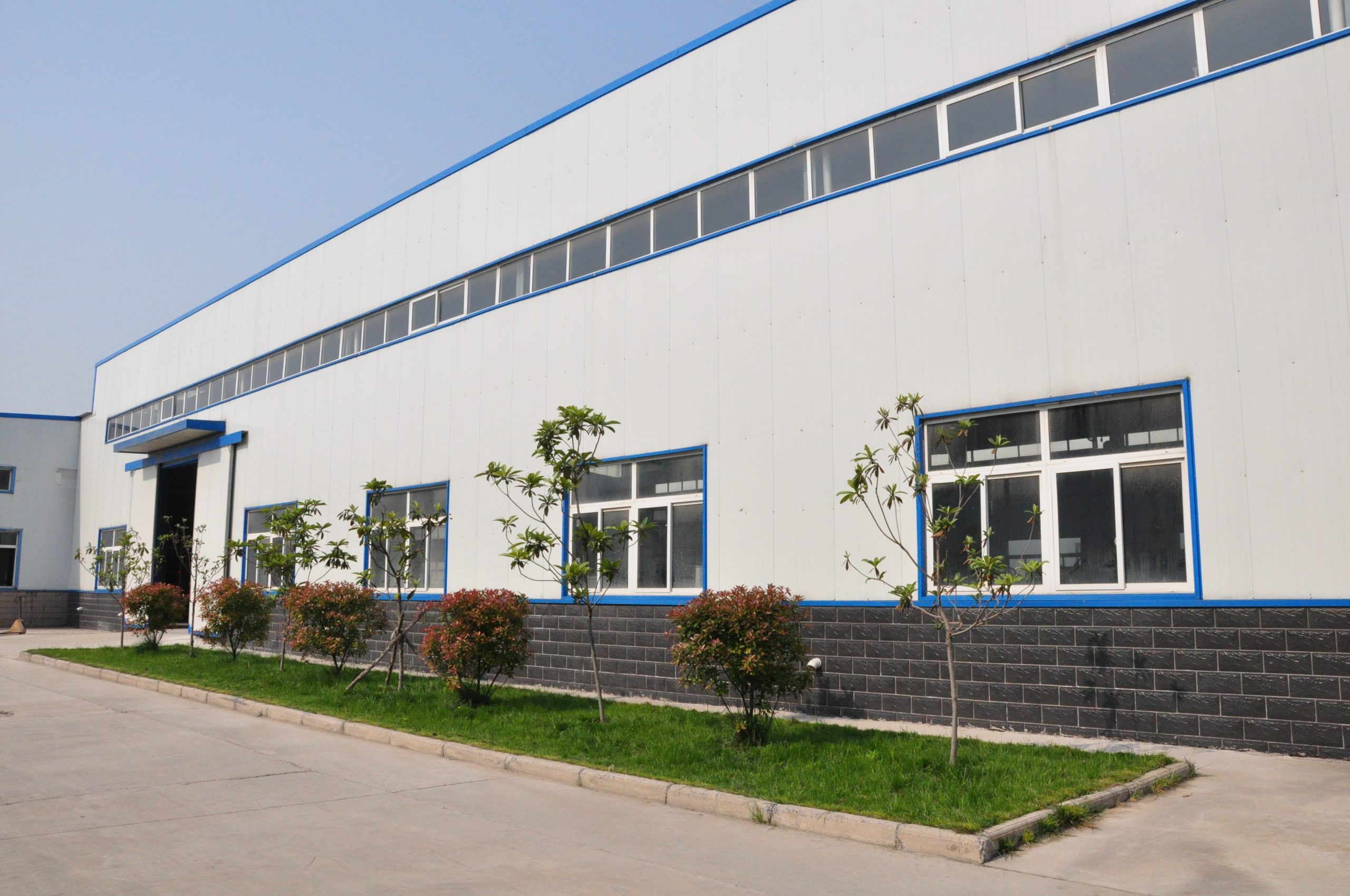
Kaifeng Xinya Instrument Co., Ltd. is a professional industrial flow measurement manufacturer specializing in electromagnetic flow meters for standard, hygienic, battery-powered, and high-abrasion slurry applications. As a source factory, the company benefits from manufacturing experience supported by NewAsia Industrial since 1996, with independent R&D capability covering excitation circuit design, signal processing algorithms, and IoT data integration.
The company maintains factory calibration capability and produces liquid and gas flow calibration systems, supporting internal accuracy verification before product delivery. Kaifeng Xinya offers OEM/ODM support for customized diameter, lining, and electrode configurations, and has export experience supplying flow measurement instrumentation for industrial, municipal, and food safety applications globally.
10. Frequently Asked Questions (FAQ)
Can electromagnetic flow meters measure high viscosity slurries?
Yes, provided the slurry maintains sufficient electrical conductivity. Non-conductive or extremely viscous non-aqueous liquids may require alternative technologies such as Coriolis mass flow meters.
What liner material should be selected for abrasive slurry service?
Polyurethane and ceramic liners are commonly recommended for high-abrasion slurry applications due to their wear resistance, while rubber liners suit moderate abrasion conditions.
How accurate is high viscosity electromagnetic flow measurement?
Standard accuracy is typically ±0.5%, with optional configurations achieving ±0.3% or ±0.2% under stable, non-turbulent flow conditions.
What factors affect measurement stability in slurry applications?
Solid particle collisions with electrodes, insufficient grounding, and improper installation location are common causes of signal instability. Variation restraint algorithms and proper grounding electrodes help mitigate these issues.
Does the equipment require regular calibration?
Yes. Periodic calibration verification is recommended, especially when medium composition, solid content, or viscosity fluctuates significantly over time.
How should the correct model be selected for a specific slurry application?
Selection should be based on medium conductivity, solid content percentage, required accuracy, pipe diameter, and chemical compatibility with liner and electrode materials.
Can electromagnetic flow meters operate in remote locations without external power?
Battery-powered electromagnetic flow meters with IP68-rated sensor housings are designed for remote or submerged installations without continuous power access.
What installation conditions are necessary for accurate measurement?
Adequate straight pipe run lengths, full-pipe conditions, and proper grounding are essential to avoid turbulence-induced errors and signal interference.
11. Conclusion
High viscosity flow measurement requires careful engineering evaluation of medium conductivity, abrasiveness, liner and electrode compatibility, and installation conditions. Electromagnetic flow meters, when properly selected and installed, provide reliable, wear-resistant measurement for slurries and viscous industrial fluids across water treatment, mining, chemical, and food processing applications. Proper supplier evaluation—covering manufacturing capability, calibration capacity, and engineering support—further ensures long-term measurement reliability. For engineering guidance on selecting the appropriate flow measurement solution for your specific high viscosity application, technical consultation is recommended before final equipment specification.
Reviews
There are no reviews yet.