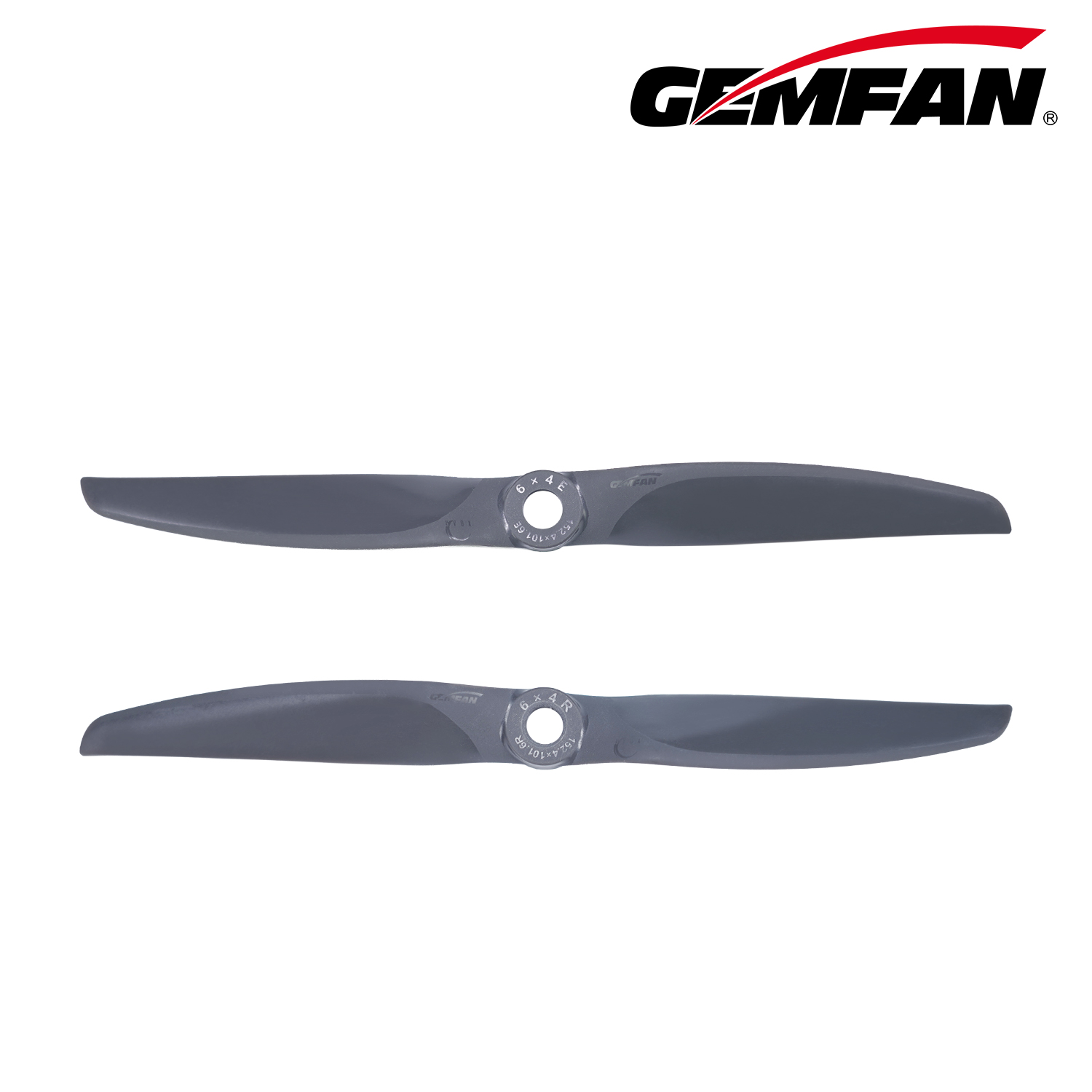
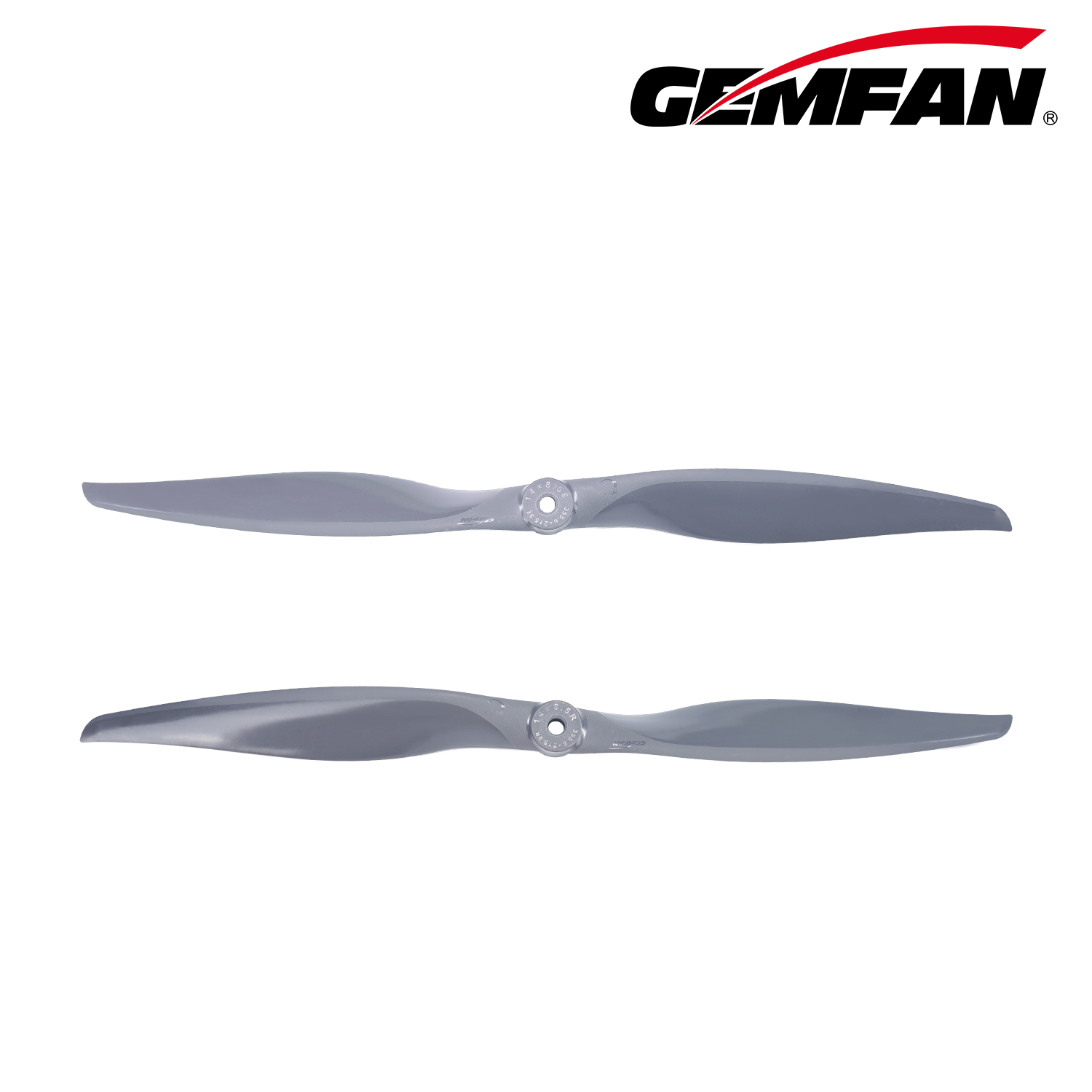
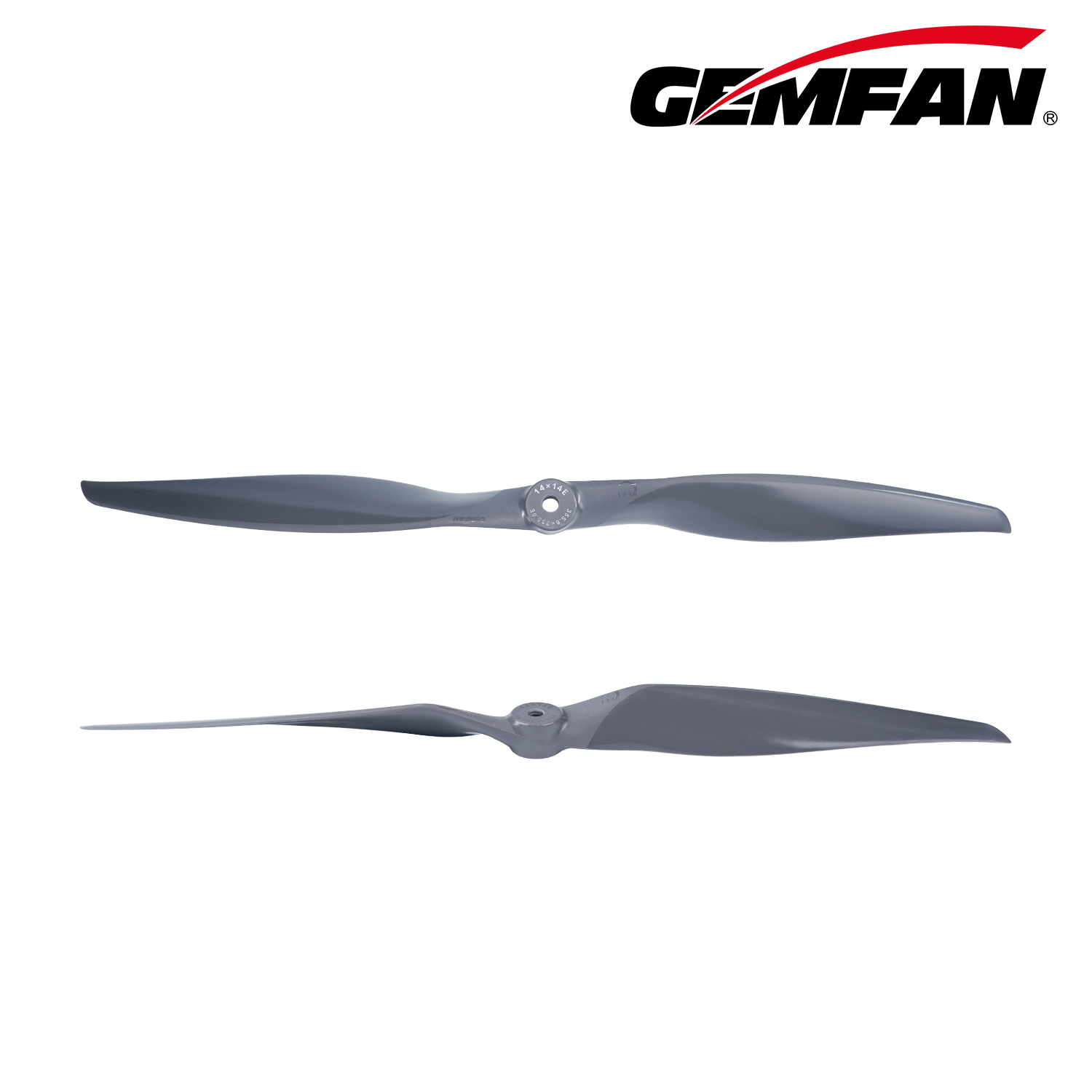
Description
Introduction: The Critical Role of Propulsion in Long-Endurance Surveying Operations
The evolution of unmanned aerial vehicle (UAV) surveying technology has transformed industries ranging from agriculture and environmental monitoring to infrastructure inspection and geological mapping. As multispectral camera payloads become increasingly sophisticated and mission requirements extend to multi-hour endurance flights, the propulsion system emerges as the single most critical component determining mission success. Large-scale surveying unmanned aircraft operating with heavy sensor packages must balance competing demands: sufficient thrust for payload capacity, exceptional efficiency for extended flight times, mechanical reliability across diverse environmental conditions, and minimal vibration to preserve data quality from precision imaging equipment.
Current industry challenges reveal significant gaps in propulsion optimization. Traditional propeller designs often sacrifice efficiency for thrust capacity, resulting in shortened operational windows and frequent battery swaps that interrupt surveying workflows. Mechanical imbalances in lower-quality propulsion components introduce vibrations that compromise multispectral image clarity, particularly in the narrow spectral bands used for vegetation health analysis and mineral identification. Furthermore, surveying missions frequently operate in challenging environments—coastal salt air, high-altitude thin atmospheres, temperature extremes, and remote locations where component failure means mission abortion and costly return trips.
This comprehensive guide examines the complete landscape of propulsion systems for large-scale surveying unmanned aircraft, with particular emphasis on fixed-wing platforms operating with long-endurance requirements and multispectral camera payloads. We will explore propulsion system classifications, technical specifications that impact surveying performance, real-world applications across industries, emerging technological advancements, and practical considerations for system selection and operation.
Understanding Propulsion Systems for Surveying UAVs: Core Definitions
A UAV propulsion system comprises the integrated assembly of components that converts stored energy into thrust force, enabling controlled flight. For surveying applications, this system specifically refers to the motor-propeller combination, energy storage (battery or fuel system), electronic speed controller (ESC), and supporting mechanical assemblies optimized for the unique demands of data collection missions.
The propeller functions as the critical interface between mechanical rotation and aerodynamic thrust generation. Through precisely engineered blade profiles, propellers accelerate air rearward, creating forward thrust according to Newton’s third law. For surveying platforms, propeller design directly influences three mission-critical parameters: thrust efficiency (the ratio of useful propulsion force to electrical power consumed), vibration characteristics (mechanical balance that affects sensor stability), and acoustic signature (noise levels that may impact wildlife behavior in ecological surveys or operational permissions in urban environments).
Electric propulsion systems dominate the large-scale surveying UAV market due to their superior reliability, minimal maintenance requirements, instant throttle response for flight control precision, and zero direct emissions—crucial for environmental monitoring missions. The fundamental performance equation balancing endurance and payload capacity creates the central design challenge: longer flight times demand larger batteries (increasing weight), while heavier multispectral camera systems require more thrust (consuming more power). Propulsion optimization therefore becomes a systems engineering challenge requiring careful matching of propeller specifications to airframe characteristics, motor capabilities, and mission profiles.
Classification of Propulsion Systems for Surveying Applications
Fixed-Pitch vs. Variable-Pitch Propeller Systems
Fixed-pitch propellers maintain a constant blade angle throughout operation, representing the standard configuration for most surveying UAVs due to their mechanical simplicity, reliability, and weight efficiency. These systems optimize performance for specific flight regimes—typically cruise conditions for surveying missions. Selection criteria focus on matching propeller diameter and pitch to the motor’s power band and the aircraft’s cruise speed. For multispectral surveying requiring stable flight at consistent altitudes, fixed-pitch systems provide predictable performance with minimal failure points.
Variable-pitch propeller systems incorporate mechanical actuators that adjust blade angle during flight, enabling optimization across multiple flight phases. During climb with heavy payloads, lower pitch angles allow higher RPM and increased thrust. During cruise surveying operations, higher pitch angles improve efficiency. While offering theoretical performance advantages, these systems introduce mechanical complexity, additional weight, and potential failure modes generally deemed unacceptable for remote surveying missions where reliability outweighs marginal efficiency gains.
Propeller Size Classification by Surveying Platform Scale
Small-format propellers (5-7 inches) serve compact surveying UAVs with wingspans of 0.6-1.0 meters, typically employed for close-range inspection work, small agricultural plot analysis, or situations requiring highly portable equipment. These systems prioritize rapid deployment and maneuverability over extended endurance, with typical flight times of 15-30 minutes and payload capacities limited to lightweight RGB or basic multispectral cameras.
Medium-format propellers (8-10 inches) represent the optimal range for professional surveying operations balancing portability with capability. Platforms in this category typically feature 1.0-1.5 meter wingspans and can maintain flight times of 45-90 minutes while carrying multispectral camera systems with 4-6 spectral bands. This classification covers the majority of agricultural surveying drones, environmental monitoring platforms, and light commercial mapping systems. The Gemfan Vortex Series provides complete specification coverage in this critical range, offering aerodynamically optimized blade profiles specifically designed for the sustained cruise conditions characteristic of systematic surveying flight patterns.
Large-format propellers (11-14 inches) power substantial surveying platforms with 1.5-2.0 meter wingspans capable of carrying advanced multispectral imaging systems, hyperspectral cameras, or multiple sensor packages simultaneously. These aircraft typically achieve 90-180 minute endurance, enabling coverage of large agricultural operations, extensive infrastructure corridors, or regional environmental assessments in single flights. The increased propeller diameter improves thrust efficiency at lower RPMs, reducing power consumption and extending range—critical factors for maximizing surveying productivity.
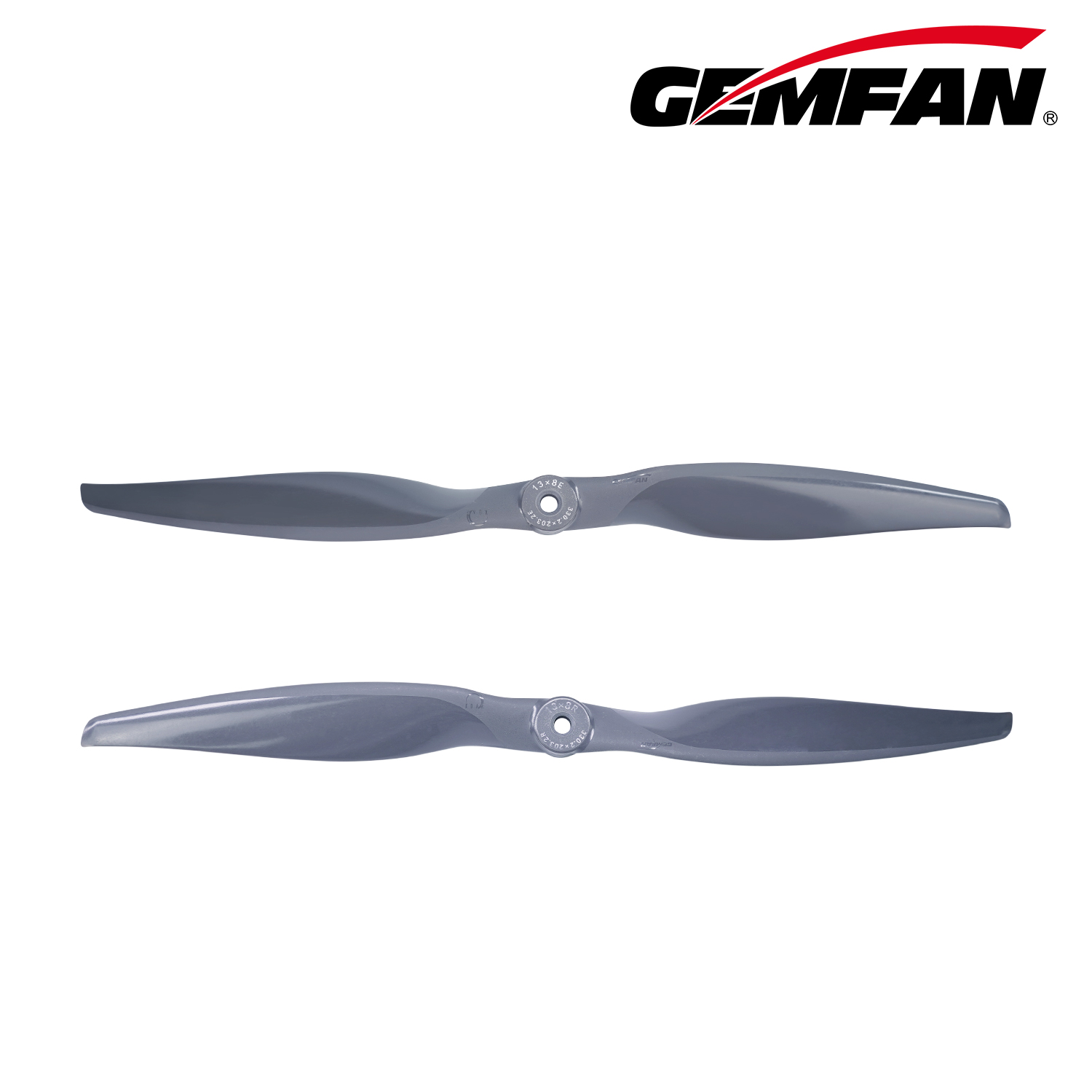
Professional large-scale propellers (15-18 inches) serve heavy-duty surveying platforms in the 2.0-2.8 meter wingspan category, often employed for geological surveying, large-scale topographic mapping, or scientific research requiring specialized sensor packages. These systems can maintain flight times exceeding 3 hours with substantial payloads, making them suitable for remote area operations where launch/recovery logistics limit flight frequency. Propeller selection at this scale demands precise attention to dynamic balance, as even minor imbalances generate vibrations that propagate through larger airframes to degrade sensor performance.
Extra-large propellers (19-22 inches) represent the upper boundary of electric propulsion for surveying applications, powering platforms with 2.8-3.5 meter wingspans used in specialized scientific research, maritime surveying operations, or applications requiring flight durations approaching or exceeding 4 hours. At this scale, propeller efficiency becomes paramount, as marginal percentage improvements in thrust conversion translate directly to substantial increases in practical range or payload capacity. Gemfan’s complete specification range extending to 22 inches addresses the growing demand for long-endurance scientific surveying platforms while maintaining the precision balance tolerances essential for vibration-sensitive sensor integration.
Material Classification for Environmental Durability
Standard engineering plastic propellers utilize injection-molded composite materials optimized for strength-to-weight ratios. These propellers suit controlled-environment operations and represent cost-effective solutions for high-volume surveying work where replacement economics favor lower unit costs. However, standard materials show vulnerability to UV degradation in high-altitude or tropical surveying operations and may develop micro-fractures under thermal cycling in temperature-extreme environments.
High-strength composite propellers incorporate advanced material formulations with reinforcing fibers or engineered polymer matrices that enhance impact resistance and fatigue life. For surveying operations in challenging environments—coastal areas with salt exposure, high-altitude missions with intense UV radiation, or remote deployments where component failure necessitates mission abortion—these materials provide critical reliability advantages. The investment in premium materials pays dividends through extended operational lifespan and reduced mission risk.
Weather-resistant coated propellers add specialized surface treatments to base composite materials, addressing specific environmental challenges. The Gemfan Vortex Series implements a dark grey functional coating that provides three surveying-relevant benefits: UV resistance maintaining structural properties during extended high-altitude operations, corrosion protection in coastal and industrial surveying environments, and thermal stability across operating temperatures from -20°C to 60°C. This coating technology enables year-round surveying operations across diverse geographical regions without propeller specification changes—a significant logistical advantage for surveying service providers operating in multiple climate zones.
Balance Precision Classification
Standard balance propellers meet typical hobby-grade tolerances, generally sufficient for basic aerial photography but inadequate for precision multispectral surveying. Residual imbalances generate vibrations transmitted through mounting hardware to the airframe, introducing motion artifacts that degrade spectral signature consistency—particularly problematic in narrow-band vegetation indices where subtle intensity variations carry analytical significance.
Precision-balanced propellers utilize enhanced manufacturing processes to reduce static and dynamic imbalance, typically achieving tolerances in the ±0.1g·cm range. These propellers suit general surveying applications using stabilized camera gimbals that can compensate for moderate vibration inputs, representing acceptable compromises between cost and performance for many commercial operations.
CNC precision-balanced propellers employ computer-controlled machining to achieve balance tolerances of ±0.01g·cm or better, as implemented in the Gemfan Vortex Series. This level of precision virtually eliminates propeller-induced vibrations, providing direct benefits for surveying missions: extended motor bearing life through reduced mechanical stress, protection for sensitive electronic components including GPS receivers and flight controllers, and most critically, stable platform characteristics enabling direct sensor mounting without complex vibration isolation systems. For hyperspectral imaging and scientific surveying applications demanding maximum data fidelity, precision balancing represents a non-negotiable requirement rather than optional enhancement.
Blade Configuration Classification
Two-blade propellers represent the standard configuration offering optimal efficiency and simplicity. The balanced design minimizes parasitic drag while providing smooth power delivery. For surveying aircraft operating primarily in cruise flight regimes, two-blade configurations deliver maximum endurance by converting the highest percentage of motor power into useful thrust.
Three-blade propellers distribute thrust generation across additional surfaces, enabling equivalent thrust from smaller diameter propellers—advantageous when ground clearance limits propeller size or when folding mechanisms constrain diameter. However, the additional blade introduces parasitic drag that reduces efficiency, typically decreasing endurance by 5-12% compared to equivalent two-blade designs. Surveying applications rarely justify this tradeoff unless physical constraints mandate the configuration.
Multi-blade propellers (four or more blades) find limited application in surveying UAVs, primarily restricted to specialized heavy-lift platforms where thrust density outweighs efficiency concerns. The substantial efficiency penalties make these configurations unsuitable for endurance-focused surveying missions.
Practical Applications Across Surveying Disciplines
Precision Agriculture Surveying and Crop Health Monitoring
Agricultural surveying represents the largest commercial application for multispectral UAV technology, with propulsion requirements centered on systematic area coverage efficiency. Typical missions involve flying predetermined grid patterns at consistent altitudes (80-120 meters AGL) and speeds (12-18 m/s) to maintain ground sample distance consistency across the surveyed area. Flight times directly translate to practical field coverage—a surveying platform maintaining 90-minute endurance can systematically cover 200-300 hectares per flight depending on camera footprint and required overlap.
Propulsion optimization for agricultural surveying emphasizes mid-range cruise efficiency rather than peak thrust or maximum speed. Propellers in the 8-12 inch range, properly matched to motor characteristics and airframe design, enable surveying service providers to complete farm-scale assessments in single flights, minimizing the field time and labor costs that determine service profitability. The vibration stability provided by precision-balanced propellers like the Gemfan Vortex Series directly impacts data quality in the critical vegetation index calculations—NDVI, GNDVI, NDRE—that form the basis for prescription mapping and crop health assessment.
Environmental resilience becomes crucial as agricultural surveying occurs across growing seasons with varying conditions. Spring planting surveys may encounter cool, wet conditions, while mid-summer crop monitoring occurs in extreme heat. Harvest planning surveys in autumn face dusty conditions and temperature variability. Weather-resistant propeller coatings maintain performance consistency across this operational spectrum, eliminating the need for seasonal specification changes and ensuring consistent results across temporal survey series used for growth tracking and yield prediction.
Environmental and Ecological Monitoring
Long-endurance surveying flights for wildlife habitat assessment, vegetation mapping, wetland monitoring, and conservation research demand maximum flight time to cover extensive natural areas often lacking convenient launch/recovery sites. Platforms equipped with propellers optimized for cruise efficiency can conduct transect surveys spanning tens of kilometers, capturing multispectral imagery used for species distribution modeling, habitat quality assessment, and ecosystem change detection.
The acoustic characteristics of propulsion systems gain significance in ecological applications where excessive noise may alter wildlife behavior, biasing survey results or violating research protocols designed to minimize observer effects. Aerodynamically optimized blade profiles that generate thrust efficiently inherently produce lower noise signatures compared to less refined designs operating at higher power levels to achieve equivalent performance. This characteristic makes precision-engineered propellers valuable for wildlife surveying beyond their efficiency advantages.
Remote deployment scenarios typical of ecological research place premium value on reliability. Survey sites in protected wilderness areas, offshore islands, or sensitive ecosystems may require substantial logistics to access, making propulsion system failures particularly costly in terms of lost data collection opportunities and research schedule impacts. The proven durability of high-strength composite propellers with protective coatings, operating within the temperature range of -20°C to 60°C, provides the dependability essential for scientific field campaigns.
Infrastructure Inspection and Asset Management
Linear infrastructure surveying—pipelines, transmission corridors, transportation networks, and coastal structures—requires sustained flight along predetermined routes, often covering 20-50 kilometers per mission. Propulsion endurance determines whether continuous corridor coverage can be achieved in single flights or must be segmented across multiple sorties with associated positioning and data stitching complexity.
Infrastructure inspection in industrial environments introduces environmental challenges including chemical exposure in petrochemical facilities, salt-laden atmospheres in coastal and maritime applications, and thermal extremes near power generation installations. Corrosion-resistant propeller treatments and materials engineered for temperature stability from -20°C to 60°C enable consistent operation across these challenging deployment contexts. The long operational life provided by weather-resistant components reduces the total cost of ownership for inspection service providers conducting frequent repeat surveys.
Vibration control achieves particular importance in infrastructure inspection when high-resolution imaging targets specific features—crack detection in concrete structures, corrosion assessment on metal surfaces, or thermal anomaly identification in electrical systems. Sensor motion during exposure degrades feature resolution and detection reliability. The ±0.01g·cm balance precision achieved through CNC processing in propellers like the Gemfan Vortex Series provides the mechanical stability foundation enabling direct sensor mounting configurations that minimize system weight and complexity while maximizing image quality.
Large-Scale Topographic and Geological Surveying
Professional mapping applications for construction planning, mining operations, geological research, and regional land use assessment often deploy large surveying platforms (15-22 inch propeller class) carrying sophisticated sensor combinations: high-resolution RGB cameras, multispectral imaging systems, and sometimes thermal or hyperspectral instruments. These heavy payloads combined with requirements for extensive area coverage in single flights place extreme demands on propulsion efficiency.
At this operational scale, propeller selection carries significant economic implications. The difference between a propulsion system achieving 85% thrust efficiency versus 90% efficiency translates to 20-30 minutes of additional flight time or equivalent increases in practical survey area coverage. Over hundreds of mission cycles, this efficiency differential determines the productivity difference between profitable and marginal operations. The aerodynamically optimized blade profiles developed through fluid dynamics analysis and refined through iterative testing deliver measurable performance advantages that directly impact operational economics.
High-altitude surveying missions for geological and topographic applications encounter reduced air density that degrades propulsion efficiency and requires careful propeller specification. Larger diameter propellers moving greater air volumes compensate for density reductions more effectively than smaller, higher-RPM alternatives. The complete specification range of systems like the Gemfan Vortex Series, extending through 22-inch diameters, enables proper matching of propulsion characteristics to high-altitude mission profiles without compromising low-altitude performance for takeoff and landing phases.
Scientific Research and Atmospheric Monitoring
Specialized scientific surveying applications—atmospheric sampling, greenhouse gas mapping, aerosol distribution studies, and meteorological research—frequently require extended loiter capabilities at specific altitudes rather than area coverage optimization. Flight endurance becomes the primary performance metric, with missions sometimes extending to the absolute limits of battery capacity or requiring in-flight power system management strategies.
These applications benefit maximally from propulsion systems engineered specifically for cruise efficiency rather than sprint performance or aerobatic capability. Every percentage point of efficiency improvement translates directly to extended measurement time or increased altitude capability—critical factors when research objectives require sustained sampling at specific atmospheric layers or maximum altitude achievement for vertical profile construction.
The mechanical reliability and vibration-free operation provided by precision-manufactured, precision-balanced propellers protects delicate scientific instrumentation. Research-grade sensors often incorporate components sensitive to mechanical shock and vibration—gas analyzers with optical cells, particle counters with precise flow systems, or meteorological sensors with fine mechanical elements. Propulsion systems maintaining dynamic balance within ±0.01g·cm minimize these risks, contributing to data quality and instrument longevity.
Future Trends and Technological Developments
Advanced Aerodynamic Optimization Through Computational Fluid Dynamics
Next-generation propeller designs increasingly leverage computational fluid dynamics (CFD) simulations to model airflow behavior across blade surfaces under varying flight conditions. This technology enables virtual testing of design iterations, identifying blade profile geometries that maximize thrust generation while minimizing induced drag and tip vortex losses. Future propellers will incorporate sophisticated features such as variable-geometry blade sections optimized for different spanwise positions, non-linear twist distributions matching actual airflow patterns, and tip designs that minimize vortex formation.
For surveying applications, CFD-optimized propellers promise 5-10% efficiency improvements over current designs, translating directly to extended endurance or increased payload capacity. These gains accumulate across mission profiles—a 7% efficiency improvement enabling 10-15 additional minutes of flight time can be the difference between completing a survey area in one versus two flights, with substantial operational cost implications.
Smart Propeller Systems with Integrated Condition Monitoring
The integration of embedded sensors and condition monitoring electronics directly into propeller hubs represents an emerging capability with significant implications for professional surveying operations. Strain gauges monitoring blade loading, accelerometers detecting balance degradation or impact damage, and temperature sensors tracking thermal conditions enable real-time propulsion health assessment and predictive maintenance scheduling.
For surveying service providers operating fleets of aircraft, predictive maintenance capabilities reduce unplanned downtime and prevent in-flight failures that result in data loss and potential platform loss. Condition monitoring data can also inform operational decisions—detecting propeller degradation that, while not immediately safety-critical, has reduced efficiency enough to warrant replacement before efficiency losses impact mission economics. Implementation of these technologies will likely become standard in professional surveying platforms by 2028-2029.
Advanced Materials for Extreme Environment Operations
Materials science advances continue expanding the operational envelope for surveying UAVs. Carbon fiber composite propellers with advanced resin matrices offer strength-to-weight ratios exceeding current glass-reinforced materials, enabling larger diameter designs without weight penalties or maintaining current diameters with improved impact resistance. For surveying operations in challenging environments—arctic research, desert surveying, or tropical deployments—these materials provide enhanced durability.
Development of functionally graded materials with properties varying across the propeller structure represents a longer-term advancement. Hub regions optimized for impact and fatigue resistance, blade roots engineered for maximum strength, and blade tips designed for minimum weight and maximum stiffness could all be integrated in single propeller assemblies, achieving performance characteristics impossible with homogeneous materials.
Biomimetic Design Approaches Inspired by Natural Flight
Research into natural propulsion systems—the wing structures of soaring birds, the fin geometries of efficient swimmers—increasingly informs engineering design. Biomimetic propeller designs incorporating features such as serrated leading edges (inspired by owl wing structures for noise reduction), flexible trailing edges that optimize across varying load conditions, or tip structures mimicking bird primary feathers show promise in laboratory testing.
For surveying applications, the primary benefit of biomimetic approaches lies in noise reduction and efficiency enhancement. Quieter propulsion systems expand operational permissions in noise-sensitive areas and reduce wildlife disturbance in ecological surveying. Efficiency improvements from designs that naturally adapt to varying load conditions could provide performance advantages across the diverse flight phases of surveying missions—climb, cruise, and maneuvering.
Hybrid Propulsion Architectures for Extended Endurance
While pure electric propulsion dominates current surveying platforms, hybrid-electric systems combining small internal combustion generators with electric propulsion motors show increasing potential for applications requiring flight times exceeding 3-4 hours. These systems leverage the high energy density of liquid fuels while retaining electric propulsion’s control precision and reliability.
Propeller requirements for hybrid systems differ subtly from pure electric applications. The continuous power availability from generators reduces the emphasis on absolute peak efficiency, while the increased total system weight shifts optimal propeller specifications toward larger diameters and lower pitch values. As hybrid systems mature and achieve market penetration in the 2027-2029 timeframe, propeller manufacturers will likely develop specifications optimized specifically for these architectures rather than adapting designs from pure electric applications.
Artificial Intelligence-Driven Propeller Selection and Optimization
Machine learning systems trained on extensive flight data can analyze the complex interactions between airframe characteristics, motor specifications, propeller parameters, and mission profiles to recommend optimal propulsion configurations. These AI-driven optimization tools will enable surveying operators to input mission requirements—target endurance, payload weight, typical wind conditions, altitude profile—and receive propeller specifications optimized specifically for those conditions rather than relying on general recommendations.
More sophisticated implementations could enable real-time propeller performance monitoring, comparing actual efficiency against predicted values to detect degradation or suboptimal configurations. The aggregation of performance data across user fleets would continuously improve recommendation algorithms, creating a positive feedback loop enhancing propulsion optimization industry-wide.
Additive Manufacturing for Custom Propeller Production
3D printing technologies suitable for high-strength composite propeller production continue advancing in material properties, production speed, and cost-effectiveness. This manufacturing approach could enable economical production of custom propeller specifications optimized for specific surveying platforms and mission profiles, moving beyond the current paradigm of selecting from standardized specification ranges.
For research institutions and specialized surveying operations with unique requirements, additive manufacturing could provide propellers incorporating custom features—modified blade profiles for specific altitude ranges, integrated mounting configurations for unusual motor interfaces, or experimental geometries testing novel aerodynamic concepts. As the technology matures through the 2026-2030 timeframe, the economic threshold for custom production will steadily decrease, potentially democratizing access to optimized propulsion solutions.
Electric Motor Advancements Requiring Propeller Co-Evolution
Continuing developments in brushless motor technology—higher power density, improved efficiency, better thermal management—will shift the optimal propeller specifications for given applications. Motors capable of maintaining efficiency across broader RPM ranges may favor different pitch values than current designs. Motors with improved thermal characteristics might enable sustained higher power operation, shifting propeller selection toward higher thrust values.
This co-evolution requires propeller manufacturers to maintain close relationships with motor manufacturers and flight platform designers, ensuring propeller specifications evolve in alignment with overall propulsion system advancements. The most successful surveying platforms of the late 2020s will feature propulsion systems engineered holistically rather than assembled from independently optimized components.
Ethical and Practical Considerations
Privacy and Surveillance Concerns in Surveying Operations
The capability of multispectral surveying UAVs to capture detailed imagery of ground surfaces raises legitimate privacy considerations, particularly when operations occur near residential areas or over private property. Even when primary mission objectives focus on agricultural or environmental data collection, incidental capture of structures, vehicles, and potentially people introduces ethical responsibilities.
Responsible surveying practices require clear communication with stakeholders about mission objectives, data collection parameters, and data retention policies. Many jurisdictions now mandate explicit permissions for UAV operations over private property, regardless of altitude. Professional surveyors should implement data management protocols that separate mission-relevant information from incidental captures, apply appropriate data retention limits, and ensure proper cybersecurity protections prevent unauthorized access to collected imagery. The propulsion efficiency enabling extended flight times and broader area coverage amplifies both the utility and the privacy implications of surveying operations, making robust ethical frameworks increasingly essential.
Environmental Impact and Operational Sustainability
While electric surveying UAVs produce zero direct emissions during operation, a complete environmental assessment must consider the full lifecycle: manufacturing energy consumption, battery production and disposal, material sourcing, and end-of-life component handling. The surveying industry’s rapid growth—with platform operators conducting hundreds or thousands of flights annually—creates cumulative environmental footprints warranting attention.
Propulsion component durability directly influences sustainability metrics. Long-life propellers manufactured from weather-resistant materials and precision-balanced for extended operational life reduce replacement frequency, decreasing cumulative resource consumption. The Gemfan Vortex Series implementation of corrosion-resistant coatings and high-strength composites extends operational lifespan, reducing the per-flight environmental burden through reduced manufacturing frequency. Survey operators can further enhance sustainability by implementing planned maintenance programs that preserve component condition, properly recycling end-of-life components where material recovery programs exist, and selecting propulsion specifications appropriately matched to missions to avoid oversizing that increases manufacturing resource consumption without operational benefit.
Safety Considerations in Surveying Operations
Propulsion system failures represent the primary mechanical cause of surveying UAV incidents. Propeller failures specifically—whether from manufacturing defects, cumulative fatigue, impact damage, or improper installation—can result in immediate loss of control, potentially causing injury to personnel or damage to property if the platform impacts populated areas.
Multiple safety layers mitigate these risks. Pre-flight inspection protocols should include detailed propeller examination for cracks, chips, erosion, or deformation. Replacement schedules based on flight hours or calendar time should retire propellers before fatigue failures become probable. Precision-manufactured propellers from established manufacturers implementing quality control procedures—such as CNC precision balancing that inherently requires post-manufacturing inspection—provide greater reliability assurance than lowest-cost alternatives from unknown sources. For professional surveying operations where platform loss means costly mission failure and potential liability exposure, the modest incremental cost of quality propulsion components represents prudent risk management.
Regulatory Compliance and Airspace Integration
The expanding use of surveying UAVs occurs within increasingly complex regulatory frameworks balancing innovation encouragement with safety assurance and airspace integration. Most jurisdictions now require platform registration, operator certification, and compliance with operational rules addressing altitude limits, distance from people and structures, and restricted airspace avoidance.
Propulsion system specifications can influence regulatory compliance. Quieter propulsion systems may receive more favorable consideration for operations in noise-sensitive areas. Platforms with proven reliability records including quality propulsion components may eventually benefit from simplified approval processes compared to systems using unproven components. As regulatory frameworks mature toward risk-based certification approaches—where demonstrated system reliability influences operational permissions—the selection of proven, quality propulsion components becomes not merely a performance optimization but a regulatory access consideration.
Intellectual Property and Technology Transfer Considerations
The propulsion systems enabling advanced surveying capabilities embody substantial engineering investments in aerodynamic research, materials development, manufacturing process refinement, and quality assurance methodologies. Companies like Gemfan invest significantly in developing technologies such as CNC precision balancing and weather-resistant coating formulations that provide competitive advantages through superior performance.
Users of surveying technology benefit from competitive markets where multiple manufacturers drive innovation and cost optimization. Respecting intellectual property rights—avoiding counterfeit components, properly crediting technology sources, and supporting manufacturers who invest in genuine innovation—helps maintain healthy market dynamics that fund continued advancement. The alternative—markets dominated by low-quality copies of proprietary designs—ultimately degrades the technology foundation supporting the entire surveying industry through reduced innovation investment and declining quality standards.
Economic Accessibility and Technology Democratization
The capability to conduct multispectral surveying provides significant advantages in agriculture, conservation, and infrastructure management, with benefits accruing both to large commercial operators and small-scale users—individual farmers, small research projects, or local conservation organizations. Maintaining broad economic accessibility to surveying technology while supporting quality and reliability standards requires balancing competing interests.
Propulsion component manufacturers serve this balance by offering specification ranges addressing varied performance needs and price points. Entry-level surveyors conducting limited operations may appropriately select cost-optimized components with adequate performance for their applications. Professional operators conducting extensive missions in challenging conditions justify investment in premium components delivering superior efficiency, durability, and reliability. The industry benefits when manufacturers maintain both accessible entry points and advanced options, supporting a healthy ecosystem spanning hobbyist experimentation, educational applications, small-scale professional work, and large-scale commercial operations.
Frequently Asked Questions
What propeller size is optimal for a surveying UAV with 90-minute endurance requirements carrying a 500g multispectral camera?
Propeller selection for specific endurance and payload requirements depends on complete system integration including airframe design, motor specifications, battery capacity, and cruise speed targets. However, general guidance suggests platforms targeting 90-minute endurance with moderate multispectral payloads typically employ 10-14 inch propellers matched to efficient brushless motors in the 300-600W range. The optimal specification within that range depends on airframe characteristics: faster cruise speeds favor higher pitch values, while platforms optimizing for lower speed and maximum endurance benefit from larger diameter, lower pitch configurations. Consulting motor manufacturer recommendations and conducting test flights with multiple propeller specifications enables empirical optimization for specific platforms. For fixed-wing surveying aircraft in the 1.2-1.8 meter wingspan range—typical for this application—the Gemfan Vortex Series offerings in the 11-14 inch range provide aerodynamically optimized options specifically designed for sustained cruise efficiency.
How significantly does propeller balance precision affect multispectral image quality?
Propeller balance precision directly impacts vibration levels transmitted through the propulsion mount to the airframe and ultimately to sensor systems. Standard balance tolerances (±0.1g·cm) generate detectable vibrations that can introduce motion blur in individual image frames and create inconsistencies in spectral measurements when exposure timing coincides with vibration cycles. For basic RGB photography and broadband multispectral imaging using stabilized gimbals, these effects remain manageable through post-processing and gimbal compensation. However, for narrow-band multispectral imaging where subtle intensity variations carry analytical significance—particularly vegetation indices calculated from bands with similar absolute intensity—vibration-induced inconsistencies degrade data quality. Precision-balanced propellers achieving ±0.01g·cm tolerances through CNC processing virtually eliminate propeller-sourced vibrations, enabling direct sensor mounting without complex isolation systems while maintaining spectral measurement consistency. For professional surveying prioritizing maximum data fidelity, precision balance represents a worthwhile investment providing measurable quality improvements.
Can propellers designed for multirotor drones be used effectively on fixed-wing surveying aircraft?
Propeller designs optimize for specific flight regime characteristics, making cross-platform application generally inadvisable. Multirotor propellers prioritize thrust density—maximum thrust from minimum diameter to enable compact platform designs—and responsiveness to rapid throttle changes for flight control. These priorities lead to design characteristics including higher pitch values, aggressive blade profiles, and emphasis on static thrust over cruise efficiency. Fixed-wing surveying aircraft operate in fundamentally different regimes: sustained cruise flight at relatively constant speeds with occasional power adjustments for climb or maneuvering. Fixed-wing propeller designs emphasize cruise efficiency, typically featuring larger diameters with moderate pitch values and blade profiles optimized for forward flight velocity ranges rather than static or low-speed conditions. Using multirotor propellers on fixed-wing platforms results in poor cruise efficiency, excessive power consumption, shortened endurance, and potential motor overheating from operating outside optimal load ranges. Conversely, fixed-wing propellers on multirotors provide inadequate static thrust and poor control responsiveness. Always select propellers designed specifically for your platform type and operational profile.
How do environmental conditions affect propeller selection and performance?
Environmental factors influence propulsion performance through multiple mechanisms. Temperature affects air density—cold, dense air enables more efficient thrust generation than hot, thin air at identical RPM and propeller specifications. Altitude similarly reduces air density, requiring larger diameter propellers or higher RPM to maintain equivalent thrust, with associated efficiency and power consumption implications. Coastal and industrial environments introduce corrosive elements—salt spray, chemical exposure—that degrade standard materials over time, making weather-resistant propellers essential for operational longevity. Temperature extremes create material stress through thermal expansion/contraction cycling, potentially introducing micro-fractures in standard materials while propellers engineered for temperature stability from -20°C to 60°C maintain structural integrity. High humidity and precipitation exposure accelerate UV-induced material degradation unless protective coatings mitigate exposure. Professional surveying operations across diverse geographical regions or throughout seasonal cycles benefit substantially from propulsion components specifically engineered for environmental resilience, as these maintain consistent performance and avoid the logistical complexity of specification changes for different environmental conditions.
What maintenance practices maximize propeller lifespan and maintain performance?
Systematic maintenance preserves propulsion performance and prevents premature failures. Before each flight, visually inspect propellers for cracks (particularly near hub mounting points and leading edges), chips or gouges (especially at blade tips), surface erosion or discoloration indicating material degradation, and deformation or warping suggesting thermal or impact damage. Clean propellers after flights in dusty, muddy, or salt-laden environments using mild soap solutions—avoid aggressive solvents that may attack composite matrices or protective coatings. Store propellers in controlled environments avoiding temperature extremes and direct sunlight exposure that accelerates UV degradation. Implement retirement schedules based on manufacturers’ recommendations, typically 200-400 flight hours depending on operational intensity, or 12-24 months calendar time regardless of usage to account for material aging. After any impact—branch strike, hard landing, or dropped platform—carefully inspect affected propellers and proactively replace any showing damage, as internal structural compromise may exist without visible external indicators. Balance precision degrades over operational life through erosion and micro-damage; periodic re-balancing or replacement maintains vibration performance. For professional surveying operations, maintain propeller logs tracking installation dates, flight hours, and inspection observations to support data-driven replacement decisions that balance component cost against performance degradation and failure risks.
Conclusion: Propulsion Excellence as the Foundation for Surveying Success
The propulsion system represents far more than a mechanical component in large-scale surveying unmanned aircraft—it fundamentally determines mission capability, operational economics, and data quality outcomes. As multispectral camera technology advances and surveying applications expand across industries, the performance envelope defined by propulsion characteristics increasingly determines competitive advantage for surveying service providers and research capability boundaries for scientific users.
The comprehensive classification of propulsion systems—spanning size ranges from compact 5-inch specifications to substantial 22-inch large-scale options, material formulations from standard composites to advanced weather-resistant systems, and precision levels from basic balance to CNC-optimized specifications—reflects the diverse requirements across surveying applications. Professional operators conducting extensive agricultural surveying optimize for different propulsion characteristics than research scientists deploying long-endurance atmospheric monitoring platforms or infrastructure inspection services prioritizing reliability in challenging industrial environments. The availability of properly engineered options addressing these varied requirements, such as the complete specification range offered in systems like the Gemfan Vortex Series with aerodynamic optimization, precision balancing, and environmental resilience, enables appropriate matching of propulsion capabilities to specific mission demands.
Looking forward, propulsion technology continues advancing through computational design optimization, smart monitoring integration, advanced materials development, and manufacturing innovations. These advancements promise measurable improvements in the efficiency, reliability, and operational envelope that translate directly to extended surveying endurance, increased payload capacities, and expanded operational environments. The platforms achieving market success through the remainder of the 2020s will feature propulsion systems designed holistically as integrated elements of complete surveying solutions rather than assembled from generic components.
For professionals specifying surveying platforms or operators optimizing existing systems, propulsion selection deserves careful attention informed by mission requirements, environmental conditions, payload characteristics, and endurance targets. The investment in quality propulsion components engineered specifically for surveying applications—featuring aerodynamic optimization for cruise efficiency, precision balancing for vibration-free sensor operation, and environmental resilience for operational reliability—consistently proves justified through superior mission performance, reduced operational costs from extended component life and decreased failure rates, and enhanced data quality from stable sensor platforms. As surveying technology continues transforming industries from agriculture to conservation, from infrastructure management to scientific research, the propulsion systems enabling flight capabilities remain the foundational technology determining what missions become possible and which organizations achieve competitive advantage through operational excellence.
Reviews
There are no reviews yet.